31 May 2021

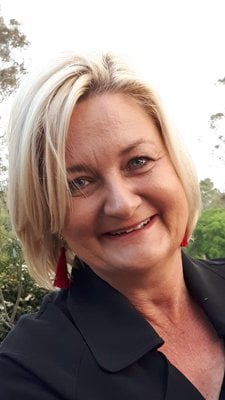
Mandy Pilottos from Camden Central Family Practice has been caring for the Camden community for 16 years as a practice nurse. Mandy is a “lifelong learner” who shares her knowledge with patients with the aim of improving their health outcomes.


How long have you been a practice nurse and how long have you been working in the Camden LGA?

I began my new career as a practice nurse in June 2005 at Camden Central Family Practice, so in total I am coming up to 16 years in the Camden Local Government Area.


When/why did you decide to pursue a career in nursing and specifically in primary care?

My decision to become a nurse was primarily influenced by my grandmother, mother and sister being Registered Nurses. My father was a radiographer, so our mealtime conversations were sometimes frank and uninhibited. When I left school the options seemed limited – nursing or teaching were the only things that interested me.

My paternal grandmother died when I was 16 years of age of a brain tumour. I didn’t cope with her death well. At my preliminary interview at Liverpool Hospital (I was the second last group to go through the hospital system) my answer to why I wanted to be a nurse was: “I wanted to know how to cope with death’’.

I was involved in community nursing a few years prior to becoming a practice nurse.

I worked for the Department of Veterans’ Affairs (DVA) looking after clients in their home for an agency, and when the agency dissolved I became a sole provider for DVA to complete my commitment to the veterans I cared for until they no longer required care in the community. I entered primary care mainly because a former nursing colleague asked me to come work for her agency –the work hours suited my family commitments and allowed me to have some work/life balance. In 2004 I did a Registered Nurse refresher course because I was feeling a bit discouraged working in a nursing home after working in the community and needed some confidence to try elsewhere. The hospital system at the time was disappointing and I knew I didn’t wish to return there. My husband encouraged me to try practice nursing because the part-time hours at the time suited our family.


Tell us about the role of nurses in primary care …

The role of practice nurses is varied and interesting. I have never learnt as much as what I have in practice nursing – health is forever changing and you have to constantly keep up with the changes.

I see the role as providing a safe environment for our staff and patients, administering First Aid when necessary and keeping patients out of hospital and in their homes. My day-to-day role involves mainly  cold chain management of vaccines, cleaning, sterilising instruments, assisting with procedures, wound management, administrative stuff like recalls, maintaining the treatment room, ordering of stock, liaising with GPs, health assessments, medicals, ECGs, audiograms, spirometry in pre-COVID times and care planning. I do lots of care planning and chronic disease management and health promotion and screening. As a practice nurse we work as a team with the GPs, hopefully lowering their workload marginally, and assisting in the efficient running of the practice and improving clinical outcomes for a patient. I see us as a valuable resource in keeping the economic burden out of the hospitals and maintaining a healthy community.


What do you love about nursing/what do you find most fulfilling about your role?

I love the relationships I have formed over the years with the patients and their families. I love knowing that a long-term patient is not well as soon as they walk in the door – the “knowing” you have after many years of a relationship. I love seeing a wound reach complete healing and being able to assess what improvements have happened or need to happen with their wound care. I love educating patients in making better health choices and giving them options.


What is your biggest challenge as a PN and how do you overcome this?

Time management is my biggest challenge. Keeping things running smoothly so the patients are keeping to their appointment times, especially when you are catering to maximum of four GPs to one nurse most of the time. It’s the domino effect – one person running behind impacts another. It’s the walk-ins on the day that come in for a “BP check” but they actually have chest pain and have to be sorted, or the appointment bookings have not been appropriately allocated, a lot of times because the patient hasn’t disclosed they need more time.


Tell me about your ideal workday …

My ideal workday – that statement makes me laugh – everything runs smoothly and to plan, has a variety of tasks and I leave work on time.


What do you like to do in your spare time?

My spare time is very much about relationships. Spending time with family and friends I love. My passion is pastoral care, in particular supporting women. I am involved in my local Anglican church and am involved in leadership with running a Thursday women’s church. I also run a separation and divorce ministry which I have been involved in since 2001. I support single mums in particular.


Do you have any role models and why?

My role models are women that have endured hardship and adversity and grown, but I am guessing you mean role models in nursing.

For practice nursing, my role model would have had to be RN Sue Donohoe. When I started practice nursing I knew nothing about practice nursing at all. I just seemed to do First Aid, immunisation and general management of treatment room and recalls. The Macarthur Division of General Practice had Sue in charge of practice nurse education. We had lots of regular in-service for nurses. I learnt so much about what I should be doing from Sue and the other nurses who attended the in-services. I am very thankful for the opportunities that were provided for scholarships to become an authorised immuniser – fully funded – and to be involved in other pilot programs for health under the direction of our local universities. Another role model was a fellow nurse who I have worked with for 15 years, RN Sonya Mackay, who was very good in the administrative side of practice nursing as well as being a loving and caring nurse.


How do you help educate your patients about maintaining good health?

I help patients be educated about maintaining good health firstly by educating myself. Ensuring I am “a lifelong learner’’. I try to take every opportunity available to provide some health coaching/health promotion. I have found that this is possible by using their care plan as a talking point for discussing aspects of their health using the SNAP assessment and encouraging them to follow up with their CST, breast and bowel screening.

I also encourage patients to utilise their 10997 RN support item numbers to discuss their health further or help them be accountable for their health goals.

Opportunistic times when the patient is seeing you and waiting for the GP are also great times to discuss some lifestyle issues or health goals.

05 May 2021

Places are still available for two Drug and Alcohol First Aid online sessions for practice staff and practice nurses on Friday, 14 May and Friday 21 May, 9am to 2pm. The workshop is funded by SWSPHN and is free to participants.
If you would like to improve your knowledge and skills to recognise and respond to alcohol and drug issues, register for one of these sessions.
To learn more about the sessions

27 April 2021

Aysu Kaya started her nursing career at Liverpool Hospital before moving to primary care, currently working at Doctors @ Liverpool. She has a Bachelor of Nursing and plans to do her Masters of Clinical Education next year. She is an authorised nurse immuniser and is trained in blood collection and ear syringing to name a few.


How long have you been a practice nurse and how long have you been working in Liverpool LGA?

I’ve been a nurse for about nine years, and a practice nurse approximately five or six years. I realised there was a lot of care needed for the people in the Liverpool LGA that are not aware they have health concerns, or even health issues, they can speak about. I feel that because I grew up in South Western Sydney, I know the people and how to approach them, hence why I choose to stay within this community.


When/why did you decide to pursue a career in nursing and specifically in primary care?

I decided to become a practice nurse because, more so than with hospital nursing, you get to know your patients a lot more and you are exposed to a lot more elements within a medical centre. As a hospital nurse, you typically just specialise in one field only and that is because you are generally assigned to one ward.

I wanted to pursue my career in primary care nursing because I wanted to do more for a patient. I love knowing I can take that extra step to help impact a patient’s life in a positive way and hopefully prevent them from going to hospital. Ultimately, general practice is there to prevent hospitals from being overburdened with preventable diseases, so if there was a way to help with that, I wanted to be a part of it.


Tell us about the role of nurses in primary care …

Well, this is a hard question to answer, what I do each day is so different. Working in a medical centre has now become instinctual for me that defining the role of a nurse in primary care is hard. It could mean managing someone’s chronic wounds, educating a patient about their health, completing health assessments that require you to sit down and listen, and then handling an emergency that has come through. And this is just to point out a few of the things, it is always a different day.

As a practice nurse, I see myself as part of a team in someone’s health care. So, I like to think that working alongside the GP can help support and assist them when they are trying to get a patient to self-manage their own health. That could mean educating myself and my colleagues with health updates, such as immunisation changes or simply learning about health programs that can be available for patients. I feel that if a doctor misses a health issue or concern, they also have confidence in me to see an opportunity to jump in and provide education or to simply update the patient’s health record.


What do you love about nursing/what do you find most fulfilling about your role?

Knowing I’ve made an impact on someone’s life. That’s the most fulfilling part of my role.  I love that I can be giving reassurance to parents about immunisations and its benefits, or simply providing guidance to a diabetic patient on their dietary needs or leg care. I like knowing I have made a patient think coming to a medical centre is not something to be dreaded and can be helpful.


What is your biggest challenge as a PN and how do you overcome this?

I think that would mostly be language barriers. Liverpool has such a wide variety of languages. So, trying to discuss strategies or getting a patient to understand ways to prevent health issues can be difficult. Thankfully with the team we have here, we cover a whole bunch of languages between us which sometimes can help with finding health information to provide to patients.

I think another big challenge is some patients just don’t see the need for nurses in medical centres. Patients that have only been cared for by just a doctor, to then getting introduced to a nurse seems to upset them or think that the doctor doesn’t care anymore. This is a challenge I am slowly seeing, especially with patients that are elderly or traditional in thinking that the doctor is the only one that can discuss health with them.


Tell me about your ideal work day…

If I could do a bit of everything, I would be happy. I’m a simple nurse, but also, I love wounds! I know that can sound really odd, but there it is. So, if I can have patients coming to the centre looking for help with managing their wounds regardless of it being chronic or acute, I would love it. There is something about knowing that each wound has different characteristics and it can require different methods of managing to see a healed wound makes it so worth being a nurse.


What do you like to do in your spare time?

I read a lot and I mean a LOT. I’m a bookworm and I love fantasy and the occasional romance. I also like spending time with my family and friends especially with my niece and nephews. So having time to wind down and relax is needed.


Do you have any role models and why?

My mother, she was a care worker who helped care for patients with disabilities and aged care patients. I strive to be like her and she is someone that takes patient care seriously and because I practiced on her constantly with everything, I’ve learnt to always see through a patient’s perspective. For example, with immunisations, when I was learning and tried various techniques she would say “That’s going to hurt the patient, don’t do it that way”. And I would change it to make sure what she told me would help make the experience positive for a patient. I also had a second year facilitator at Campbelltown Hospital who made a positive impression of the type of nurse I wanted to be.

31 March 2021

Register now for of upcoming ASHM courses.


STI and BBV Nursing: An Introduction

This two-part online workshop?will provide nurses and midwives with the introductory skills to incorporate STI and BBV screening within their workplace.

This course is for: NSW nurses, midwives and sexual Health workers.

This activity has been endorsed by APNA and ACM. It has been allocated 3 CPD hours.

Part One: 4 May, 6.30pm to 8pm

Part Two: 11 May, 6.30pm to 8pm

Please note that you will need to attend both workshops in order to receive accreditation.

REGISTER HERE

Funded by NSW Health 


Curing Hepatitis C in Primary Care

This training aims to provide participants with the knowledge and confidence to increase screening and management of HCV in primary care settings.

This course is for: General practitioners, nurse practitioners, other practitioners prescribing or intending to prescribe s85 direct-acting antiviral medication for HCV in primary care settings.

This education is a CPD Accredited Activity under the RACGP CPD Program. 40 points allocated.

15 May, 9.30am to 12.30pm

REGISTER HERE

Funded by NSW Health


Hepatitis C Nursing

This free facilitated online training course provides?nurses?with the knowledge and?confidence to increase?screening and management of hepatitis C in?primary care settings.

This course is for: NSW nurses working in sexual health services, public and private medical clinics, refugee and migrant services, correctional facilities, Aboriginal and Torres Strait Islander health services, drug and alcohol services, mental health services, and youth services, and midwives.

This course is?endorsed by the ACN according to our Continuing Professional Development (CPD) Endorsed Course Standards. It has been allocated 6.5 CPD Hours according to the Nursing and Midwifery Boards of Australia – Continuing Professional Development Standard.?

Part One: 28 May, 9.30am to 12.30pm

Part Two: 5 June, 9.30am to 12.30pm

REGISTER HERE

Funded by NSW Health

23 March 2021

Kyle Gibbs is Director of Clinical Services at Sydney Dermatology Group and MyDoctors Ltd.

He has a Bachelor of Nursing (Honours), Bachelor’s degree, Registered Nursing and a Master’s degree in Management.

Two years ago, he gave a presentation at the Practice Nurses Association conference and has also spoken at the Australian College of Nursing.

Kyle has just completed his thesis on the barriers and facilitators of graduate nurses entering primary health care.

This year he is starting his PhD.

Learn more about Kyle. 


How long have you been a practice nurse? 

I’ve worked in primary care for approximately 11 years. 


What got you into being a practice nurse, particularly in public health? 

Originally, I thought it would be an easier way for me to study while doing my Masters; to work and study at the same time. When I completed my Masters, I was offered a job in management and have been managing medical centres ever since.  

I love being a practice nurse because I get to look after all facets of life, birth, death and everything in between. I love the fact that I can prevent a lot of people from going to hospital or getting medical chronic conditions. 

Working in South Western Sydney, particularly here in Macquarie Fields, can be very rewarding, there’s a lot of need within the area identifying and managing chronic illness. There’s a lot of patients who are asymptomatic, walking around, not knowing they have a condition. They need help to be educated on identifying the tests they need and to get those treatments and become healthy. 


Give me a typical example of your workday 

A lot of my day involves training new nurses in primary healthcare. It’s not uncommon for me to be teaching a nurse who has worked in a hospital for 30 or 40 years of their career and introducing them to general practice. I cover immunisations and culture, pain management, sterilisation, care planning, health assessments and other aspects that wouldn’t normally be undertaken in a hospital.  

Primary care is a lot more involved than just completing a template on Best Practice or MedicalDirector. It is actually about knowing what questions to ask, listening carefully and finding preventative strategies to improve that patient’s health.  

My role also includes boring stuff like business planning, writing policies and procedures, project management, going to meetings. We’ve just been through the EOI for the COVID-19 vaccine. We have to purchase more equipment and hire more staff, that usually falls to me as well. This morning I conducted a construction inspection for a new medical centre in Burwood.


Tell us about the role of primary care, how does your role complement the role of GPs and how you contribute to improving clinical outcomes.  

I see my role as a nurse when I’m with patients. A lot of it is educating patients around navigating the health system and advising when they are eligible for free services or knowing that, because of their conditions, they should have certain tests or assessments yearly, three-monthly or six-monthly.  

I often check the files doctors have put together of patients, ensuring there’s no gaps in their treatment, and then educating the patient about the gap and working with the doctor to fulfill that need. 

I make sure my level of knowledge and understanding of medical conditions follows best practice guidelines, and then educate my colleagues, the GPs, about those guidelines to have the best outcomes for patients.


What is your biggest challenge as a PN and how do you work on this? 

Nursing is growing quite rapidly in the primary healthcare setting. Even so, there are some nurses and GPs who are still somewhat traditional in the way they work and perceive their roles. Some nurses are hesitant to start learning and doing more as this area evolves, and some GPs are hesitant to let go of some tasks they’ve historically done. There are many tasks a nurse can do, leaving the doctor to handle more complex situations. I advocate for nurses to do more and to speak up more about the growing scope of their role within primary healthcare. 

In nursing generally, general practice nurses may think of their role in a primary care setting is lower than being a nurse in a hospital setting; I would argue that’s not the case. In a hospital setting, a nurse will get very specialised in one facet of nursing. In contrast, a general practice nurse’s role may cover orthopaedic, renal, geriatric, and paediatric conditions, we have to have a generalised knowledge of a wide range of conditions. For example, knowing when a 30 and 40-year-old keeps breaking their bones, getting sprained ankles, or starts to have chest pains, they probably have high cholesterol. And if we get rid of that high cholesterol, they won’t end up as a 60-year-old who needs to be on beta blockers and have hypertension medication treatment, because we treated it early.  


What do you like to do in your spare time? 

I live on a small farm with lots of animals. I have cows, geese, dogs, fish and birds. This weekend I’m building a waterfall, last weekend I built a garden. I also play soccer and I’m studying to do my PhD. I’m a person that doesn’t like to be still. I think it’s is a nursing thing, a lot of nurses I know are about time management, doing the next thing and always planning.  


Who are your role models in the industry? 

Oh, I’ve got a few role models in the industry. Firstly, my mum who is a nurse. She became a nurse later in life. She decided to become a nurse after I finished my Bachelor degree and heard how much I loved it. She now works in drug and alcohol and mental health.  

Another role model is Carrie Cordrey, who encouraged me to become a nurse manager. Carrie is now retired. Other nurses in my career who have pushed and inspired me are Julie Baker and Nicole Tibideau. 


23 February 2021

Welcome to our new monthly practice nurse profiles!

Jean Cristobal at Myhealth Medical Centre Fairfield has kindly agreed to be our first profile. Jean says choosing a career in nursing was the natural choice for her because she comes from a family of nurses. Learn more about Jean and the care she provides to her patients.


How long have you been a practice nurse and how long have you been working in the Fairfield LGA?

I have been a practice nurse for six years now and I have been working in the Fairfield LGA for one year. 


When/why did you decide to pursue a career in nursing and specifically in primary care?

It was natural for me to choose nursing as a career path as I come from a family of nurses. I started my career in primary care and I haven’t looked back since. 


Tell us about the role of nurses in primary care …

My role in primary care is to provide nursing care to our patients such as wound care, childhood and adult immunisations, emergency care, ear syringing, spirometry, ECG monitoring, asthma management, health assessments, assisting doctors with minor procedures, etc. As a practice nurse working with GPs we aim to provide optimal care to all our patients so I work hand-in-hand with the GPs to discuss appropriate nursing care for their patients. 


What do you love about nursing/what do you find most fulfilling about your role?

What I love most about nursing is meeting patients from different backgrounds. The most fulfilling thing about my role in primary care is receiving positive feedback from patients and staff. 


What is your biggest challenge as a practice nurse and how do you overcome this?

The biggest challenge as a practice nurse working in Fairfield LGA is the language barrier. Working in Fairfield I see plenty of patients whose first language is not English. It’s hard for me at times to get a better understanding of my patients’ needs. This is overcome by supportive staff who are always there to help translate. 


Tell me about your ideal work day…

My ideal work day is when I’m busy and proactive during my shift. I am the type of person who doesn’t like to sit around all the time. I like to keep myself busy all the time. 


What do you like to do in your spare time?

I have a three-year-old son who keeps me busy at home. Spending time with family is important. 


Do you have any role models and why?

My mum. She is also a registered nurse and she works in aged care. She’s a very hard worker. 


How do you help educate your patients about maintaining good health?

I try my best to encourage patients to maintain good health by providing them with support and guiding them with the appropriate resources, and sharing my own experiences with them as well. 

26 October 2020

Are you new to primary care nursing and feeling a little bit lost?

SWSPHN’s New to General Practice Nursing Program aims to upskill the practice nurse workforce by providing continuing professional development events, mentoring and practical online education and resources to new nursing graduates and those transitioning from acute care settings.

The free, 12-month program rolled out across our region this year and practice nurses like Macquarie Fields Medical Practice’s Danii Cook (pictured) – and her patients – are already benefiting from the confidence and knowledge she’s gained from the program.


Where did you go to university and when did you graduate?

I graduated from the University of Western Sydney with a Bachelor of Nursing at the end of last year. I spent just over a year in the hospital setting as an undergraduate as an Assistant in Nursing (AIN) at Liverpool Hospital.


When/why did you decide to pursue a career in primary care?

I decided to pursue a career in nursing after my son was diagnosed with brain cancer in 2013. We went through all the treatment and had an amazing team including fantastic nursing staff who inspired me to go into nursing. My son is now doing really well and just celebrated six years post chemotherapy.


How did you learn about the New to General Nursing Program?

I was on the SWSPHN website looking up something else and came across it. Universities prepare you more for hospital-based nursing, so as a new graduate, new to general practice and because I work autonomously, I felt there was a lot I was missing out on, gaps in my knowledge of general practice which I needed to fill. The program has helped fill those gaps.


What training/support did you receive through the New Gen Program?

I started the program in mid-2020 and have completed six of the seven online modules. The modules have been great for filling in my gaps in knowledge about developing care plans, general practice accreditation and speaking to patients about preventative healthcare measures.

When I first started speaking to patients about preventative healthcare it seemed forced and unnatural. You’ve got to find your own way and the modules have helped with that. Now I’m talking to patients in a way that feels more natural and they feel more comfortable as well.

My PHN support officer has also been fantastic providing support and mentoring over the phone. We’ve had lots of calls!


What was the most important thing you have learnt through the program so far?

I’ve gotten a lot of evidence through the modules to explain why we do things the way we do. I can now rely on more evidence-based practice. Learning how to develop care plans has also been very important.


Why is a program like New Gen valuable for training practice nurses?

University helps prepare you for hospital-based nursing and my placement as an AIN in a hospital was the only nursing experience I had had. There’s a big gap when you go into practice nursing, it’s a completely different form of nursing.

If you are coming straight from university you have the skills but there’s certain gaps in knowledge you are missing, especially working autonomously. I needed that extra support to tie that all together.

It’s all about providing the best care for your patient. If you keep persisting along with the gaps you are not going to provide the best evidence-based care for your patients.


Are you a better nurse because of your New Gen training/ are patients benefiting from the skills you learnt through the program? In what ways?

I’m definitely a better nurse – and more confident in my skills as a practice nurse – because I’m doing the program. My patients are also benefiting. I feel comfortable enough now that I can have a discussion with my patients about ways to prevent chronic disease and what lifestyle habits they can change rather than just focusing on treating chronic disease.


Would you recommend the program to other graduates and nurses transitioning to primary care?

I would recommend it to any new nursing graduate or nurse transitioning from a hospital setting into a practice setting. It would be great for the program to be more widely rolled out and known about in general practice so nurses know that there’s courses out there and there is more support available if you need it.


What do you love about nursing?

I love having that patient interaction, building a rapport, especially in practice nursing because you do get to know your patients who are regularly coming back. I also enjoy seeing the change and that you’re making a difference to the patient after you’ve had a good discussion with them about something they’re concerned about.


To find out more about the New to General Practice Nursing Program, read this factsheet or email clinicalsupport@swsphn.com.au.

02 October 2020

We are looking for a practice nurse representative on a working group to provide subject matter expertise to support the planning and implementation of the My Care Partners program.

The My Care Partners program adopts a ‘medical neighbourhood’ model of care and has been co-designed by SWSPHN, South Western Sydney Local Health District, primary healthcare providers and community members. It involves a team-based approach to fulfil the individual’s required care needs. Team members include the patient and GP, and potentially practice administration staff, practice nurses, specialists and allied health providers such as physiotherapists, podiatrists, dietitians, diabetes educators and psychologists.

The program will provide participating practices with ongoing support to transform into a patient- centred medical home.

The Implementation Working Group is responsible for leading the implementation of My Care Partners. The group will have a key role in providing specialist input, strategic advice and recommendations on the implementation, troubleshooting and monitoring of the program.

To  register your Interest and for further information please contact Yin Li – Special Projects Coordinator – by emailing yin.Li@swsphn.com.au 

12 February 2020

Update – 11 May

Join in celebrating the contribution of nurses – in particular the almost 370 nurses who work in general practice across our region – on International Nurses Day, TUESDAY, 12 MAY. SWSPHN has a team of passionate registered nurses who support your local general practice in a wealth of ways. Find out more in this special feature which also celebrates International Year of the Nurse and of the Midwife.


Most of us have been cared for in some way by the nurses at our local general practices.

But did you know primary care nurses do so much more than meets the eye?

They not only care for, but support and advocate on behalf of their patients. They assist patients to understand their current health conditions and how to manage them, and educate patients about disease prevention and health promotion. They are problem solvers. They connect patients with clinicians and services. Most importantly, they are there to listen.

The World Health Assembly has designated 2020 International Year of the Nurse and the Midwife to recognise and celebrate the vital role of nurses worldwide.

Our dedicated team of registered nurses have first-hand experience in general practice, so are passionate about supporting the 360 practice nurses employed in 190 general practices across our region.

SWSPHN’s Karen said she was taken in by the care and expertise of the nurses who cared for her uncle in hospital as a teenager and “wanted to do the same”.

She said nurses played an important role in general practice, which was generally the first point of contact people had with the health system.

“Primary care nurses enhance the multidisciplinary team approach to patient care. They improve outcomes in chronic disease, increase the range of services available at the practice, reduce waiting times, improve public access and improve integration with the acute sector.”

SWSPHN’s Kristina recognised nursing was the right path for her after a placement at a nursing home. “Seeing the care that nurses provided to their patients and being able to provide that level of care to them meant the world to me,” she said.

“Nurses play a huge role in general practice. They are advocates for patients and are there to provide their patients with the support, education and training that they require to assist them with being able to understand their current health conditions and how to manage them.”

SWSPHN’s Grace said she became a nurse because she liked to help people and wanted to do something interesting and challenging, while SWSPHN’s Lisa stepped into nursing after realising that there were so many career paths available for a nurse.

“Primary care nurses have so much to offer with their skills and knowledge,” Lisa said.

“Nurses contribute greatly to patient care and help take the pressure off general practitioners. Often GPs can get quite busy and with the availability of nurses, extra time and care can be put into the care of patients – ensuring patients are well educated and informed.”

SWSPHN’s team of registered nurses support primary care nurses through:

  • Our Practice Nursing Program, which aims to strengthen our general practice workforce by mentoring, telephone support, and face-to-face education and training in areas including chronic disease management, care planning, immunisation and infection control/sterilisation.
  • And new in 2020, the New to General Practice Nursing Program, which aims to upskill new graduates, and nurses returning to the workforce or transitioning from other nursing roles in places like hospitals.

Watch this video to learn about how the role of practice nurse has evolved.

04 February 2020

There is still time to enrol in the online Graduate Certificate in Primary Care Nursing at the University of Melbourne. The course is optimised for nurses working in general practice/primary care and provides a personalised and friendly study experience.

Late enrolments are open until mid-February. To find more information.

Scholarships are available through the Heath Workforce Scholarship Program for nurses in rural and remote areas across Australia (MMM 3-7). To find scholarship information.