South Western Sydney PHN is a not-for-profit health organisation dedicated to supporting general practitioners, practice nurses and other primary health providers.
Expressions of Interest (EOI) open for Focused Psychological Strategies Skills Training
Are you interested in training to better equip you to support patients with mental health concerns?
SWSPHN is funding Level 2 Focused Psychological Strategies Skills Training for GPs and GP registrars practising in South Western Sydney.
You’re invited to express your interest in undertaking the training delivered by The Black Dog Institute in Warwick Farm over two consecutive Saturdays in May 2026 (dates to be confirmed).
SWSPHN will cover the cost of the training – valued at $1,279.
All participants are required to pay a $200 refundable deposit via Mastercard or Visa to confirm their registration. SWSPHN will refund the deposit after participants have attended the training.
Please note, the deposit will be forfeited if you do not attend the event or if your registration is cancelled less than one month before the event.
Payments can be made to Ashleigh Budd by calling on 4632 3009. Spaces are limited and registrations will be based on a first-come, first-served basis. Late registrations cannot be accepted due to training restrictions.
To undertake the Level 2 Focused Psychological Strategies Skills Training, you must first have completed the prerequisite course, Level 1 Mental Health Skills Training. SWSPHN will also be funding and running the Level 1 training. Please indicate using the EOI which course/s you will be completing.
Please complete your EOI using the link below by Friday, 31 January 2026.
SWSPHN is seeking expressions of interest from primary care nurses in South Western Sydney who are keen to work with us to improve the recruitment, engagement and retention of practice nurses in our region.
Seven nurses are being sought to join a two-hour focus group in early November at the SWSPHN office, on Bolger Street, Campbelltown.
What is the aim of the focus group?
Your contribution will support SWSPHN in creating programs to attract and keep practice nurses, which are fit for purpose and tailored to the needs of practice nurses in our region.
By participating in the focus group, you consent to sharing your professional experience as a practice nurse in South Western Sydney. No identifiable information will be included in the focus group discussion, analysis or will be shared.
Participants will be remunerated $300 (plus GST if registered) for their time.
If you have insights to share, please, apply to join our focus group.
Who should express their interest?
To be considered for the focus group you must work as a primary care nurse within the Bankstown, Campbelltown, Camden, Fairfield, Liverpool, Wingecaribee or Wollondilly Local Government Areas.
We’re aiming to gather a variety of perspectives and strongly encourage nurses from First Nations and culturally diverse backgrounds to apply. Participants will be chosen on a first-come basis.
If you would like to express your interest in joining the focus group, please contact us by 30 October 2025 at primarycareworkforce@swsphn.com.au or call Workforce Engagement Coordinator Mary Soriano on 4632 3022.
24 September 2025
The National Allied Health Practice Engagement Toolkit is now available to support allied health professionals in South Western Sydney working in primary care.
This online resource brings together key information to make it easier for clinicians to deliver high-quality, connected care for patients and communities.
The toolkit includes guidance on:
understanding local health care systems
accessing local services and resources
finding education and training opportunities
strengthening safety and quality in allied health practice
exploring funding streams and grants opportunities
By bringing this national initiative to clinicians in South Western Sydney, the toolkit provides practical resources to enhance professional practice, build networks, and support integrated care. It is part of a broader focus on supporting allied health professionals to work more closely with general practice and other parts of the primary health system.
SWSPHN is also developing local opportunities for allied health professionals, including networking events, education, and initiatives designed to strengthen engagement across the region. To learn more about our commitment to supporting allied health, visit our allied health page.
The Common Ground newsletter for allied health professionals
Sign up to receive updates, opportunities, and relevant information for allied health professionals in South Western Sydney.
Practices with a desire to expand their patient care services can access support and funding through the Workforce Incentive Program – Practice Stream (WIP-PS), an initiative by the Department of Health, Disability and Ageing.
The WIP-PS offers financial incentives to help general practices engage a range of health professionals, giving them more flexibility to respond to their patients’ needs and deliver care through a multidisciplinary team.
Through this program, practices can employ health professionals such as nurses, midwives and allied health professionals, as well as Aboriginal and Torres Strait Islander health workers and health practitioners, broadening the range of services and quality of care provided.
At SWSPHN, the practice support team plays a key role in guiding practices through the WIP – PS process. This includes helping practices navigate the system and achieve the necessary accreditation requirements to become eligible for funding. It ensures more practices can access the WIP funding and strengthen their capacity to deliver multidisciplinary care.
One example of success is Moorebank Family Medical Practice. Since becoming involved in the program they have enhanced their ability to deliver high-quality, accessible and patient-centred care through a multidisciplinary, team-based approach.
Practice manager Razeena Sahid shared their positive experience, highlighting both the impact and benefits of the program and the support received throughout the process
Why don’t you start by telling us about your practice?
We are a community-focused, multidisciplinary AGPAL-accredited clinic located in Moorebank Shopping Village. Our practice offers a wide range of healthcare services including general medicine, chronic disease management, immunisations, allied health and specialist support. Our experienced team of doctors, nurses and administrative staff are committed to patient-centred care.
How many patients, on average, do you treat each week?
Approximately 900 patients per week.
What motivated your practice to participate in the Workforce Incentive Program?
We wanted to enhance our ability to deliver high-quality, accessible and patient-centred care through a multidisciplinary, team-based approach.
Our current in-house allied health team includes a dietitian, podiatrist, physiotherapist, exercise physiologist, general psychologist, three clinical psychologists and a pharmacist. With the support of WIP-PS we’ve successfully integrated these professionals into our care model, enabling more collaborative and holistic management of our patients’ health.
This has allowed us to meet the growing and complex needs of our community and to maintain the excellent feedback we consistently receive from our patients.
Have you found the process easy?
Overall, we’ve found the process to be manageable and worthwhile. While there were some initial administrative requirements to work through, the support and guidance provided made it easier to navigate.
The benefits to our practice and patients have far outweighed any challenges, and the program has been instrumental in helping us build a stronger, more integrated healthcare team.
Have there been any particular challenges you have had to face with its implementation?
One of the key hurdles was navigating the administrative and reporting requirements, particularly in the early stages. Ensuring alignment between funding guidelines and our internal processes also required time and coordination.
Additionally, adding appropriate allied health professionals into our existing team structure involved some logistical adjustments to workflows and space. However, with careful planning and support, we’ve been able to overcome these challenges and establish a well-functioning, multidisciplinary team.
How has SWSPHN supported your practice to participate in the Workforce Incentive Program?
SWSPHN has been instrumental. They provided clear guidance on the program’s requirements and offered practical assistance throughout the initial application and implementation process.
Their ongoing support has helped ensure we are consistently meeting WIP guidelines. Our Practice Support Officers have always been readily available to answer questions, offer resources and check in regularly to make the process smoother.
How has your practice utilised the WIP to improve services?
With support from WIP, we’ve integrated the best allied health professionals into our care model and focused on recruiting and training a registered nurse to specialise in chronic disease management. She has become the glue that holds communication together between GPs, allied health and specialists, effectively managing case conferences and ensuring coordinated care.
This approach has allowed us to provide more comprehensive, holistic care tailored to individual patient needs, enhance chronic disease management and improve patient outcomes. Additionally, the program has helped increase accessibility and reduce wait times, ensuring our community receives timely, convenient and coordinated healthcare.
Can you share an example of how multidisciplinary team care has been delivered successfully in your practice?
A great example is how we are managing patients with chronic conditions like diabetes. Our chronic disease management nurse, dietitian, exercise physiologist, clinical psychologists and pharmacist work together to create coordinated care plans. This teamwork addresses the patient’s physical, mental and medication needs, leading to better health outcomes and positive patient feedback.
Were there any enablers which made multidisciplinary team care successful at your practice?
There were several. Strong leadership and clear communication channels ensure everyone from the practice manager through to the GPs, allied health professionals, specialists and nurses, are aligned and collaborating effectively.
Our practice manager arranges monthly clinical team meetings, which help keep everyone on the same page and facilitate coordinated care.
Support from the WIP has been crucial in recruiting and training skilled team members, particularly our chronic disease management nurse who acts as a key coordinator. Additionally, WIP funding has enabled us to increase nursing hours dedicated to preventative health recalls, improving patient follow-up and early intervention.
What advice would you give to other practices considering joining the WIP program?
Embrace building a strong multidisciplinary team and prioritise clear communication. Expect some initial administration work, but the benefits outweigh it. Invest in training staff and always keep patient-centred care as your focus to get the most from the program. We’re grateful for the WIP’s support, which has truly strengthened our practice and improved care for our community. The funding has helped grow our practice and enabled us to provide our community with the best possible care. We encourage other practices to consider participating to enhance their services and patient outcomes.
29 August 2025
A strong focus on multidisciplinary teams, and innovative and targeted CPD events were among the key takeaways from the Annual National Health Workforce Summit, for SWSPHN’s Primary Care Workforce Manager Bianca Walsh (pictured).
The summit, held in Melbourne on 18 and 19 August, brought together representatives from PHNs, hospital and health services, frontline clinicians, managers, regulators and insurers, to share ideas and solutions to challenges facing our healthcare workforce.
It included: solution-focused panels and keynote speakers, action-oriented case studies, peer learning through interactive roundtable workshops, and strategic insights from thought leaders, tech experts and frontline professionals.
Bianca said the summit explored general workforce considerations such as burnout, flexibility in work hours, ways to facilitate staff retention and navigating health literacy in the age of AI. She said digital health upskilling, skills-based CPD planning, and leadership and progression pathways were also areas of interest.
“The summit was an excellent opportunity to stay up-to-date on workforce trends, exchange ideas with other PHNs and healthcare professionals more broadly, and take away valuable insights which we’ll be able to apply to our work supporting the primary care workforce in South Western Sydney.”
18 June 2025
The last chance for GPs to receive reimbursement to complete the Initial Assessment and Referral (IAR) Decision Support Tool (DST) training is quickly approaching, with the once-off $300 incentive payment ending on 30 June this year.
The option of locally delivered training, both face-to-face or via Zoom, will also end on 30 June, with the completion of an Australian Government initiative to expand the use and uptake of the IAR-DST.
Use of the IAR-DST continues to be encouraged, and national training will continue to be available online for primary care providers – including GPs, GP registrars, allied health and other health service providers – who may refer someone to a mental health support service.
An eLearning modulefor clinicians will be available in the next financial year.
The eLearning module is being developed by the Department of Health and Aged Care (DoHAC) and the University of Melbourne.
The University of Melbourne will coordinate eligibility for Continuing Professional Development (CPD) hours as part of the development process. GPs and GP registrars will not receive the incentive payment for undertaking this training.
We will provide more information on the eLearning module when it becomes available.
CPD hours will continue to be awarded
In addition to the $300 once-off incentive payment available for training undertaken before 30 June, CPD hours (one Educational Activity hour and one Reviewing Performance hour) will continue to be awarded until 31 December 2025.
About the IAR
How the IAR tool helps
SWSPHN commissions a range of services across the stepped care spectrum to meet the mental health needs of our community.
These include: low-intensity services, psychological therapies, specialised services for children, young people, people with severe mental illness, Aboriginal and Torres Strait Islander people, among others.
The IAR-DST is designed to assist the various parties involved in the assessment and referral process to ensure:
patients are guided to the option which best meets their needs, and has the least burden on them and the health system
resources are targeted to where they’re needed most and that those resources are used effectively
Ultimately, the IAR will help streamline referral pathways and improve service visibility.
How it works
An initial assessment is used to gather information from the referrer and patient. The assessment is undertaken across eight domains which aim to describe clinical severity and service needs, and guide decisions on the most appropriate next steps (for example, intervention, further assessment).
The IAR-DST, an initiative of DoHAC, is a nationally consistent, evidence-based and objective approach to initial assessment and referral of patients seeking mental health support.
All federally funded mental health services will soon be using the IAR-DST, standardising how referrals are made and making it less likely your referrals will be refused.
Given GPs are often the first contact point when a mental health issue emerges, it is important to ensure you are prepared for the change and are supported in implementing the IAR tool into your daily practice.
The training includes an introduction to IAR; orientation to the domains, levels of care and the decision support tool; information on clinical judgement and supported decision-making; and a practical activity using case studies to the IAR in referral, assessment and intake settings.
How do GPs access the tool?
DoHAC is working on digital integration of the IAR-DST into general practice software.
Currently, general practices can access the tool through the:
GP Referral Template, which is compatible with their software, which they will be given after completing the training. The IAR-DST is included in this template.
Medical practices play a crucial role in the health of their community – and ensuring everything is done the right way is about more than booking appointments and issuing prescriptions. That’s why general practice accreditation is more than just policy folders and recall and reminder systems. It’s a fail-safe, structured and systematic way to embed quality and safety, improve accountability, reduce risk and improve practice viability.
More than 275 practices across South Western Sydney are currently accredited and a further 22 have started the journey.
Dr Thoa-Van Le from Cabramatta, and practice manager Helen (Truc) Huynh in Padstow, are just two of the happy cohort who completed accreditation in the past 12 months.
While acknowledging accreditation was a thorough process which seemed daunting at first, both experienced professionals reflected on how much they learned through the process and how small, but important, improvements ultimately resulted in better patient care.
Accreditation has a range of benefits for practices, along with its goal of ensuring accountability and promoting a culture of quality and safety. It enables the practice to develop the skill level of their staff and engage their team in continuous quality improvement which increases practice efficiency as well as their patients’ overall health outcomes.
Accreditation reduces risk, improves safety and offers patients assurance a high level of care is always provided. It also increases a practice’s eligibility to access government schemes and financial incentives such as the Practice Incentives Program (PIP), Workforce Incentive Program (WIP) and MyMedicare.
General practices are assessed for accreditation against the Royal Australian College of General Practitioners (RACGP) Standards for General Practice, which are considered the benchmark for high quality care. It is voluntary and valid for three years.
Practices can choose from four independent approved agencies: AGPAL, Quality Practice Accreditation (QPA), Global Mark and The Australian Council on Healthcare Standards. The two most used by practices in SWSPHN’s region are AGPAL and QPA.
Dr Thoa-Van Le has a medical centre in Cabramatta. His practice gained its first accreditation on 1 August 2024. Helen (Truc) Huynh is the practice manager at MD Plus Clinic in Padstow. Her practice received its first accreditation on 14 November 2024.
They were happy to share their accreditation experiences with their peers and talk about why they would encourage others to follow their lead.
Why is the accreditation process important?
Dr Le: Because it ensures we are providing safe, high-quality and patient-centred care, and it gives us an opportunity to reflect on our systems, processes and clinical care, and then benchmark our practice against national standards. Accreditation is not just about meeting requirements; it’s about ongoing quality improvement and creating a culture of excellence within the practice.
Mrs Huynh: It helps to ensure all medical practices in Australia are up to good practice standards and helps to mitigate changes in the working environment, for example Medicare and digital requirements.
What prompted your practice to undertake accreditation?
Dr Le: We wanted to ensure our practice met the highest standards of care for our patients and we were compliant with current regulations and best practices. It was also a way to identify areas where we could improve and grow as a team, ensuring long-term sustainability and trust with our patient community.
Mrs Huynh: We wanted our surgery and staff to be recognised for the great work they have done and to bring our surgery up to date with the changes in Medicare and other legislation requirements.
What did it involve?
Dr Le: The process involved reviewing and updating our policies, procedures and clinical practices to ensure alignment with the RACGP Standards. It also included staff training, reviewing infection control measures, quality improvement activities and ensuring appropriate documentation in both clinical and administrative areas. It required team collaboration and commitment across the entire practice.
Mrs Huynh: It involved all our staff looking at our daily practices, physical environment, procedures and equipment, and comparing it to the good practice standards, then making changes or upgrading to these standards if necessary.
How did your PSO help you understand the accreditation requirements and support you through the process?
Dr Le: Our PSO was incredibly helpful throughout the entire process. She broke down complex requirements into manageable steps, provided clear explanations and offered guidance tailored to our specific needs. Her support was practical and hands-on: from helping us organise our documentation to advising on risk management strategies. Her approach made the process less daunting and far more achievable.
Mrs Huynh: Our PSO helped us greatly in navigating the accreditation procedure by breaking it down to logical, smaller and easy to understand sections. She provided us with all the necessary resources and templates and gave us a good framework to start with.
What were the challenges presented by the accreditation process?
Dr Le: One of the main challenges was balancing the accreditation preparation with our daily clinical workload. It required time, dedication and the ability to manage change without disrupting patient care. Some of the documentation and evidence gathering was time-consuming, but with good planning and support we were able to manage it effectively.
Mrs Huynh: We were quite anxious as this was our first accreditation, and we did not know what to expect. Also, we didn’t know where to obtain some of the requirements. But the greatest challenge was finding time to do the paperwork while still running the busy surgery.
What PHN resources and tools did you find most useful to assist with your accreditation?
Dr Le: The templates and checklists provided by the PHN were very helpful. Most importantly, the one-on-one guidance and personalised support from our PSO made all the difference.
Mrs Huynh: Definitely the templates sent by the PSO and AGPAL. These helped cut down so much writing and typing. Also, the posters were helpful, as some of those are hard to find and take a long time to arrive if ordered online.
What did the accreditation process highlight for you?
Dr Le: It highlighted the importance of clear systems, clinical governance and risk management in supporting safe and effective patient care. It also reminded me of the value of teamwork and regular communication among staff to maintain high standards and respond to changing needs.
Mrs Huynh: It highlighted the gaps in some of our workflow and procedures and showed how the surgery can be better managed.
What areas did you, personally, find out you could improve?
Dr Le: I realised I could improve in areas such as structured quality improvement planning, consistent documentation of clinical actions and formalising internal communication processes. Accreditation gave me the motivation and tools to strengthen these areas.
Mrs Huynh: I found I need to be more organised and streamlining procedures could also help.
What overall impact did your PSO have on your practice’s accreditation outcome?
Dr Le: Our PSO had a significant positive impact on our outcome. Her professionalism, knowledge and patient support enabled us to stay on track and confident throughout the process. I truly believe her involvement was key to our successful accreditation.
Mrs Huynh: The interviewers were most impressed with our clinic performance, especially our paperwork, thanks to our PSO.
Would you encourage other practices to take part? If so, why?
Dr Le: Absolutely. It’s a valuable opportunity for growth, improvement and assurance to patients that their care is being delivered in a safe and high-quality environment. With the right support, especially from a dedicated PSO, the process is very manageable and ultimately rewarding.
Mrs Huynh: I would encourage other practices to take part in the accreditation process. I have learned so much. It also helps to improve our workflow and make it more efficient. Our staff have learned new skills and take more pride in their work, all of which ensures our surgery is functioning better than ever before.
Want to learn about the accreditation process and how SWSPHN can help you? Contact your Practice Support Officer or Practice Advancement Officer for more information.
The Australian College of Nursing is offering clinical skills training through a range of practical, CPD-accredited workshops this May and June. These sessions are ideal for nurses, allied health professionals, and healthcare workers looking to strengthen core clinical skills in a supportive, simulated environment.
Venepuncture and Cannulation
Wednesday, 28 May from 9am to 1pm (and ongoing monthly)
This workshop includes a two-hour online preparation module followed by a four-hour hands-on simulated session. It’s suitable for healthcare professionals who perform peripheral venepuncture and/or catheterisation as part of their scope of practice.
Expert facilitators deliver this workshop using interactive teaching methods in a simulated environment. Learn how to understand the anatomy and physiology related to tracheostomy, recognise the indications and contraindications for tracheostomy placement, perform placement and more. Suitable for nurses, respiratory therapists, nursing assistants and other healthcare professionals involved in the care of patients with tracheostomies.
This workshop is ideal for registered and enrolled nurses, allied health clinicians and pharmacists Participants will learn to describe the anatomy and physiology of the integumentary system, outline the process of wound healing, discuss recent developments in wound hygiene and wound bed preparation and more. It is equivalent to 14 CPD hours.
Tuesday, 17 June from 9am to 4.30pm (and ongoing monthly)
This session provides participants with practical skills on safe removal, insertion and maintenance of urethral and suprapubic urinary catheters. Learn evidence-based knowledge on risk prevention and reduction, management of problems associated with urinary catheterisation procedures and appropriate urinary catheter maintenance and care. The workshop offers an interactive teaching approach. It is worth six CPD hours.
The all-encompassing, often challenging but hugely rewarding work of primary care nurses will be celebrated across South Western Sydney and the world, on International Nurses Day, Monday 12 May.
More than 420 nurses are employed at general practices across our region, providing high quality, and respectful treatment and care.
International Nurses Day, held each year on the birthday of the founder of modern nursing, Florence Nightingale, acknowledges the dedication, compassion and professionalism of our nurses.
This year’s theme, Our Nurses. Our Future. Caring for nurses strengthens economies, underscores the critical role a healthy nursing workforce plays in strengthening economies, improving health systems, and ensuring better outcomes for communities worldwide.
South Western Sydney Primary Health Network (SWSPHN) Chief Executive Officer, Dr Keith McDonald PhD, said the huge difference practice nurses made to the health of our community could not be overstated.
“The knowledge and skills needed to be a nurse in primary care is vast,” he said. “Nurses can be responsible for everything from excisions and immunisations to liaising with allied health teams and educating their patients.
“International Nurses Day is an important opportunity to ensure that contribution, their skills and empathy, are recognised.”
Trained nurses, SWSPHN Clinical Coordinator, Kristina Allen, and Clinical and Quality Improvement Officer, Lisa Cerruto, work closely with nurses across the region.
Mrs Allen said the role of a practice nurse required many skills to help with different areas of healthcare.
“Nurses work collaboratively with doctors and pharmacists to keep up with disease management, referrals or acute illnesses.
“Nurses can also empower their patients and their families with knowledge. We can help our patient to understand their disease process and the plan of care, it is an awesome feeling. Nurses can bring understanding and peace during what can be a confusing or challenging times.
Mrs Allen said practice nurses differed from other areas of nursing, as they handled such a diverse set of circumstances daily.
“Essentially, a practice nurse is an all-rounder in a general practice setting,” she said.
Mrs Cerruto said she loved the versatility of nursing and the opportunities to evolve and grow across a range of different clinical fields.
“You never know what the day or situation may bring so it challenges you to always be thinking of a solution to help, whether it be a skin tear, helping bring a new life into the world, or helping one pass from it,” she said.
“Nursing is a career in which you will never stop learning and growing. This is why I love being a nurse.”
24 March 2025
When Dr Land Phan of Eagle Vale Medical Centre signed up for the trauma informed care training on offer by SWSPHN she had no idea of the impact it would have on her professional and personal knowledge.
The training, provided by the Blue Knot Foundation, equips GPs and other primary care providers in South Western Sydney with the tools to better recognise complex trauma and possible health presentations in their patients, while also supporting the clinician’s ability to cope with what comes as a result of such care.
Dr Phan said she had known about the Blue Knot Foundation but had not had the opportunity to attend their courses due to cost and time constraints.
“I expressed my interest to SWSPHN when they offered to cover the training course because even though I do not seek it, trauma finds me,” Dr Phan said. “I was also worried that I was starting to experience symptoms of burnout and possibly vicarious trauma from my work as a GP.”
The two courses she chose were “Managing Wellbeing and Recognising Vicarious Trauma” and “Trauma Sensitive Practice – Working with Complex Trauma”.
On the day of the first course Dr Phan said it didn’t take her long “to realise the breadth and wealth of experience and wisdom in the room”.
“It was overwhelming and so humbling to listen to everyone’s experiences in their work,” she said.
“I was also surprised to learn this was not just a course for doctors: this ended up being one of the best things about the course. I sat next to an interpreter, an ICU nurse and a counsellor working in Family and Community Services.”
Although at first Dr Phan wondered whether the material would be relevant for her it didn’t take long to realise just how useful such training can be.
“As a GP, I understand the barriers to attending – time and cost just being two among them. But to my colleagues I would say this: the lessons I took away from these courses will not only allow me to be a better doctor, but also a better human being in general,” she said.
“New concepts and those I only knew of in passing were fleshed out for us, and guidance given for further learning about topics such as Vicarious Resilience, Self-Compassion, Polyvagal Theory, Safety and Stabilisation, Internal Family Systems therapy and staying in the window of tolerance.
“Hearing from clinicians with deep expertise in working with people with trauma helped remind me how positive relational experiences can heal – including the therapeutic doctor-patient relationship.
“In the midst of a mental health crisis in NSW – with access to psychiatrists even scarcer now – GPs remain at the forefront of helping people to stay well mentally. Our work is more important than ever – and this is one of the tools which will enable me to keep doing what I love.”
However, Dr Phan was surprised to hear from one of the instructors she was the first GP who had ever attended one of their trauma informed care training sessions.
“That saddens me,” she said. “I have already begun encouraging other GPs and nursing staff in the region to attend and I am so thankful for the amazing learning opportunity.
“I would like to share a quote which reminds us to not lose sight of our humanity in the midst of doctoring.”
‘Self-compassion entails seeing one’s own experiences in light of the common human experience, acknowledging that failure, suffering and inadequacies are part of the human condition, and that all people – oneself included are worthy of compassion.’ – Kristen Neff
The trauma informed care training courses aim to teach primary care providers about well-being and self-care when working with clients who have complex trauma.
They offer knowledge, skills and tools to better recognise early signs of various stress outcomes as well as information about trauma, the impacts of trauma and the neurobiological responses which occur in order to offer understanding about the key features of complex trauma which can present in your working relationships, and the resourcing and regulation available to support you in your practice.


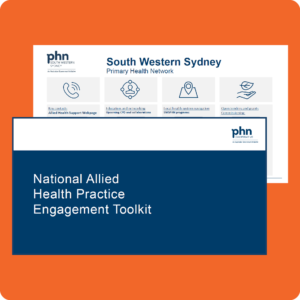 The National Allied Health Practice Engagement Toolkit is now available to support allied health professionals in South Western Sydney working in primary care.