04 May 2020

Residents in aged care facilities across South Western Sydney will now have access to improved mental health support after SWSPHN commissioned Parramatta Mission to deliver new psychological treatment services for residents with mild to moderate symptoms of common mental illness.


Why have we commissioned these services?

It is estimated that up to 52 per cent of older adults in Residential Aged Care Facilities (RACFs) experience symptoms of depression, and fewer than 1 per cent receive psychological support. Experience with other initiatives such as the Medicare Benefits Schedule (MBS) Better Access Initiative, suggests that up to half of this group of older people with mild to moderate depression may wish to receive mental health services if they were available to them. The new services are intended to enable residents of these facilities with mental illness to access mental health services similar to those available in the community which, in the past, have not been routinely available to older people living in RACFs.


When will the services be available?

The services are available now via telehealth. Initially, there will be a focus on engagement with RACFs and staff capacity building as well as individual telehealth support options.


Who can access the services/what is the eligibility criteria?

The services are intended to target people with a diagnosed mental illness who are residents of residential aged care. The new services are expected to primarily target residents with mild to moderate symptoms of common mental illness. However, residents with severe mental illness who are not more appropriately managed by a State or Territory Government Older Persons Mental Health Service, and who would benefit from psychological therapy, are not excluded. The services also target people who are assessed as at-risk of mental illness. Flexibility is important as mental health needs can be highly changeable in vulnerable older adults and it may not always be possible to obtain an early diagnosis.


Is there support for people who don’t speak English as a first language?

A free Telephone Interpreter Service will be available to support residents from diverse cultural and linguistic backgrounds to access mental health treatment services in their preferred language.


Are the services suitable for people with disabilities/dementia?

A person with co-morbid mental health issues alongside dementia or with a disability, will be eligible.


How can people access the services?

The intake processes will be tailored to meet the unique needs of each RACF. A GP referral is not necessary and self-referrals and/or relative/carer referrals will be accepted and assessed.


Where will these services be available?

Parramatta Mission will be engaging with RACFs in the early stages of implementation and the services will be rolled out across the region.


What should service-users expect?

The services will include individual psychological therapy as needed, group sessions and RACF staff capacity building activities, including mental health understanding through education sessions and Older Persons Mental Health First Aid Training to give aged care staff an insight to residents’ needs.


What should health professionals caring for the resident expect/ need to know?

Parramatta Mission will develop and implement a GP engagement plan which will establish an integrated treatment team involving RACF staff, treating clinical team and the resident GP.

For more information, please contact Rhonda Simpson at rhonda.simpson@swsphn.com.au or phone 0499 055 231.

07 April 2020

Australia’s 2.7 million unpaid carers now have access to greater supports, with the introduction of new Carer Gateway support services on 6 April.

The Australian Government is investing $550 million in support services for carers across the country through the Carer Gateway – the biggest carer support reform in Australia in more than a decade.

New services for carers include carer support planning, counselling, peer support, carer directed support packages and emergency respite services through the new Carer Gateway.

Some service delivery will be impacted by the Coronavirus (COVID-19) pandemic with current limitations on face to face contact.

Online and phone-based supports are already available, and carers can access these services by calling the national Carer Gateway number on 1800 422 737 or visiting www.carergateway.gov.au

These services are free to access for anyone caring for a family member or friend who is living with a disability, a long-term medical condition, mental illness, alcohol or drug dependency or someone who is frail due to age.

Anyone can become a carer at any time – through the birth of a child who has special needs, as a result of a loved-one’s accident or illness, if someone close to you has an addiction or a long-term health condition, and sometimes because the people we love simply get older.

Carer Gateway provides support through a network of regional Carer Gateway Service Providers. In NSW there are four service providers who are working collaboratively to deliver consistent support services for carers across the state.

Wellways Australia is the Carer Gateway Service Provider across the NSW regions of South West Sydney and Nepean Blue Mountains and will provide services in across this area.

Wellways Australia CEO Laura Collister said the Carer Gateway provided practical advice and support for all carers.  

“No matter where you are located, you can contact Carer Gateway on 1800 422 737 and be directed to the Carer Gateway Service Provider in your region who will help identify the supports best suited to your needs,” Ms Collister said.

“Getting help early can make a big difference to a carer’s life, reducing carer stress and improving wellbeing. The Carer Gateway is focussed on early intervention services to ensure carers get the support they need.”

Since July 2019, the Carer Gateway has been offering free phone-counselling and online self-guided coaching and skills courses through the Carer Gateway 
website www.carergateway.gov.au

30 March 2020

As of today (1 April 2020), people requiring support for their severe and persistent mental illness can now receive services under the SWSPHN commissioned You in Mind program delivered by One Door Mental Health and Community Links Wellbeing. These changes do not apply to You in Mind services delivered by Connection Emotion Reflection.

Due to these changes, the Connect for Wellness program delivered by Wellways will cease to accept referrals. Previous clients of Connect for Wellness will be transitioned into the You in Mind Program through a warm handover process.

To find out more.

As of 1 April 2020, people requiring support for their severe and persistent mental illness can now receive services under the SWSPHN commissioned You in Mind program delivered by One Door Mental Health and Community Links Wellbeing. These changes do not apply to You in Mind services delivered by Connection Emotion Reflection.

Due to these changes, the Connect for Wellness program delivered by Wellways will cease to accept referrals. Previous clients of Connect for Wellness will be transitioned into the You in Mind Program through a warm handover process.

You in Mind will provide psychological therapies for people who are part of one of the following eligible groups:

  • Experiencing a mild to moderate mental illness and identify as one of these populations:
    • Aboriginal and Torres Strait Islander
    • Culturally and Linguistically Diverse groups
    • Residents of Claymore, Airds and the 2168 postcode
    • People living in Wollondilly and Wingecarribee with barriers to using Better Access (Medicare) services
    • LGBTQAI+
    • Older people
    • Financial disadvantaged
    • Perinatal depression

OR

  • Experiencing a severe and persistent mental illness

Psychological therapies are delivered by mental health professionals and are matched to the person’s mental health needs (short and medium-term clinical supports). 

For current referrals relating to Connect for Wellness please contact Wellways directly at connectforwellness@wellways.org or call 4666 0512. If you have referred patients to Connect for Wellness and they are currently engaged in the program, you will receive a separate communication from Wellways.

For all SWSPHN referral and intake enquiries please contact SWSPHN Mental Health Intake Line on 1300 797 746.

24 March 2020

Over the past 12 months,  South Western Sydney PHN (SWSPHN) and South Western Sydney Local Health District (SWSLHD) have been working together to develop a Regional Mental Health and Suicide Prevention Plan to 2025. The development of a joint regional mental health and suicide prevention plan is an action under the Fifth National Mental Health and Suicide Prevention Plan.

The Regional Plan promotes the partnerships and integrated approaches in order to reduce the impact of mental illness and suicide in the South Western Sydney.

The Regional Plan has been informed by an extensive consultation with over 200 participants including people with lived experience, their families, carers, SWSLHD clinicians and managers, Aboriginal and Torres Strait Islander organisations, local general practitioners, along with peak bodies and other government and non-government services and agencies.

Over the next five years, the Regional Plan will establish an integrated approach for collaborative actions to improve the provision of better integrated mental health and related services in South Western Sydney.


The draft Regional Plan is now available for review and comment.

Who can share feedback?
If you are a local community member, NGO, service provider or health professional you are invited to comment and share your feedback on the draft Regional Plan. 

You can see the draft Regional Mental Health and Suicide Prevention Plan here. Download icon phn blue

Share feedback on the draft Regional Plan
 Give feedback online >

You can also give feedback via email if you prefer.
Email SWSLHD-areaserviceplanning@health.nsw.gov.au 

Opportunities to comment and share feedback close on 9 April 2020.

Questions about the draft Regional Plan?
Contact Diana Milosevic, Senior Planner, SWSLHD Planning Unit
Phone: 8738 5719
Email: Diana.Milosevic@health.nsw.gov.au

13 March 2020

Tackling the Challenge (TTC) encourages local men to share their stories of overcoming physical, psychological and social health issues with the aim of opening a healthy discussion on men’s health.

TTC is led by the South Western Sydney Mental Wellbeing Health Promotion Team in partnership with government and non-government services including Western Sydney University.

Community Pulse is publishing a series of these stories. If you have a story to share, please contact Brendan Bennett on 8738 5983 or Brendan.Bennett@health.nsw.gov.au


Malcolm reflects on his journey

The Tackling the Challenge: Talking Men’s Health project gives a voice to men’s health and shares stories of overcoming life’s challenges to encourage other men to ask for help.

In this story, Malcolm shares his life journey.

By the age of 30, Malcolm had accomplished many things most would only dream of. He had received all of his engineering qualifications, owned properties, worked a variety of jobs and travelled for three years across 36 countries. Despite this, Malcolm felt adrift.

Returning to Australia from working overseas, Malcolm married for the first time and entered the hotel business as part-owner of an establishment with his family members. “So here I was, early 30’s with my name above the door of a hotel – I was very proud”.

Malcolm and his wife welcomed pregnancy news and opted out of the hotel business to focus on their new family.

They welcomed a baby daughter into their lives who was born with Down syndrome. At the time, Malcolm felt a sense of shock then guilt, despite professional reassurance that a person who has Down syndrome can go on to live quite an ordinary life in the community.

Living with a sense of helplessness and feeling to blame, Malcolm started to unravel.

He made some business decisions which did not go his way and lost financial stability. He felt increasingly low and began to grow disconnected from his family. His relationship ended in divorce and he moved out of the family home. “I was in depression, deep depression,” he said.

Malcolm moved to Sydney and lived with friends, working as a taxi driver to make ends meet. “I reached such a low point, I felt like a total nobody and didn’t know which way to turn,” he said.

During this time, Malcolm disguised the extent of his mental distress to his extended family but a good friend suggested he seek professional support from a nearby counsellor at Catholic Care.

Over time, the counsellor helped Malcolm identify and understand what he was going through. She guided Malcolm away from holding blame for his daughter’s intellectual disability and she provided him with tools to support his recovery from depression.

Malcolm’s recovery journey included non-judgemental support from a life-long friend who understood the depths of his depression; therapeutic support; re-engagement with study; and joining a social group which helped him form new connections with others across Sydney.

“Suddenly, life started to look up because I was mixing with lots of people,” he said. 

He also credits his Christian faith which has grown as a result of facing the highs and lows of life. 

In this social group, Malcolm met his second wife and moved to the Southern Highlands to support her new role as a teacher. Malcolm also credits his second wife for supporting him through his recovery.

Sadly after 26 years of marriage and a second daughter, his wife passed away from cancer.

Now, Malcolm is proudly part of the Bundanoon Men’s group ‘Men at Shop’. This group is mainly retired men from a variety of backgrounds who meet weekly for an hour over a cup of coffee.

“I often sit there and observe four separate conversations happening around the table, it’s never the same blokes together,” he said.

This group helps men connect with the community to combat loneliness, often after their partners have passed away. “It’s a great way for blokes to get out and be with other blokes,” he said.

Malcolm is grateful and content with his life and his advice to other men is to make sure they have people around who they can trust, to talk to about how they feel and why.

Further support can be provided by a GP or heath professional. You can also contact Lifeline on 13 11 14 or the Mental Health Access Line on 1800 011 511.

18 February 2020

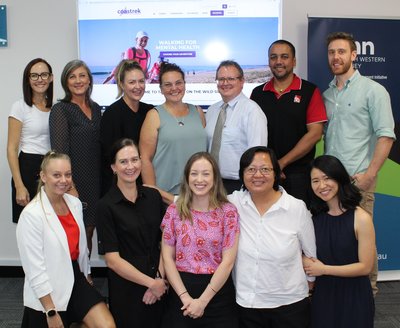
We’ve got a group of 16 committed staff in training to take up the Coastrek Challenge on Friday, 27 March and your support is needed to help us meet our fundraising goal of $10,000!


What is Coastrek?

Coastrek on Friday, 27 March is a hiking challenge which is raising funds for Beyond Blue.

There are 60km, 30km and 15km options, and this year’s route is along the Northern Beaches of Sydney, starting at Palm Beach, South Curl Curl Beach and North Harbour Reserve, Balgowlah (respectively).

Find out more:

Coastrek

Watch the Coastreak video

What is Beyond Blue?

Beyond Blue is an independent, not-for-profit organisation working to reduce the impact of anxiety, depression and suicide. It provides information and support to help Australians achieve their best possible mental health, whatever their age and wherever they live.

Find out more:

Beyond Blue


Who are our teams?

60km

Team 1 – Perception vs Reality

Team 2 – Cirque de Sore Legs

30km 

Team 3 – SWSPHN Happy Feet

15km

Team 4 – Sea Breezes

Donate to Coastrek

14 February 2020

SWSPHN has had success with a recent project which aimed to increase the mental health literacy of young people, and adults who work with young people, from culturally and linguistically diverse (CALD) backgrounds.

We commissioned Mental Health First Aid Australia to deliver and evaluate CALD Youth and Teen Mental Health First Aid in Fairfield.

The project involved training youth and teen Mental Health First Aid instructors and developing resources.

Western Sydney University was engaged to undertake research and evaluation of the effectiveness of the project.

The project found that training led to an improvement in mental health literacy, thereby leading to the improvement in youth mental health in areas with high CALD populations.  

Read the Evaluation Report

An article has also been published in the International Journal of Mental Health Systems.
Read the article

14 February 2020

Tackling the Challenge (TTC) encourages local men to share their stories of overcoming physical, psychological and social health issues with the aim of opening a healthy discussion on men’s health.

TTC is led by the South Western Sydney Mental Wellbeing Health Promotion Team in partnership with government and non-government services including Western Sydney University.

Community Pulse is publishing a series of these stories. If you have a story to share, please contact Brendan Bennett on 8738 5983 or Brendan.Bennett@health.nsw.gov.au


A builder learns how to rebuild

After 28 years together and two lovely daughters, one now living in London, Annie found that over time her distress levels were increasing. Annie was feeling overwhelmed, helpless and had become mentally unwell. It took some time for husband, Ian, to realise what was happening.

“If someone falls over and breaks a leg, you know straight away they’re in trouble. But with mental illness it’s so important to encourage people to seek help when they need it,” he said.

After becoming unwell, and with the help of Ian, Annie sought help from a range of mental health services over many years for ongoing support with her treatment and recovery. Tragically, nine years ago Annie died by suicide.

“That morning we just sat in the kitchen chatting away for ages over a coffee. At about 10, I said I had to pop down the road to finish off a building job and would be back in time for lunch,” Ian recalled.

“After I left, she apparently went outside and watered the garden and chatted for a while with the neighbour. Then she got in the car and drove off. And that was that.”

Ian was crushed after his wife’s passing and in the back of his mind was a sense of blame for not doing more to help Annie. On any given day, the best Ian could hope for was a reason to get out of bed.

“It was as if the whole shape and framework of my life just collapsed with Annie’s passing. Meaning, purpose and routine ceased to exist. I found myself looking for things that would drive me forward: past the grief; past the anxiety; past the what-ifs.”

Overnight he went from being a tower of strength for his wife to being a man with new and emotional challenges to face. That’s how quickly things can turn.

Across Australia, one in five (20 per cent) people aged 16 to 85 will experience a mental illness in any year. Every day, at least eight Australians die from suicide and a further 30 people will attempt to take their own life.

“In our society we’ve placed a stigma on mental illness and that’s a massive problem. Because if you won’t even acknowledge the wound, how are you going to stop the bleeding?”

For Ian, activities with the ‘get-out-of-bed factor’ were what supported him get through this difficult time. Spending more time with his daughters was high on that list as well as church and prayer. Ian dived into community connections and became the international service director for the Bowral/Mittagong Rotary club and also renewed ties with his old ski club.

He travelled overseas to take time to reconnect with himself and his brother. When he wasn’t travelling he was working as builder, cycling, meeting new people and taking part in new activities.

A short while back, Ian rang up a close friend and asked him how he was getting on and the response was ‘yeah, I’m ok’.

As a result of his recent experience, Ian visited this friend and they spent the afternoon together chatting. Ian listened and supported his friend and provided advice to always seek support early.

What worked for Ian came in the form of personal and community connections. A range of professional help-seeking psychological services are available in the Wingecarribee Shire and can be accessed through a GP.

If you need further support, you can also contact Lifeline: 13 11 14.

Also, the Mental Health Line is a state-wide 24-hour mental health telephone access and information service. To call: 1800 011 511.

Find out more about Tackling the Challenge

14 February 2020

SWSPHN has commissioned the training of 11 Aboriginal Mental Health First Aid Instructors.

Aboriginal identified staff from a range of organisations, including Tharawal Aboriginal Corporation, South Western Sydney Local Health District, Lifeline Macarthur, NSW Police, Justice Health and St Vincent de Paul Society NSW, undertook the training and became accredited by Mental Health First Aid Australia.  

Prior to completing the training, there were no accredited Aboriginal Mental Health First Aid Instructors based in South Western Sydney.

The new instructors are working together to coordinate delivery of training across the region, in the hope of increasing the mental health literacy and capacity of community members and workers who assist people from an Aboriginal background who are experiencing a mental health problem or mental health crisis.

Find out more about the Aboriginal Mental Health First Aid course

For enquiries or to be put in touch with an instructor, please email jade.weidner@swsphn.com.au.

04 February 2020

We’ve expanded our You in Mind program to include low intensity Cognitive Behavioural Therapy (CBT). ‘You in Mind Low Intensity’ is based on the model fidelity of the NewAccess program, developed by Beyond Blue.

The service is utilised as a lower intensity intervention to support patients who are feeling stressed, anxious or overwhelmed due to the pressures of everyday life such as work, study, relationships, health issues or loneliness. It is delivered by specially trained coaches, who receive regular clinical supervision.

Through the addition of Low Intensity CBT, the You in Mind Program can now cater for the needs of patients who require intervention for mild mental health concerns. Any changes in the treatment approach for your patient will be conveyed to you in writing – no additional referral will be required.

  • You in Mind Low Intensity: low intensity intervention for mild mental health concerns
  • You in Mind: moderate intensity intervention for moderate mental health concerns

You in Mind Low Intensity Service Providers:

  • Community Links Wellbeing: Wollondilly and Wingecarribee
  • One Door Mental Health: Bankstown, Camden, Campbelltown, Fairfield and Liverpool

Referral Templates:

SWSPHN GP Mental Health Referral Form.

For referral enquiries, call 1300 797 746 (1300 SWS PHN).