08 March 2021

In her monthly column, Dr Jan Orman from the Black Dog Institute is providing reliable evidence-based Australian online resources for mental healthcare. In this month’s column Dr Orman looks at BITEBACK – www.biteback.org.au


The BITEBACK website from Black Dog Institute is a positive psychology-based website designed for young people between the ages of 13 and 18 (though many older people have used and benefitted from its contents).

BITEBACK is helpful for young people who are struggling, teaching them emotional survival skills like mindfulness and gratitude using creative techniques that keep them interested and engaged.

One of the great features of the BITEBACK site is its 6 Week Mental Fitness Challenge which provides a structured way for young people to build their resilience. Week by week it focusses on things like gratitude, identifying personal strengths, learning mindfulness skills and making social connections. At the end of the program the site develops a downloadable wellbeing plan based on the user’s activity in the program. It’s free, fun and anonymous and to my mind is potentially helpful for lots of people – not just teenagers.

To find more information

16 February 2021

Butterfly’s Youth Program, a skills-based group therapy treatment program for young people aged 18 to 25, is open for referrals. The program is based on Enhanced Cognitive Behaviour Therapy (CBT-E) and Butterfly’s clinicians are trained to work with young people living with body image issues and eating disorders. The program is currently delivered via Zoom and is open to anyone aged 18 and 25 years, anywhere in Australia.

In a safe, supportive and recovery-focused environment, trained clinicians will aim to help patients:

  • Develop skills to manage stress and emotions
  • Manage relationships
  • Increase mindfulness
  • Learn self-compassion
  • Improve body image
  • Reduce symptoms of their eating disorder
  • Build a healthier relationship with food

The program runs for two hours a week for 12 weeks and can supplement treatments participants may be already receiving.

  • Next daytime program starts: 5 April 2021
  • Next evening program starts: 22 March 2021

To find out more

15 February 2021

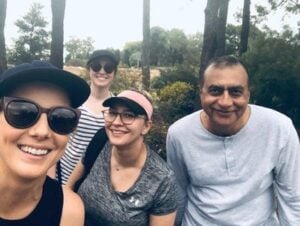
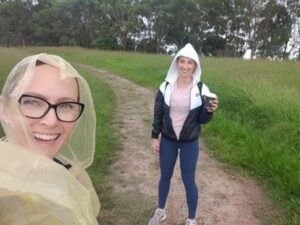
The opportunity for fun, fitness and fundraising – Coastrek – is back and SWSPHN has three teams taking part this year, in the 60km, 30km and 15km treks.


What is Coastrek?

Coastrek on Friday, 19 March is a hiking challenge which aims to raise $1 million for Beyond Blue.

There are 60km, 30km and 15km options, and this year’s route is along the Northern Beaches of Sydney, starting at Palm Beach (60km), Long Reef (30km) or Balgowlah (15km) to Mosman.

Find out more:

Coasttrek


What is Beyond Blue?

Beyond Blue is an independent, not-for-profit organisation working to reduce the impact of anxiety, depression and suicide. It provides information and support to help Australians achieve their best possible mental health, whatever their age and wherever they live.

Find out more:

Beyond Blue 


This year’s Sydney Coastrek is booked out but you can still support the cause by making a donation.


15 February 2021

Peer support is now available through the You in Mind program which provides free psychological therapies for people (12 years and above) experiencing moderate-severe mental illness. The program is delivered by mental health professionals across South Western Sydney.


Who is eligible for You in Mind?

  • Living with stress, anxiety or depression and from one of the following populations:  
  • Culturally and linguistically diverse or from a refugee background
  • Aboriginal or Torres Strait Islander
  • Living in the rural areas of Wollondilly and Wingecarribee, with barriers to gaining support through Better Access (Medicare) services
  • Residents of Claymore, Airds and the 2168 postcode 
  • LGBTQAI+
  • Older People
  • Financially Disadvantaged
  • Perinatal Depression

Or

  • Experiencing a severe and enduring mental illness


Who provides the peer support?

SWSPHN has commissioned One Door Mental Health to provide the new peer support component of the You in Mind program, in partnership with Community Links Wellbeing.

Consumer peer support workers use their own lived experience of mental illness and accessing services to support clients in:

  • Understanding what to expect from engaging in psychological therapy
  • Psychoeducation
  • self-advocacy
  • Linking with other supports (e.g. psychosocial support)


How do I know if peer support will be best for me?

Once accepted into the You in Mind program, clients will be assessed to determine if they would benefit from peer support.


How do I find more information about peer support?

Contact One Door Mental Health

14 February 2021

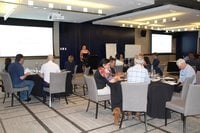
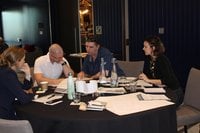
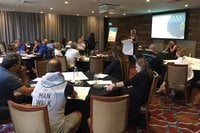
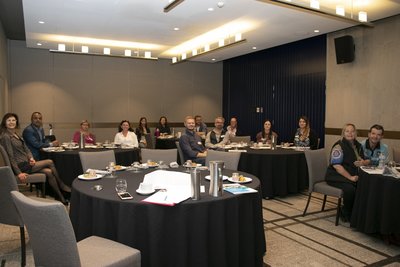
Passionate, enthusiastic and innovative community members and services providers came together with SWSPHN recently to create design briefs for new local mental health services which could transform the way men at risk of suicide access supports.

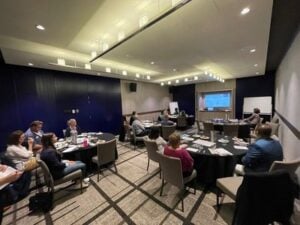
Eighty-three participants attended our Men’s Proactive Suicide Prevention co-design sessions at Campbelltown and Mittagong on 3 and 4 February.

We’ll be developing and funding a range of new men’s suicide prevention initiatives over the coming years to reduce the alarming rate of male suicide.

The co-design sessions gave local people an opportunity to contribute to the development of local services.

Presentations from existing services which have already tailored programs towards men inspired participants early on in the sessions and helped spark crucial early conversations about the best practice approaches to men’s suicide prevention.

Consumers, carers and family members whose lives have been touched by suicide also spoke, reminding participants of the importance of tackling the significant mental health concern.

Our Mental Health Manager Christopher Jones received a positive response from participants.

“Participants said the sessions provided a tangible way to put forward their ideas and visions for change,” he said.

“They also said that through the creation of their own design brief, both individually and with like-minded people, they gained a sense that they are able to be part of a wider vision that influences how programs and services should be funded and made available in South Western Sydney.”

Our mental health and commissioning staff will now work closely with the co-design consultant to review the design briefs and develop programs and supports within the coming months.

09 February 2021

Welcome to the first of our regular columns by Dr Jan Orman from the Black Dog Institute providing reliable evidence-based Australian online resources for mental healthcare. In her first column Dr Orman looks at Portals to Care – online repositories of all the information you need to start using online resources. There are three major Australian portals:

Online mental health resources can look like a confusing mass at first glance. There is so much available and is hard to know how they can be useful.

The best places to start to find information about what’s available and what would suit the people you are helping manage their psychological wellbeing are portals. They are online repositories of all the information you need to start using online resources.

There are three major Australian portals:


Head to Health

Head to Health is a constantly evolving website that provides information for consumers and health professionals about Australian online mental health resources. It has great search functionality. Searches can be filtered to suit patient characteristics like age and cultural group. A function called Sam the Chatbot provides easy access to information about resources to suit specific needs. Asking Sam to recommend something for a specific symptom will lead to a list of appropriate resources including websites for psychoeducation, apps and online treatment programs. Find the portal at www.headtohealth.gov.au and while you are there you might notice that there are specific sections for people affected by the Black Summer bushfires and those experiencing CoVID related distress. Head to Health provides direct links to all the resources it recommends.

Head to Health


WellMob

WellMob is an Aboriginal and Torres Strait Islander specific portal that provides links to more than 200 culturally appropriate online resources to promote cultural and emotional wellbeing. These resources differ from more Western style resources by including much more narrative based material in the form of audios and videos of peoples’ stories as well as the more traditional sorts of resources including online assessment tools and treatment programs. It’s a very important and useful site for anyone looking for material to support their work with indigenous patients and clients.

WellMob


MumSpace

MumSpace is a site that will lead you to a host of resources to support the mental health of parents in the perinatal period. These include websites, apps and treatment programs. Definitely something worth knowing about as we see people struggling with the demands of parenthood. 

MumSpace


Take a look at these sites and we’ll come back to talk about some of the to the individual resources they recommend and how to use them in future columns.

For more information and training go to:

Black Dog Institute: e-Mental Health in Practice

30 November 2020

After three years and lots of hard work, SWSPHN and SWSLHD have launched our Regional Mental Health and Suicide Prevention plan for South Western Sydney – a roadmap for supporting the mental health needs of our region’s residents.

Those who attended the virtual event on 19 November heard from our CEO, Dr Keith McDonald PhD, and SWSLHD Chief Executive Amanda Larkin, in addition to SWSPHN and SWSLHD staff. We also got the perspective of service providers and people with lived experience on what the plan means to them.

The plan includes input from more than 200 people from organisations, services, hospital staff, GPs, people with lived experience and carers, Indigenous support services, schools and community services across South Western Sydney.

It will guide local efforts to improve access to mental health support in areas including referral pathways, integration, and collaboration within the mental health sector and relevant community and health services.

In a video message, Dr McDonald welcomed the plan as the next important step in addressing our region’s mental health needs, saying up to 166,000 people in our community were impacted by some level of mental illness in any given year.

He explained that integration was the concept underpinning the regional plan.

“Integration to remedy the fragmentation that people with mental health issues experience all too often, integration to break down the silos and to ensure services are working together,” he said.

“By tapping into all the networks and services both organisations work with on a daily basis, we have been able to build a comprehensive snapshot of the needs of consumers, services and the wider community.”

In the video Ms Larkin said the plan’s vision was to provide treatment, care and support for individuals which was personalised and provided by the right service at the right place, at the right time.

“Our vision is that services work with those accessing support in a coordinated way to understand them and holistically meet their needs,” she said.

“Mental health and suicide prevention services must be affordable, family-inclusive and free from discrimination and stigma.”

The plan received praised from representatives of local services and those with lived experience and carers who spoke at the launch.

Representatives from The Benevolent Society/headspace, Community Links Wellbeing, One Door Mental health and South Western Sydney Recovery College/MDS took the opportunity to talk about their services and what the plan will mean for their clients.

Larry Whipper from Community Links Wellbeing said he was excited to see the plan come together and that it showed someone was listening to the needs of rural communities.

Debbie Graham from South Western Sydney Recovery College and MDS said the plan provided a roadmap and would strengthen what her organisation was already doing.

Carer, Cheryl Paradella, said if the plan was used the way it was set out, it would be successful in bringing together different organisations.

Ashley Reynolds, a senior peer worker at SWSLHD, shared her lived experience of mental illness and recovery.

“For the first 20 years of my life the symptoms were devastating… it impacted by ability to take part in everyday life,” she told the launch.

“The plan brings together many things that are meaningful to me. I didn’t feel safe to reach out for support. There was a lack of readily available information about where I could go for support; lack of actual services was an issue as well.

“The plan works to address issues that I experienced navigating the mental health system in South Western Sydney.”

Read the plan

16 November 2020

Mentoring Men provides life mentoring programs for men in the community and is presenting The Connection Experience, starting Wednesday, 18 November.

The program is designed to give younger men, aged typically 18 to 32, a better idea of what’s involved in mentoring conversations and support.

It aims to help participants find answers to sometimes hard to ask questions such as:

  • How do I connect with the activities I want to do in life?
  • How do I get better connected with friends and groups?
  • What are my options when it comes to living the life I want to live?

Bookings/enquires can be made at mailto:info@mentoringmen.org.au

Find out more

30 October 2020

Thirty local Indigenous men came together to share their experiences and potential solutions at a recent co-design workshop to develop a proactive approach to suicide prevention among Aboriginal men.

SWSPHN hosted the 6 October workshop which had participants from Gooboora men’s social support group and Dharawal Men’s Aboriginal Corporation, and was facilitated by former NRL player, professional boxer and mental health advocate, Joe Williams, SWSLHD’s Mervyn Taylor and mental health consultant Jenni Campbell.

The workshop took a relaxed rather than structured approach to co-design, allowing attendees to share their experiences and potential solutions in a cultural context.

The co-design process will ultimately fund non-clinical suicide prevention approaches for Indigenous men.


What will the program do?

  • Provide more timely and appropriate access to supports for Aboriginal men experiencing distress
  • Support men in cultivating an improved sense of individual and cultural identity and belonging
  • Support men in developing an improved understanding of, and connection to, culture
  • Strengthen positive support people and networks available to individuals throughout the local community.

10 October 2020

What does it feel like to have a mental illness? How does a carer of someone with a mental illness cope with their role?

Tune In to the Campbelltown Living Library during Mental Health Month and hear local stories of people with a lived experience of mental illness, of being a carer or professional in the mental health sector, answer these questions.

Connect to the Living Library on Facebook Live via Libraries Facebook page or via SWS Wellbeing Facebook page on 19 and 26 October, 10am to 11am.
 

Find out more