South Western Sydney PHN is a not-for-profit health organisation dedicated to supporting general practitioners, practice nurses and other primary health providers.
The strong focus on primary care, with the tripling of the bulk billing incentive and investment in the health workforce to better meet the health needs of the Australians in the 21st century, were among the welcome features of Tuesday’s Federal Budget.
South Western Sydney Primary Health Network (SWSPHN) Acting Chief Executive Officer, Kristen Short, said there was little doubt primary care had been struggling in recent years, with fewer practices in a position to bulk bill, further highlighting the need for strong and ongoing funding commitment for the sector.
“The $3.5 billion committed to bulk billing incentives, $98.2 million for new Medicare rebates for patients who require consultations of longer than 60 minutes and $445.1 million to support team-based care in general practice, are welcome measures to support the revival and protection of a healthcare system which has served us well for decades,” she said.
Other investments of interest to primary care, in particular general practices in South Western Sydney include:
$358.5 million for Medicare Urgent Care Clinics
$143.9 million for after hours primary care
$91.5 million to improve mental health by addressing workforce shortages
Ms Short said SWSPHN had a particular focus on innovative projects like iRAD, the New to General Practice Nursing program and My Care Partners to build capacity and support our general practices in delivering accessible, effective and timely care to our community.
She noted investment in digital health ($951.2 million); increasing the number of nurses in primary care ($10.7 million); and increasing incentives for general practices to employ a range of health professionals to provide team-based primary care ($445.1 million) would support those projects which were already improving the health of our region.
“Primary care is the cornerstone of our healthcare system, and SWSPHN looks forward to continuing to work with and support primary care providers across our region on the projects, services and other activities funded in this budget.
“We particularly welcome the focus in the budget on multidisciplinary team care and voluntary patient enrolment and look forward to seeing how it complements our local medical neighbourhood model of care, My Care Partners, which has been working for the past two years to reduce avoidable hospital admissions and enhance care coordination for people with multiple chronic diseases.”
19 April 2023
SWSPHN has funded a theatre project which focuses on mental health stigma, and promotes mental health support and recovery in Arabic speaking communities.
The play, The Black Box, features natural disaster themes and aims to increase community awareness of how to access mental health services during a natural disaster, and encourage people to talk more openly about the impact of mental health.
The shows will be performed on:
Friday, 26 May, 6.30pm at Casula Powerhouse, 1 Powerhouse Road, Casula
Friday, 9 June, 6.30pm at Fairfield School of Arts, 19 Harris Street, Fairfield
Individuals and organisations working with refugees need to recognise and respond appropriately to the unique vulnerability and specific needs of lesbian, gay, bisexual, trans, intersex and gender diverse peoples.
In many parts of the world, individuals are still subject to serious human rights abuses because of their real or perceived sexual orientation, gender identity, gender expression and sex characteristics, particularly when these do not conform to dominant social and cultural norms.
Severe persecution and discrimination in more than 70 countries continues to force LGBTIQ+ persons – including children, youth, older people and people with disabilities – to leave their home in search of a safe environment in which they can fully exercise their rights.
The Australian Government has promised to fulfil refugee quotas during the next four years with additional places given to Afghani refugees.
Between 2021 and2026 there will be some 31,500 permanent visa places for Afghani refugees.
Priority will be given to locally engaged employees and their immediate family, family members of class XB visa holders, women, girls, ethic minorities, LGBTIQ+, and other identified minority groups seeking refuge.
The NSW Refugee Health Service has developed a series of informative webinars to give participants the opportunity to learn about different refugee health topics from experts in the field. The first in the series on Friday, 21 April, at 12pm is about The impact of displacement on the health of LGBTQI+. Register to receive your e-ticket and link to login on the day.
22 March 2023
SWSPHN staff joined the Harmony Week celebrations last week with activities which gave everyone the opportunity to share, learn and appreciate Australian multiculturalism.
Harmony Week, 20 to 26 March, is about inclusiveness, respect and belonging for all Australians, regardless of cultural or linguistic background, united by a set of core Australian values.
The message of Harmony Week is everyone belongs.
We held our activities on Harmony Day on Tuesday, 21 March.
Our staff wore orange, the colour chosen to represent Harmony Week, while:
Enjoying a lunch of flavours from around the world
Hearing first-hand the experiences of a staff member who came to Australia as a refugee in 1993 to escape the Bosnian war
Pinning our places of cultural identity on a world map
Participating in the How diverse is your universe? activity
GPs are being sought to participate in a working group to kickstart conversations about how different models of brain health lifestyle care can be used to support multi-ethnic individuals living in South Western Sydney.
Our region has a large multicultural population, with 54.1 per cent of households speaking a non-English language (compared to NSW’s average of 26.5 per cent).
Dementia prevention is a major public health priority yet programs targeting lifestyle and dementia risk modification are yet to be broadly implemented into practice and have been developed mainly using a Western-centric model of care.
Primary care professionals are often the first point of contact for older adults. As such, general advice and support discussions on lifestyle factor management are best suited to be provided in primary care.
Although key Australian policy guidelines specify a role for GPs to promote brain health, it is not routinely delivered, with only 15 per cent of Australian patients hearing about dementia from their GP.
The working group will aim to bridge the gap between current practice and routine promotion of brain health for dementia risk reduction.
If you’re interested in joining the working group, please contact Dr Joyce Siette, Research Theme Fellow Health and Wellbeing from Wester Sydney University, via email at Joyce.Siette@westernsydney.edu.au
16 February 2023
You are invited to a health forum to promote International Day of Zero Tolerance for Female Genital Mutilation/Cutting.
The theme for this forum is: Partnering with men and boys to transform social and gender norms to end FGM.
When:Tuesday, 28 February 2023, from 11am to 1pm
Where: Westmead education and conference centre. Level 1 Education block L1.02 Cabaret
Cnr Hawksbury and Darcy Roads, Westmead.
Speakers include:
Nesrin Varol Clinical Associate Professor at Sydney Medical School: “Health consequences of FGM on women/girls”.
Dr Ngatho Mugo, NSW Health “Make your voice heard: understanding men’s perceptions, views and opinions about FGM”.
Mr Vedi Kurnia Buana, Consulate General of Indonesia
Q&A led by A/Prof Olayide, Ogunsiji, WSU: “The role of men and boys in the community to stop FGM practise”
This is a free forum and includes light refreshments.
Dr Ngatho Mugo Community Education Officer: NSW Education program on FGM/C; Mob: 0427360692; E: Ngatho.Mugo@health.nsw.gov.au
Dipti Zachariah Multicultural Health Team Leader, Statewide and Specialist Programs; Mob: 0400524065
15 February 2023
South Western Sydney PHN (SWSPHN ) will be joining the annual celebration of diversity during Harmony Week, 20 to 26 March and we encourage you to get involved too!
Harmony Week is a time to celebrate Australian multiculturalism and the successful integration of migrants into our community.
The message of Harmony Week is everyone belongs.
It is about inclusiveness, respect and belonging for all Australians, regardless of cultural or linguistic background, united by a set of core Australian values.
SWSPHN will celebrate the cultural diversity of our staff through activities every day during Harmony Week and we’ve already started putting together our SWSPHN Taste of Harmony Cookbook.
Start organising your Harmony Week activities. Go to the Harmony Week website for ideas on how your school, community or sporting groups, or workplaces can get involved.
And don’t forget to wear orange to show your support during Harmony Week.
Did you know?
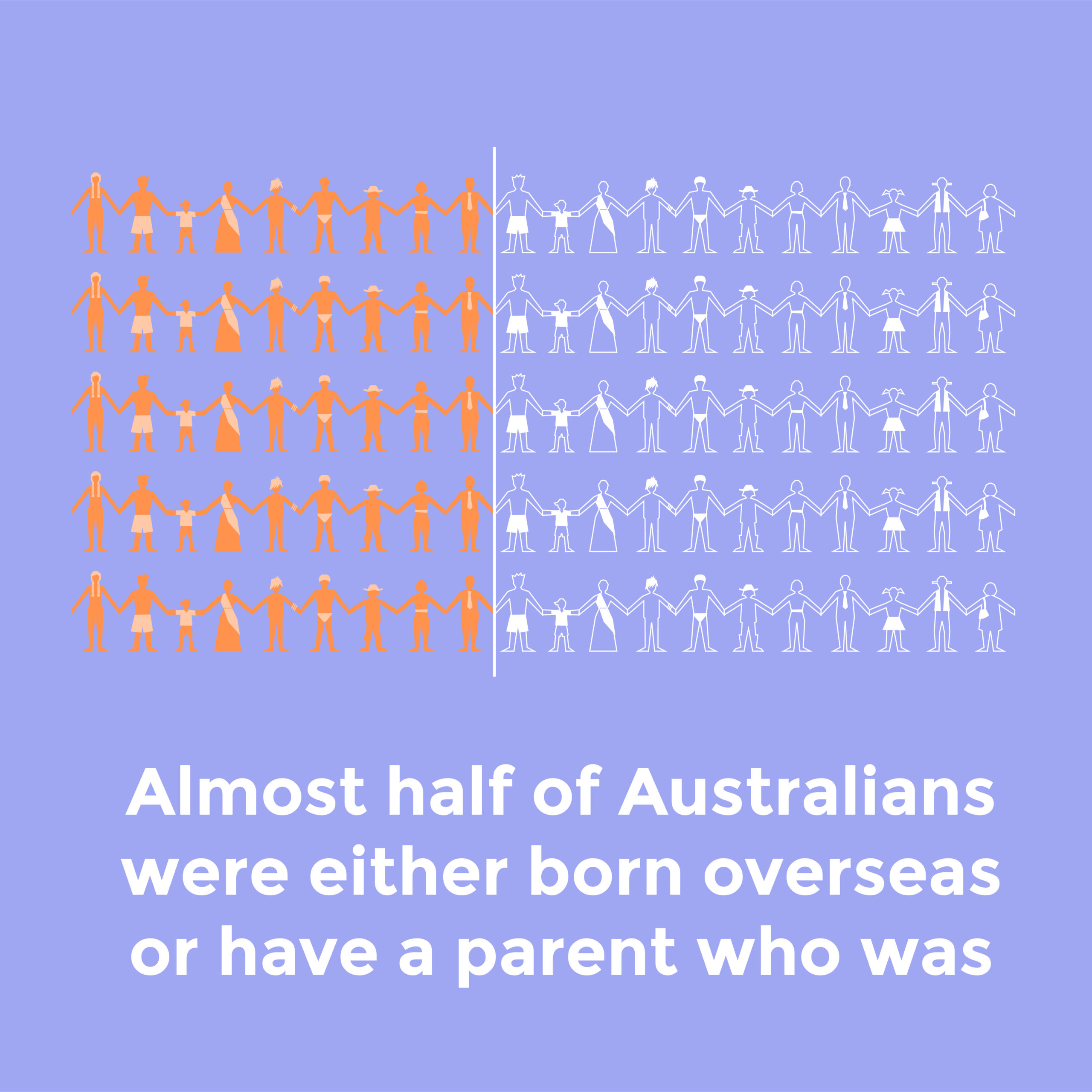
Almost half (49 per cent) of Australians were born overseas or have at least one parent who was.
We identify with more than 300 ancestries.
Since 1945, more than 7.5 million people have migrated to Australia.
85 per cent of Australians agree multiculturalism has been good for Australia.
Apart from English, the most common languages spoken in Australia are Mandarin, Arabic, Cantonese, Vietnamese, Italian, Greek, Tagalog/Filipino, Hindi, Spanish and Punjabi.
More than 70 Indigenous languages are spoken in Australia.
Find out how to register and use the free interpreting services for mental health service providers commissioned by PHNs.
From 1 February 2023 all mental health services commissioned by Primary Health Networks (PHNs) may apply to access free interpreting services funded by the Department of Health and Aged Care through the Translating and Interpreting Service (TIS National).
The Australian Government is investing $7.8 million over two years (2022-23 to 2023-24) to ensure interpreting services for mental health service providers commissioned by PHNs are available. Language services are designed to ensure that people with limited or no English language proficiency can access the services and programs they need, removing a significant barrier faced by Australians from multicultural backgrounds when accessing mental health support.
How to register for TIS National
To access TIS services, mental health service providers register for a client code via the TIS National website.
You’ll be asked to complete an online registration form.
For the first four questions of the registration form, answer as follows:
Category — choose ‘Commonwealth Government Agency’
Sub-category — choose ‘Other Commonwealth Government agency’
Name of organisation or agency — enter the name of your organisation/service
Section name — enter ‘PHN-Funded Mental Health Program’
TIS National will email you the unique client code once your application is complete. You will also receive a welcome email containing your account details and information on how to use the services.
Services who provide mental health services through different government programs, you need to register a separate client code for each one.
How to access TIS National
TIS National provides access to the following interpreting services:
Once you have a client code, you can book an immediate phone interpreter by calling TIS National on 131 450 or make a booking through your TIS Online account (onsite, pre-book phone interpreting and video interpreting can only be booked via TIS Online). You should use phone interpreting services unless there’s a genuine need for an on-site interpreter. Providers will need to quote their unique client code when booking an interpreter.
A guide to TIS National services ebrochure
Download TIS’s guide for different service types and help with deciding the most suitable format for your client. Interpreters are available in more than 160 languages.
Working in a community with a high population of refugees, the compassionate staff at Fairfield Chase Medical Centre are proud to work alongside the NSW Refugee Health Service to create a safe and seamless transition to the Australian primary healthcare system through their Refugee Health Clinic.
With a long tradition of welcoming refugees and migrants over many decades from many countries across the world, Fairfield is a unique and vibrant community. There are currently more than 19,000 Arabic speakers living in Fairfield, with more than 9,000 settling in the area as refugees.
Highlighting the clinic’s achievements in this space, we asked Selin Tekirdag, the practice nurse manager; Muthana Al-Iedani, an Arabic speaking practice nurse; Dr Allan Gregor, GP and practice principal; and other passionate practice staff about their experience working with this community.
This is what they said:
Why did the team begin working with NSW Refugee Health to assist the refugee community to access better healthcare?
Creating a space for the refugee community to feel safe and cared for is a passion of practice principal, Dr Allan Gregor.
Being from a similar background, he recognised a service gap and the difficulty refugees faced accessing healthcare once they’d arrived in Australia.
Expressing this passion with the team, and gaining the support of his entire practice staff, the team reached out to NSW Refugee Health to find out more about the entire process a refugee goes through upon arrival in Australia and how the two organisations could work together to ensure a seamless transition into the community.
Actively working with NSW Refugee Health means the team has access to resources and information making the transition to the Australian healthcare system, and the community, as seamless as possible for refugees.
What does this care involve?
Wanting to ensure there is a simple pathway with minimal barriers for this population to be able to look after their health, an important part of care is the environment. The newly refurbished Refugee Health Clinic in Fairfield Chase Medical
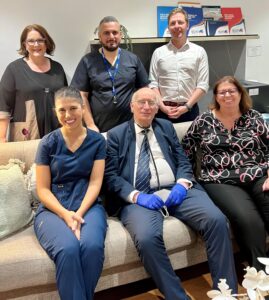
The team at Fairfield Chase Medical Centre.
Centre is calm and inviting, a stark contrast to the clinical setting of a regular consultation room.
An initial consult will involve meeting with a GP as a family, where routine screenings will take place and they are introduced to their nominated refugee health nurse, who will assist them throughout their healthcare journey.
The refugee nurse will carry out patient care from this point within the Refugee Health Clinic room and spend about an hour-and –a-half with each patient (sometimes there is up to five patients in one family) ensuring the patients are relaxed and do not feel intimidated by the whole process.
This first consultation will involve an overall health assessment, including a mental health check, vision and hearing checks, and will record smoking and alcohol history. The nurse will also provide general counselling, catch-up vaccinations, women’s health education, preventative health education and arranging referrals to any allied health services which may be needed to support the patient.
Fairfield Chase Medical Centre is also home to a number of allied health services, so patients do not need to go far, alleviating the risk of patients slipping through the cracks or not continuing their care. Education materials are also available for patients in language to support an ongoing positive health experience and to ensure patients feel comfortable returning to the clinic as well.
The clinic at Fairfield has also built relationships with STARTSS, a service for refugees, asylum seekers and people from refugee-like situations who have survived torture or other traumatic experiences associated with organised violence; and SSI, a service working with people who have experienced vulnerability, including refugees, people seeking asylum and culturally and linguistically diverse (CALD) communities, to build capacity and enable them to overcome inequality.
Why is this clinic important?
The refugee clinic delivers accessible urgent care to some of the most vulnerable members of our society. Often patients are unable to take advantage of, or are unaware of, all avenues of care available to them. It is wonderful the practice staff at Fairfield Chase Medical Centre are able to provide the opportunity to access care in a supportive setting.
Refugee patients often require a slightly different approach to healthcare, it is important to ensure background and experience is considered while introducing them to the Australian healthcare system. The refugee clinic establishes a clinical home for patients to come back to in the future.
What has the clinic allowed Fairfield Chase Medical Centre to achieve in the community?
The clinic provides clinical care for those who may have otherwise not searched for it. The current refugee health nurse Muthana has built strong and meaningful relationships with his patients through his own shared refugee experience. His dedication to the role has allows patients to feel comfortable and continue to attend the clinic, which has also helped to increase healthcare knowledge within the community through word of mouth.
What is the biggest challenge of the role and how do you overcome it?
The greatest challenge is generally the lack of understanding of the importance of preventive health and the important role of a healthcare plan. Many patients aren’t aware of how the Australian healthcare system functions, others have faced great difficulty in their home country making it hard to talk about.
Working with these patients to build a strong rapport and providing them with exceptional care throughout the entire process, practice staff ensure each family and individual patient is given the time they require to understand and feel comfortable with the process, their nurses, and the whole Fairfield Chase Medical Centre team.
What is most rewarding about the role facilitating care for such a diverse population?
The team is able to build therapeutic relationships between the patient, their families, and the overall refugee community. It is incredibly rewarding to see patients on their return visits and notice such a difference in their overall confidence in navigating the healthcare system, and of course seeing their healthcare being managed effectively.
How do you educate your patients about the importance of maintaining good health?
Ensuring staff speak in a way in which the patient can relate and easily understand is most important. Muthana is a fluent Arabic-speaker who can tailor the education efficiently and accurately to allow patients to also trust he is providing the care best suited to them as an individual.
By setting up the refugee clinic, the team is able to take all the time necessary for each patient to ensure they get the best outcomes. This includes educating each patient about their health and why it’s important to take up preventative health measures.
A massive thank you to Fairfield Chase Medical Centre for allowing this opportunity to discuss the Refugee Health Clinic.