17 November 2022

Asthma Australia has recently worked with parents of children with asthma from Arabic speaking backgrounds in South Western Sydney to help identify the issues, opportunities, priorities, and potential partners to better support young children living with asthma.

NSW Health funded the project which identified the need for asthma information resources in Arabic.

Asthma Australia has developed a range of resources in Arabic including a written Asthma Action Plan template, Asthma First Aid steps, Asthma what should I know? booklet and What your doctor needs to know information sheet.

If you would like to receive a copy of these resources, please email kelmir@asthma.org.au.

Read more about the project on Asthma Australia’s website:

Understanding the needs of primary school aged children with asthma from Arabic speaking backgrounds – Asthma Australia

Find other resources :

Resources – Asthma Australia

12 October 2022

SWSPHN has identified that people from some vulnerable groups may be vaccine averse due to the association between mRNA COVID vaccines and foetal cells.

In response, we have created an information sheet about Novavax to address this barrier.

It is available in English and the languages of our high-risk, low-vaccinated groups.

The Chaldean, Assyrian, and Arabic groups have lower than 25 per cent third dose vaccination coverage which increases their risk of COVID-related complications.

If you know of people who are vaccine adverse, particularly those in the identified groups above, please share with them this information about how Novavax is different.

06 September 2022

Odyssey NSW will begin delivering alcohol and other drug (AOD) services for culturally and linguistically diverse communities in South Western Sydney this month, following the imminent closure of Drug and Alcohol Multicultural Education Centre (DAMEC).

SWSPHN has funded DAMEC to deliver AOD counselling and case management in the region since 2017.

DAMEC works with culturally and linguistically diverse communities in South Western Sydney, with people speaking a range of languages, primarily Farsi, Vietnamese, Arabic, Mandarin and Cantonese. It employs multi-lingual counsellors in these and other languages.

After more than 30 years of service in the community, DAMEC has decided to cease operations and will not provide services after 30 September 2022.

SWSPHN will now fund Odyssey NSW to deliver AOD services in South Western Sydney. Transfer of services is ongoing and Odyssey NSW is expected to commence delivery on 12 September 2022.

In recognition of the high level of service provided by DAMEC over the years and to provide continuity of care to clients, Odyssey has retained existing staff where possible, to deliver the same model of care from existing phone numbers and address in Liverpool.

Where possible, clients will continue with the same counsellor.

Odyssey will recruit suitably qualified and culturally appropriate staff as required. 

Odyssey is a well-known and respected service in South Western Sydney, with alcohol and other drug treatment services operating in the region for more than 45 years.

In addition to their residential rehabilitation and withdrawal services, Odyssey operates community programs in Fairfield, Campbelltown and Bowral, as well as services in Western Sydney and throughout the Greater Sydney region.

SWSPHN looks forward to continuing an existing close relationship with Odyssey NSW and will provide ongoing support and funding for transition of care and ongoing culturally and linguistically diverse services.

Please direct questions to:

Val Burge, SWSPHN, Val.Burge@swsphn.com.au

David Kelly, Odyssey House, David.Kelly@odysseyhouse.com.au

05 September 2022

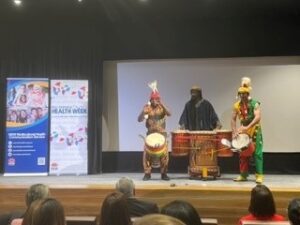
Multicultural Health Week this week (5 to 11 September) is an opportunity to raise awareness of health issues experienced by culturally and linguistically diverse communities. This year’s theme is Cancer Screening, with a focus on the three National Cancer Screening Programs.

The facts:

 Resources:

  • Multicultural Health Week website
  • Resource Directory listing Cancer Institute NSW all in-language resources
  • Language resources: Cancer Institute NSW has produced factsheets in 38 languages with key messages on the national cancer screening programs. They are downloadable as factsheets or as audio files (in eight languages). Access the resources here or here
Multicultural Health Week - launch
Multicultural Health Week launch.

Watch a video of the Multicultural Health Week launch.

18 July 2022

Do you want to help shape how health issues and information is communicated and promoted in your community?

Can you contribute time and teach others to monitor how important health information is being discussed in your community, and help identify misinformation online?

The Health Literacy Unit, Multicultural Services of South Western Sydney Local Health District (SWSLHD) invites community minded individuals from refugee backgrounds from South Western Sydney to be part of the South West Digital Health Literacy and Refugee Project.

Over 12 months, the project will provide you with training, support and experience to help you assess quality health information, identify and address misinformation, and engage with local health professionals and social media for your community.

You will be trained to critically review health information and produce engaging social media content.

You will learn how public health organisations make health campaigns for refugee communities and ways to build online engagement for health issues for communities. You will also learn to produce, edit and develop engaging stories and content about health issues important to you and your community.

Participants will be coached by a project team with extensive experience in health communication, identifying and addressing “fake news,” social media engagement and working with multicultural communities.

You don’t need to be an elected community representative or have a health background.

The project is looking for bilingual speakers from refugee backgrounds who live in South Western Sydney who speak any one of the following languages: Arabic, Assyrian, Bosnian, Croatian, Dari, Dinka, Farsi, Hazaraghi, Karen, Krio, Khmer, Kurmanji, Lao, Serbian, Spanish, Swahili, Tamil,  Ukrainian and Vietnamese.

Applications close at 5pm on Friday, 5 August.

To submit your expression of interest,

18 July 2022

The NSW Refugee Health Service (RHS) works with GPs to help address the health needs of newly arrived humanitarian entrants.

The RHS has provided the following resources to assist GPs in providing care to refugees.

Australia’s humanitarian program

The humanitarian program has recommenced with a large number of refugees currently being resettled to NSW, predominately in South Western and Western Sydney. We expect this to continue over the next 12 months. Those currently arriving are in the main from Afghanistan, Syria and Iraq.

Refugees arrive as permanent residents, with the support of Settlement Services International (SSI) (for those who settle in Sydney) and have access to Medicare, Centrelink and English classes. People newly arrived are encouraged to have an initial health assessment.

A proportion of new arrivals will be seen by the RHS nurse team for a health assessment (NOT an MBS item), and then transferred to a local GP for on-going care. Others arriving with family support for example, may attend a medical practice directly.

Refugees will have completed a mandatory visa check prior to arrival, with an electronic health summary available through RHS.

To assist GPs in seeing refugees:

For any advice or support you may need:

Call RHS: 9794 0770 or email SWSLHD-Refugeehealth@health.nsw.gov.au

Further Information:

NSW Refugee Health Service Homepage

NSW Refugee Health Service – GP Portal

NSW Refugee Health Service factsheets


Ukrainian arrival update

There are significant numbers of people arriving from the Ukraine settling in metropolitan Sydney.  Visa pathways to Australia have varied; most are initially on tourist visas and do not have access to Medicare. A three-year protection visa (786) with Medicare is available, but applications may take some time.  

Because of the urgency of Ukrainians leaving for Australia, most will not have had a visa medical check; this will be completed here (via BUPA) if applying for a temporary protection visa.

Newly arrived Ukrainians coming to your practice would benefit from a comprehensive health assessment. Free interpreters are available through TIS National, 24/7. Book online at www.tisnational.gov.au or for instant interpreting call the TIS Doctors priority line: 1300 131 450.

Ukrainians without Medicare

A degree of primary healthcare is also available through RHS (Medicare is not required). There are a number of GP clinics for asylum seekers without Medicare. See: GP/Asylum Seeker Clinic

NSW Health will also provide access to public hospital services free of charge for people from Ukraine who arrived in Australia on or after 1 December 2021. This is a temporary arrangement under the NSW Health policy for asylum seekers without Medicare.

Health background of Ukrainians:

RCH Melbourne – Ukrainian refugees – key issues

Systematic review of health and disease in Ukrainian children highlights poor child health and challenges for those treating refugees

The health needs of refugees from Ukraine

Further supports:

SSI – provides a range of support services

Service for the Treatment and Rehabilitation of Torture and Trauma Survivors (STARTTS) – provides culturally relevant psychological treatment and support 

For any advice or support you may need:

Call RHS: 9794 0770 or email SWSLHD-Refugeehealth@health.nsw.gov.au


09 January 2022

Allied health professionals in private practice, delivering services to patients within Fairfield and Liverpool local government areas, can now access the free Translating and Interpreting Service.

Visit the Department of Home Affairs website for information on eligibility, how to apply and for frequently asked questions.

Australian Government Chief Allied Health Officer, Dr Anne-marie Boxall, held a webinar on 7 December 2022 to provide information on the Translating and Interpreting Service, how to use an interpreter and how to access the service.

Watch the webinar

This article appeared in Practice Pulse on Wednesday, 2 November 2022 and Wednesday, 11 January 2023 (update). If you are a GP, practice nurse or practice manager in South Western Sydney and do not get the weekly Practice Pulse email, speak to your Practice Support Officer.

13 July 2021

SWSPHN recently asked our commissioned mental health and Alcohol and Other Drug (AOD) service providers about their experiences engaging with and supporting culturally and linguistically diverse communities. We hope these shared collective experiences will support other services to develop their own strategies for engaging these communities.

For support and guidance on how to work effectively with multicultural communities, consider implementing the Embrace Multicultural Framework in your organisation. The free framework, developed by Mental Health Australia, has a range of resources which support organisations and individual practitioners to evaluate and enhance their cultural responsiveness. It is mapped against national standards to help organisations meet their existing requirements.


What do we mean by culturally and linguistically diverse (CALD)?

The Ethnic Communities Council of Victoria defines ‘culturally and linguistically diverse’ as a broad term used to describe people and communities which have diversity in language, ethnic backgrounds, nationalities, traditional and societal structures, and religions.

The 2016 Census found 43.3 per cent of South Western Sydney’s population was born overseas, higher than the state average. It showed 46.3 per cent speak a language other than English at home and 9.9 per cent speak English ‘not well or not at all’. These communities often have lower levels of health literacy, and lower levels of access or later access to mental health services, than people born in Australia who speak English at home. Therefore, it is important to develop targeted approaches to engage and support people from culturally or linguistically diverse backgrounds.


What approaches or strategies have been used to engage culturally diverse communities and clients?

From service promotion and outreach activities, through to referral and service provision, organisations work to ensure services are accessible, appropriate and meet the range of needs of diverse communities.

“[The] clinician/service viewed her cultural identity with curiosity and asked relevant questions with no judgement.”

Translated resources and promotional materials allow people to understand what support is available and make an informed decision about the care they receive. In addition, flexible referral pathways provide several avenues for people to be referred into a service, including self-referral/referral from carers, GPs including those who work with people from non-English speaking backgrounds, schools, youth services and other clinical and non-clinical support services (e.g. migrant and settlement services).

At referral, the person is offered access to an interpreter if needed. They may also be offered longer appointments to account for cultural and language barriers which need to be addressed during the appointment. Initial screening and assessment also provides insight into a person’s culture and its influence on identity, their understanding of mental illness, psychosocial stress, vulnerability and resilience. A variety of data is collected to understand need and respond accordingly, including preferred language, country of birth, parent/s’ country of birth and ethnic identity.

Some services are offered by bilingual clinicians with the cultural and language competence to work with people from culturally diverse backgrounds, and/or peer workers or peer trainers may be involved in the person’s care. One service even provides childcare to ensure parents can access therapies and engage with the service without worrying about who will care for their children.

Where appropriate, services involve family and extended family, recognising the intergenerational nature of care-giving and creating connection by increasing understanding and empathy towards the person’s experience of mental health issues.

“We felt respected and welcomed. You provided a warm and welcoming environment.” – carer of young person

To ensure a culturally competent workforce, case reviews/supervision may also be provided to support clinicians and case workers to work effectively with culturally diverse clients. Training provided may include trauma-informed care, person-centred care, recovery and strengths models, inter-cultural communication, graded language and reflective practice. Such training aims to develop an understanding of how mental health is understood in a person’s culture of origin to ensure a culturally responsive service is delivered.


What local organisations do services work with to engage culturally diverse communities?

A number of these services have established collaborative relationships with local organisations which support culturally diverse communities, including:

  • STARTTS
  • Transcultural Mental Health
  • Western Sydney Migrant Resource Centre
  • Settlement Services International (SSI)
  • CORE Community Services
  • Woodville Alliance
  • Multicultural Disability Advocacy Association
  • Muslim Women’s Association
  • Lebanese Muslim Association
  • Lebanese Women’s Association
  • NAVITAS
  • Flourish Australia
  • Focus Connect
  • Educaid Liverpool

In addition, there are committees like the Multicultural Network and Liverpool Migrant and Refugee Network where services can connect with each other, share their experiences, workshop common issues and promote their services.


What barriers influence help seeking and service delivery?

The stigmatisation of mental illness is the greatest barrier to people seeking help. This is seen to be most significant in smaller communities. In one example, a service was told not to discuss suicide as it would influence others to suicide. They also found young people had problems with parents not believing in mental health issues or not wanting to discuss the topic, even after a suicide attempt.

“[The client] reported feeling comfortable in how the clinician did not make assumptions and approached his views from a learner-observer perspective.”

Other barriers are in relation to language and communication. For example, although interpreters are used when delivering services, interpreters are not available when booking appointments which is a barrier to initial engagement.

To encourage people to seek help and ensure they are able to access services once they decide to seek support, these barriers need to be addressed within the service system and in the community.


How is the lived experience of those from a culturally diverse background engaged with and promoted?

Engaging with people who have lived experience is vital to service development, implementation and evaluation, and empowers others to access services. It also builds the capacity of service providers to support people from culturally diverse backgrounds. During service design, some organisations consult with consumers and carers from culturally diverse communities to co-design approaches. Culturally diverse people may also participate in advisory committees, steering committees and other governance committees.

“I certainly learnt a lot and will cascade the information to my tutors who work with new migrants and refugees one on one. There are many salient points that can assist people with settlement and coping in their everyday life as they face many challenges.”

Some services employ people from culturally diverse backgrounds who have a lived experience of mental illness, or as a carer, in peer work or peer trainer roles. A mental health peer worker is someone employed on the basis of their personal lived experience of mental illness and recovery, or supporting someone with a mental illness. Growing a culturally diverse peer workforce can ensure culturally diverse communities have access to support which is tailored to their unique cultural and religious needs. Tackling the Challenge: Talking Men’s Health project in South Western Sydney is an example of how people with a lived experience from a culturally diverse background can help breakdown stigma and myths about mental illness which is often a major barrier to people from culturally diverse communities seeking help. The project brought together men from different cultural backgrounds to share their stories of resilience through challenges such as migration, unemployment, mental illness and discrimination.

SWSPHN would like to thank our commissioned programs which contributed case studies; including You in Mind (One Door Mental Health and VT Psychological Services), Star4Kids (Proactive Psychology), headspace Bankstown (Flourish), SWS Recovery College (Macarthur Disability Services),  Lifeline Crisis Support Suicide Aftercare Program (Lifeline Macarthur) and HeadFyrst/Fyrst/Yarnlink (Salvation Army Youthlink).

12 February 2021

Dr David Lim from the School of Health Sciences at Western Sydney University is looking for participants to attend two focus groups as part of a research project to increase awareness and improve management of osteoporosis among people from Asian communities.

Please find attached participant recruitment flyers:

For community

For healthcare providers

In Simplified Chinese


Find more information:

Participant Information Sheet and Consent Form

Or contact Dr Lim via email at david.lim@westernsydney.edu.au.

08 September 2020

South Western Sydney Primary Health Network (SWSPHN) will implement Embrace, a framework for engaging multicultural communities in mental health support, following the announcement of our successful Expression of Interest (EOI).

The Embrace Project is run by Mental Health Australia and delivered in partnership with the Federation of Ethnic Communities’ Council of Australia, and the National Ethnic Disability Alliance.

During the next year, the SWSPHN Embrace Advisory Committee, along with key stakeholders, will develop activities to improve how we engage with Culturally and Linguistically Diverse (CALD) communities in South Western Sydney. This may include how our services are promoted, co-designed, commissioned and evaluated.

As key stakeholders and partners of SWSPHN, we encourage you to implement the framework within your own organisation. In addition, we hope your organisations will participate in consultations and feedback opportunities.


What is the Embrace Project?

The Embrace Project builds on the achievements of previous national projects and aims to promote an equitable mental health system and improved mental health and wellbeing for Australia’s multicultural populations.

The project provides a coordinated approach to meeting the unique needs and challenges faced by people from CALD backgrounds. This includes providing a platform to increase national networking and collaboration opportunities for mental health practitioners working with people from CALD backgrounds.

Crucially, the project works to improve the cultural responsiveness of mainstream mental health services to meet the needs of the diverse Australian population. This is being achieved through further development and implementation of the Framework for Mental Health in Multicultural Australia.


What is the framework?

The Framework for Mental Health in Multicultural Australia is a free, nationally available, online resource which has been mapped against national standards to help you meet your existing requirements. It has been developed to support Australian mental health services, practitioners, Primary Health Networks and others to work effectively in a multicultural context.

The framework consists of a tailored set of modules and self-reflection tools, which allow organisations and practitioners to evaluate and enhance their cultural responsiveness. Registered users build on their strengths and address areas for improvement in a self-paced way, with free access to a range of support and resources to inform both professional and service development.

To find out more go to www.embracementalhealth.org.au, email Mental Health Australia on multicultural@mhaustralia.org or call on 6285 3100.