08 June 2021

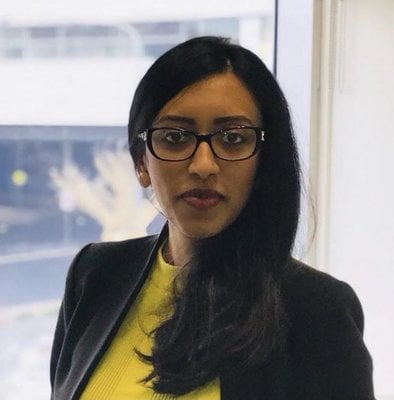
Narellan Town Medical Centre’s Dr Esther Amarasingham was initially attracted to the diversity of general practice. As a new mother, she is now also appreciating the good work-life balance the specialty offers.


How long have you been a GP and how long have you been practising in Narellan?

I completed my training in London in 2016 and worked as a GP over there before migrating to Australia in 2017. I have been working in Narellan since then.


When/why did you decide you wanted to become a GP?

I decided to become a GP during my intern years. Having completed rotations in various specialities, I must say that the diversity I saw within the general practice was one of the main driving forces for choosing this specialty. I enjoyed the challenge of seeing patients of all ages who present with a variety of concerns. Now as a mother, it is also helping me to maintain a good work-life balance.


What do you love most about being a GP/what part of the job gives you the most satisfaction?

For me what I love about being a GP is the continuity of care that I am able to provide to my patients. I feel most satisfied when my patients leave the consult room feeling satisfied with the consult and of course seeing them recover and returning back to their day-to-day life.


What is the most important thing you/your practice contributes to this community?

We place a lot of emphasis on preventative medicine. As a team we identify and remind our patients when they are due for their routine health checks and screening tests. As well as that we focus on patient education and empowerment to enable them to able to identify red flag symptoms, manage their conditions and make informed decisions about their care.


What do you like to do in your spare time?

As a new mother to a beautiful one-year-old girl most of my spare time is now taken up caring for her and keeping her entertained. As a family, we do spend a lot of time outdoors exploring zoos, parks and play areas.


Tell me about your ideal work day…

I don’t have an ideal work day, as I have mentioned every day is different and I have the opportunity to assess and support patients with a wide range of concerns.


What do you love most about Narellan?

Transitioning from working in London to Narellan seemed quite effortless due to our lovely patient base and the support and guidance from South Western Sydney PHN.


What advice do you give your patients about maintaining good health?

I always emphasise to my patients that for overall good health one must always take care of their mental wellbeing as well as focusing on a healthy diet and exercise.

31 May 2021

Mandy Pilottos from Camden Central Family Practice has been caring for the Camden community for 16 years as a practice nurse. Mandy is a “lifelong learner” who shares her knowledge with patients with the aim of improving their health outcomes.


How long have you been a practice nurse and how long have you been working in the Camden LGA?

I began my new career as a practice nurse in June 2005 at Camden Central Family Practice, so in total I am coming up to 16 years in the Camden Local Government Area.


When/why did you decide to pursue a career in nursing and specifically in primary care?

My decision to become a nurse was primarily influenced by my grandmother, mother and sister being Registered Nurses. My father was a radiographer, so our mealtime conversations were sometimes frank and uninhibited. When I left school the options seemed limited – nursing or teaching were the only things that interested me.

My paternal grandmother died when I was 16 years of age of a brain tumour. I didn’t cope with her death well. At my preliminary interview at Liverpool Hospital (I was the second last group to go through the hospital system) my answer to why I wanted to be a nurse was: “I wanted to know how to cope with death’’.

I was involved in community nursing a few years prior to becoming a practice nurse.

I worked for the Department of Veterans’ Affairs (DVA) looking after clients in their home for an agency, and when the agency dissolved I became a sole provider for DVA to complete my commitment to the veterans I cared for until they no longer required care in the community. I entered primary care mainly because a former nursing colleague asked me to come work for her agency –the work hours suited my family commitments and allowed me to have some work/life balance. In 2004 I did a Registered Nurse refresher course because I was feeling a bit discouraged working in a nursing home after working in the community and needed some confidence to try elsewhere. The hospital system at the time was disappointing and I knew I didn’t wish to return there. My husband encouraged me to try practice nursing because the part-time hours at the time suited our family.


Tell us about the role of nurses in primary care …

The role of practice nurses is varied and interesting. I have never learnt as much as what I have in practice nursing – health is forever changing and you have to constantly keep up with the changes.

I see the role as providing a safe environment for our staff and patients, administering First Aid when necessary and keeping patients out of hospital and in their homes. My day-to-day role involves mainly  cold chain management of vaccines, cleaning, sterilising instruments, assisting with procedures, wound management, administrative stuff like recalls, maintaining the treatment room, ordering of stock, liaising with GPs, health assessments, medicals, ECGs, audiograms, spirometry in pre-COVID times and care planning. I do lots of care planning and chronic disease management and health promotion and screening. As a practice nurse we work as a team with the GPs, hopefully lowering their workload marginally, and assisting in the efficient running of the practice and improving clinical outcomes for a patient. I see us as a valuable resource in keeping the economic burden out of the hospitals and maintaining a healthy community.


What do you love about nursing/what do you find most fulfilling about your role?

I love the relationships I have formed over the years with the patients and their families. I love knowing that a long-term patient is not well as soon as they walk in the door – the “knowing” you have after many years of a relationship. I love seeing a wound reach complete healing and being able to assess what improvements have happened or need to happen with their wound care. I love educating patients in making better health choices and giving them options.


What is your biggest challenge as a PN and how do you overcome this?

Time management is my biggest challenge. Keeping things running smoothly so the patients are keeping to their appointment times, especially when you are catering to maximum of four GPs to one nurse most of the time. It’s the domino effect – one person running behind impacts another. It’s the walk-ins on the day that come in for a “BP check” but they actually have chest pain and have to be sorted, or the appointment bookings have not been appropriately allocated, a lot of times because the patient hasn’t disclosed they need more time.


Tell me about your ideal workday …

My ideal workday – that statement makes me laugh – everything runs smoothly and to plan, has a variety of tasks and I leave work on time.


What do you like to do in your spare time?

My spare time is very much about relationships. Spending time with family and friends I love. My passion is pastoral care, in particular supporting women. I am involved in my local Anglican church and am involved in leadership with running a Thursday women’s church. I also run a separation and divorce ministry which I have been involved in since 2001. I support single mums in particular.


Do you have any role models and why?

My role models are women that have endured hardship and adversity and grown, but I am guessing you mean role models in nursing.

For practice nursing, my role model would have had to be RN Sue Donohoe. When I started practice nursing I knew nothing about practice nursing at all. I just seemed to do First Aid, immunisation and general management of treatment room and recalls. The Macarthur Division of General Practice had Sue in charge of practice nurse education. We had lots of regular in-service for nurses. I learnt so much about what I should be doing from Sue and the other nurses who attended the in-services. I am very thankful for the opportunities that were provided for scholarships to become an authorised immuniser – fully funded – and to be involved in other pilot programs for health under the direction of our local universities. Another role model was a fellow nurse who I have worked with for 15 years, RN Sonya Mackay, who was very good in the administrative side of practice nursing as well as being a loving and caring nurse.


How do you help educate your patients about maintaining good health?

I help patients be educated about maintaining good health firstly by educating myself. Ensuring I am “a lifelong learner’’. I try to take every opportunity available to provide some health coaching/health promotion. I have found that this is possible by using their care plan as a talking point for discussing aspects of their health using the SNAP assessment and encouraging them to follow up with their CST, breast and bowel screening.

I also encourage patients to utilise their 10997 RN support item numbers to discuss their health further or help them be accountable for their health goals.

Opportunistic times when the patient is seeing you and waiting for the GP are also great times to discuss some lifestyle issues or health goals.

04 May 2021

After starting his career in emergency medicine, Dr Roy Abi-Hanna, a GP at Harrington Park Medical Practice for the past 14 years, has found making a difference to patients’ lives and being able to track that difference over years, to be very rewarding.


How long have you been a GP and how long have you been practising in the Camden LGA?

I started working in general practice in 2007. I’ve been practising medicine in this area since 1998.

After graduating from Sydney University medical school in 97, I started working in 98, completing my internship at Bankstown and Campbelltown hospitals. From 2001 onwards I worked in various emergency departments, but mainly at Campbelltown and Camden Hospitals, until 2009.

I’ve been at this practice at Harrington Park for the past 14 years.


When/why did you decide you wanted to become a GP?

My initial interest and love were for emergency medicine. I decided to complete GP training as something to fall back onto in the future, as I was planning to start a family and the lifestyle in emergency medicine wasn’t very suitable, with all the shift work, nightshifts and weekend work.

For the first couple of years though as a GP, I continued to work in both, the local emergency departments and general practice, overlapping for a little while just because I enjoyed the emergency work, and I’d developed the skills needed to manage acute emergencies well and with competence.

However, once my first boy was born, it became more difficult to do both, and it’s been general practice since.


What do you love most about being a GP/what part of the job gives you the most satisfaction?

Initially, I thought general practice was going to be a boring career choice, after the daily adrenalin rush of working in emergency departments, but surprisingly it’s been very rewarding. It’s never quiet, just like emergency!

I’m most satisfied making positive differences to my patients’ lives and being able to see and track that change over years. It’s rewarding to see patients coming back for ongoing care, trusting in the knowledge and shared decision-making that’s provided to them.


What is the most important thing you/your practice contribute to this community?

I don’t believe we are any different from any other practices in this area. We all have the same goals and mission, to improve people’s health and wellbeing, and be there for the hard times.

We are a group of six doctors working at Harrington Park Medical Practice. Most of us have been around for about 14 to 15 years, a couple for four or five years. Our receptionists and nurses have been here for many years also. This has led a continuity of care for our patients, which is important, as we have developed lifetime relationships with people in the area.

I find our practice to have a good working environment. All the doctors here have similar mentalities, and a proactive approach, to the high level of care that we want to deliver. Our supporting staff are lovely, dedicated and caring. Having that stability in personnel, and pride in our work ethics is probably one of our greatest strengths and something that our community sees and benefits from.


What do you like to do in your spare time?

I have very little spare time.

Apart from general practice, I do a bit of football/sports work as well. Over the past eight years, I’ve been working in the NRL, with the Bulldogs and the Dragons, and in the A-League with the Western Sydney Wanderers and most recently the local Macarthur Bulls FC. That’s my spare time fun work, outside of my four office walls, Monday to Friday work.

When I do have some free time otherwise, the rest of the weekends are usually taken out by my two boys sports or scouts’ activities.

The rest of the time is family time. I do love just sitting back, enjoying a drink and barbecue by the river or doing a bit of fishing and boating.

School holidays are all about travelling, mostly international. Before COVID-19 hit we were doing a lot of overseas trips. My boys are still young, only nine and 12, but they’ve clocked over two dozen overseas trips already, thanks to my wife. We’ve all got that addictive love of travelling.


Tell me about your ideal work day…

Getting enough time in the morning for a coffee is great!

I don’t know if there is an ideal work day. There are certain things that you don’t want or like in your day – you don’t like being an hour behind and having patients wait, and you don’t like missing conditions or making the wrong diagnoses, or feeling that you could have managed something better.

I do like to take something positive out of every day at work though. I’m ideally satisfied by getting one or two patients in a day, where I feel that I’ve made a significant difference to their lives, even if in a minor way.


What do you love most about Camden LGA?

Travelling against traffic! And I’m a westy.

I grew up in Greenacre and started working at Bankstown Hospital with secondments to Campbelltown Hospital. I was happy working in the smaller hospitals, where my knowledge and skills developed quickly. I was often the only doctor on at nights, in the early days, when I was working in the local emergency departments. There’s a lot of pathology here, a lot of medicine to be practised, and a need for the service that we provide.


What advice do you give your patients about maintaining good health?

Most of the time patients know what they have to do about maintaining good health. Everybody is always talking about it and it’s there in the media and online. My message generally isn’t any different to what they hear. A lot of the advice that I provide to my patients is about preventative health, and it’s part of most consults. I generally suggest little lifestyle changes at a time. Provide ongoing encouragement, support and education. When patients start on the journey of being a little bit healthier, I try and develop their understanding about it not being just a two-week thing. Benefits will eventually come, often after a generally prolonged period of time, and that gains are always made, even when the outcomes and goals aren’t fully reached. It’s all about educating them that the changes they make, even in small increments over time, will all add up. I get them to work on the basics of healthy living, whether it’s a low sugar or low fat diet, smoking cessation, drinking in moderation, exercise, work and family balance, health relationships. It’s advice we all hear all the time and I work on reinforcing that advice. I also traumatise them but telling them that my children are averaging a visit to McDonald’s, only two to three times in year, for at treat!

27 April 2021

Aysu Kaya started her nursing career at Liverpool Hospital before moving to primary care, currently working at Doctors @ Liverpool. She has a Bachelor of Nursing and plans to do her Masters of Clinical Education next year. She is an authorised nurse immuniser and is trained in blood collection and ear syringing to name a few.


How long have you been a practice nurse and how long have you been working in Liverpool LGA?

I’ve been a nurse for about nine years, and a practice nurse approximately five or six years. I realised there was a lot of care needed for the people in the Liverpool LGA that are not aware they have health concerns, or even health issues, they can speak about. I feel that because I grew up in South Western Sydney, I know the people and how to approach them, hence why I choose to stay within this community.


When/why did you decide to pursue a career in nursing and specifically in primary care?

I decided to become a practice nurse because, more so than with hospital nursing, you get to know your patients a lot more and you are exposed to a lot more elements within a medical centre. As a hospital nurse, you typically just specialise in one field only and that is because you are generally assigned to one ward.

I wanted to pursue my career in primary care nursing because I wanted to do more for a patient. I love knowing I can take that extra step to help impact a patient’s life in a positive way and hopefully prevent them from going to hospital. Ultimately, general practice is there to prevent hospitals from being overburdened with preventable diseases, so if there was a way to help with that, I wanted to be a part of it.


Tell us about the role of nurses in primary care …

Well, this is a hard question to answer, what I do each day is so different. Working in a medical centre has now become instinctual for me that defining the role of a nurse in primary care is hard. It could mean managing someone’s chronic wounds, educating a patient about their health, completing health assessments that require you to sit down and listen, and then handling an emergency that has come through. And this is just to point out a few of the things, it is always a different day.

As a practice nurse, I see myself as part of a team in someone’s health care. So, I like to think that working alongside the GP can help support and assist them when they are trying to get a patient to self-manage their own health. That could mean educating myself and my colleagues with health updates, such as immunisation changes or simply learning about health programs that can be available for patients. I feel that if a doctor misses a health issue or concern, they also have confidence in me to see an opportunity to jump in and provide education or to simply update the patient’s health record.


What do you love about nursing/what do you find most fulfilling about your role?

Knowing I’ve made an impact on someone’s life. That’s the most fulfilling part of my role.  I love that I can be giving reassurance to parents about immunisations and its benefits, or simply providing guidance to a diabetic patient on their dietary needs or leg care. I like knowing I have made a patient think coming to a medical centre is not something to be dreaded and can be helpful.


What is your biggest challenge as a PN and how do you overcome this?

I think that would mostly be language barriers. Liverpool has such a wide variety of languages. So, trying to discuss strategies or getting a patient to understand ways to prevent health issues can be difficult. Thankfully with the team we have here, we cover a whole bunch of languages between us which sometimes can help with finding health information to provide to patients.

I think another big challenge is some patients just don’t see the need for nurses in medical centres. Patients that have only been cared for by just a doctor, to then getting introduced to a nurse seems to upset them or think that the doctor doesn’t care anymore. This is a challenge I am slowly seeing, especially with patients that are elderly or traditional in thinking that the doctor is the only one that can discuss health with them.


Tell me about your ideal work day…

If I could do a bit of everything, I would be happy. I’m a simple nurse, but also, I love wounds! I know that can sound really odd, but there it is. So, if I can have patients coming to the centre looking for help with managing their wounds regardless of it being chronic or acute, I would love it. There is something about knowing that each wound has different characteristics and it can require different methods of managing to see a healed wound makes it so worth being a nurse.


What do you like to do in your spare time?

I read a lot and I mean a LOT. I’m a bookworm and I love fantasy and the occasional romance. I also like spending time with my family and friends especially with my niece and nephews. So having time to wind down and relax is needed.


Do you have any role models and why?

My mother, she was a care worker who helped care for patients with disabilities and aged care patients. I strive to be like her and she is someone that takes patient care seriously and because I practiced on her constantly with everything, I’ve learnt to always see through a patient’s perspective. For example, with immunisations, when I was learning and tried various techniques she would say “That’s going to hurt the patient, don’t do it that way”. And I would change it to make sure what she told me would help make the experience positive for a patient. I also had a second year facilitator at Campbelltown Hospital who made a positive impression of the type of nurse I wanted to be.

06 April 2021

Dr Allison Thorn has been working at Tharawal Aboriginal Medical Service in Campbelltown, for five years.


How long have you been a GP & how long have you been practising in the Campbelltown LGA at Tharawal?

I gained my fellowship in 2017 and have been working at Tharawal Aboriginal Medical Service for the past five years.


When/why did you decide you wanted to become a GP?

When I was a medical student, I had some amazing placements in South Western Sydney as well as remote areas, and they left me in awe at the change a GP could make at an individual level but also at a community level. I am a bit of a sticky beak and I love getting to know my patients so I knew GP was right up my alley.


What do you love most about being a GP/what part of the job gives you the most satisfaction?

Being an advocate for my patients. And also cuddles with fresh babies!


What is the most important thing you/your practice contributes to this community?

Tharawal is an amazing place to work because it is made up of a huge team of people who are extremely motivated to care for people who need it the most. It is truly a one-stop shop for our local community and I feel honoured to be a part of the team that the community trusts so much.


What do you like to do in your spare time?

Watch RuPaul’s drag race and hang out with my family.


Tell me about your ideal work day.

A morning of our “Mums and bubs” clinic, plenty of health checks on young people, a few of my regular patients coming back to report they’ve achieved some of their health goals and a procedure thrown in there somewhere. Plus all the coffee.


What do you love most about working in Campbelltown?

I grew up in Campbelltown and was fortunate enough to get into WSU medical school in it’s first year. I feel a strong sense of pride working in an area that has given me so much and where there is a real need for high quality healthcare.


What advice do you give your patients about maintaining good health?

I prefer to tailor my advice to each individual. I ask my patients what their health goals are and then try my very best to help them get there.

23 March 2021

Kyle Gibbs is Director of Clinical Services at Sydney Dermatology Group and MyDoctors Ltd.

He has a Bachelor of Nursing (Honours), Bachelor’s degree, Registered Nursing and a Master’s degree in Management.

Two years ago, he gave a presentation at the Practice Nurses Association conference and has also spoken at the Australian College of Nursing.

Kyle has just completed his thesis on the barriers and facilitators of graduate nurses entering primary health care.

This year he is starting his PhD.

Learn more about Kyle. 


How long have you been a practice nurse? 

I’ve worked in primary care for approximately 11 years. 


What got you into being a practice nurse, particularly in public health? 

Originally, I thought it would be an easier way for me to study while doing my Masters; to work and study at the same time. When I completed my Masters, I was offered a job in management and have been managing medical centres ever since.  

I love being a practice nurse because I get to look after all facets of life, birth, death and everything in between. I love the fact that I can prevent a lot of people from going to hospital or getting medical chronic conditions. 

Working in South Western Sydney, particularly here in Macquarie Fields, can be very rewarding, there’s a lot of need within the area identifying and managing chronic illness. There’s a lot of patients who are asymptomatic, walking around, not knowing they have a condition. They need help to be educated on identifying the tests they need and to get those treatments and become healthy. 


Give me a typical example of your workday 

A lot of my day involves training new nurses in primary healthcare. It’s not uncommon for me to be teaching a nurse who has worked in a hospital for 30 or 40 years of their career and introducing them to general practice. I cover immunisations and culture, pain management, sterilisation, care planning, health assessments and other aspects that wouldn’t normally be undertaken in a hospital.  

Primary care is a lot more involved than just completing a template on Best Practice or MedicalDirector. It is actually about knowing what questions to ask, listening carefully and finding preventative strategies to improve that patient’s health.  

My role also includes boring stuff like business planning, writing policies and procedures, project management, going to meetings. We’ve just been through the EOI for the COVID-19 vaccine. We have to purchase more equipment and hire more staff, that usually falls to me as well. This morning I conducted a construction inspection for a new medical centre in Burwood.


Tell us about the role of primary care, how does your role complement the role of GPs and how you contribute to improving clinical outcomes.  

I see my role as a nurse when I’m with patients. A lot of it is educating patients around navigating the health system and advising when they are eligible for free services or knowing that, because of their conditions, they should have certain tests or assessments yearly, three-monthly or six-monthly.  

I often check the files doctors have put together of patients, ensuring there’s no gaps in their treatment, and then educating the patient about the gap and working with the doctor to fulfill that need. 

I make sure my level of knowledge and understanding of medical conditions follows best practice guidelines, and then educate my colleagues, the GPs, about those guidelines to have the best outcomes for patients.


What is your biggest challenge as a PN and how do you work on this? 

Nursing is growing quite rapidly in the primary healthcare setting. Even so, there are some nurses and GPs who are still somewhat traditional in the way they work and perceive their roles. Some nurses are hesitant to start learning and doing more as this area evolves, and some GPs are hesitant to let go of some tasks they’ve historically done. There are many tasks a nurse can do, leaving the doctor to handle more complex situations. I advocate for nurses to do more and to speak up more about the growing scope of their role within primary healthcare. 

In nursing generally, general practice nurses may think of their role in a primary care setting is lower than being a nurse in a hospital setting; I would argue that’s not the case. In a hospital setting, a nurse will get very specialised in one facet of nursing. In contrast, a general practice nurse’s role may cover orthopaedic, renal, geriatric, and paediatric conditions, we have to have a generalised knowledge of a wide range of conditions. For example, knowing when a 30 and 40-year-old keeps breaking their bones, getting sprained ankles, or starts to have chest pains, they probably have high cholesterol. And if we get rid of that high cholesterol, they won’t end up as a 60-year-old who needs to be on beta blockers and have hypertension medication treatment, because we treated it early.  


What do you like to do in your spare time? 

I live on a small farm with lots of animals. I have cows, geese, dogs, fish and birds. This weekend I’m building a waterfall, last weekend I built a garden. I also play soccer and I’m studying to do my PhD. I’m a person that doesn’t like to be still. I think it’s is a nursing thing, a lot of nurses I know are about time management, doing the next thing and always planning.  


Who are your role models in the industry? 

Oh, I’ve got a few role models in the industry. Firstly, my mum who is a nurse. She became a nurse later in life. She decided to become a nurse after I finished my Bachelor degree and heard how much I loved it. She now works in drug and alcohol and mental health.  

Another role model is Carrie Cordrey, who encouraged me to become a nurse manager. Carrie is now retired. Other nurses in my career who have pushed and inspired me are Julie Baker and Nicole Tibideau. 


02 March 2021

Dr Marzieh Niknami from The Practice – Bundanoon says happy and healthy community members are more likely to contribute to their community’s productivity and sustainability. Learn more about how she and her colleagues empower their patients to become healthier versions of themselves.


How long have you been a GP and how long have you been practising in Bundanoon/Wingecarribee Shire?

I have about eight years GP experience. I have been practising in Bundanoon since March 2019.


When/why did you decide you wanted to become a GP?

I have been very active in the field of medicine and I was fortunate to be able to accomplish various degrees, do research and teach in universities. My curiosity took me to different fields and helped me to achieve degrees including a PhD in medicine and fellowship at the University of Sydney. However, I realised that nothing satisfies me like being with and talking to people. My compassionate nature, my question about the purpose of life and my idea about touching people’s lives guided me to become a GP which offers rich opportunities for patient encounters and treating people of all ages including babies, toddlers, children, teenagers, to adults. It also gives me the opportunity to see patients in the context of their families and communities. My passion is helping people to change their health and eventually their life for the better. I believe change in one person’s health can improve the community and a better community makes a better Australia where every citizen will benefit. Further, being a GP is intellectually very challenging, which is really rewarding. Unlike hospital, as a frontline doctor you see patients presenting often with one to two pieces of information and you need to find a diagnosis. It is very exciting when you come up with a diagnosis and understand a patient’s health conditions.


What do you love most about being a GP/what part of the job gives you the most satisfaction?

I really enjoy the continuity of care and the opportunity to develop long-term relationships with my patients which is the pillar of comprehensive care. Empowering patients and making my patients’ healthcare journey as convenient as possible is very rewarding. Freedom in choosing different advanced skills such as training in advanced women’s health, skin disease, wound care and mental health and applying them to my every day practice has been very satisfying. It feels that I can grow daily with general practice and learn extensively every day. Also, I quite like the flexibility of choosing my work hours and days which is necessary for work-home balance especially for GPs with young children.


What is the most important thing you/your practice contributes to this community?

Alongside my dear colleague Dr Indran Rajendra, we try to provide the best comprehensive healthcare and empower our community’s residents to move steps closer to a healthier version of themselves and to stay healthy. I believe happy and healthy members are more likely to contribute to the community’s productivity and sustainability. Our holistic team care in general practice – including but not limited to skin cancer, children’s health, women’s health, sexual health, mental health, chronic disease care and wound management – has been improving people’s health and life and reducing unnecessary referrals. Due to our genuine care, we enjoy a great deal of loyalty from members of our community.


What do you like to do in your spare time?

I like to spend time with my family and discover nature. I am blessed to live in the Southern Highlands, which offers plenty of natural beauty. I also like fashion and photography.


Tell me about your ideal day…

My ideal day is when it is full of my children’s laughter at home and my patient’s big hopeful smile when they leave my office at work.


What do you love most about the Bundanoon/Wingecarribee Shire?

I guess it’s people who are so warm and friendly. It is also perfect for raising my young family with plenty of green fields, parks, great schools, shops and cafes. It is protected like a beautiful jewel from noise and air pollution but at the same time is close to three major cities if I need to go for training and conferences.


What advice do you give your patients about maintaining good health?

My advice to my patients is take control and responsibility for your health. Mental health is the pillar of a healthy life so I always recommend that my patients stay positive and in touch with loved ones, be involved with their community as much as possible and be mindful. 

23 February 2021

Welcome to our new monthly practice nurse profiles!

Jean Cristobal at Myhealth Medical Centre Fairfield has kindly agreed to be our first profile. Jean says choosing a career in nursing was the natural choice for her because she comes from a family of nurses. Learn more about Jean and the care she provides to her patients.


How long have you been a practice nurse and how long have you been working in the Fairfield LGA?

I have been a practice nurse for six years now and I have been working in the Fairfield LGA for one year. 


When/why did you decide to pursue a career in nursing and specifically in primary care?

It was natural for me to choose nursing as a career path as I come from a family of nurses. I started my career in primary care and I haven’t looked back since. 


Tell us about the role of nurses in primary care …

My role in primary care is to provide nursing care to our patients such as wound care, childhood and adult immunisations, emergency care, ear syringing, spirometry, ECG monitoring, asthma management, health assessments, assisting doctors with minor procedures, etc. As a practice nurse working with GPs we aim to provide optimal care to all our patients so I work hand-in-hand with the GPs to discuss appropriate nursing care for their patients. 


What do you love about nursing/what do you find most fulfilling about your role?

What I love most about nursing is meeting patients from different backgrounds. The most fulfilling thing about my role in primary care is receiving positive feedback from patients and staff. 


What is your biggest challenge as a practice nurse and how do you overcome this?

The biggest challenge as a practice nurse working in Fairfield LGA is the language barrier. Working in Fairfield I see plenty of patients whose first language is not English. It’s hard for me at times to get a better understanding of my patients’ needs. This is overcome by supportive staff who are always there to help translate. 


Tell me about your ideal work day…

My ideal work day is when I’m busy and proactive during my shift. I am the type of person who doesn’t like to sit around all the time. I like to keep myself busy all the time. 


What do you like to do in your spare time?

I have a three-year-old son who keeps me busy at home. Spending time with family is important. 


Do you have any role models and why?

My mum. She is also a registered nurse and she works in aged care. She’s a very hard worker. 


How do you help educate your patients about maintaining good health?

I try my best to encourage patients to maintain good health by providing them with support and guiding them with the appropriate resources, and sharing my own experiences with them as well. 

01 February 2021

The relationships with her patients and other health professionals in the area makes working in Moss Vale extra special for Dr Taleitha Atkins who opened Highlands General Practice with her colleagues in November. 


How long have you been a GP and how long have you been practising in Moss Vale?

I was awarded Fellowship with the RACGP in 2018 after finishing my GP training. For the past five years I’ve worked in the Southern Highlands at a variety of different practices through my training, but as well as in general practice and the Emergency Department at Bowral Hospital. I teach medical students through Wollongong University as well.


When/why did you decide you wanted to become a GP?

I decided to be a GP during my hospital terms, as an intern, for two reasons. I’m interested in all aspects of medicine and want to continue seeing a broad range of patients and specialties. I also like to be able to see patients long-term. In the hospital you just see patients once or twice, you don’t really know what happens to them, but here you get to follow them through, get to know their journey, what happens with their illness over time and you develop relationships with them.


What do you love most about being a GP/what part of the job gives you the most satisfaction?

What we like to do is to help people but people don’t always accept our help or advice. So, I don’t think we can measure our reward by how much we impact people. It’s about maintaining that attitude of serving and helping regardless of whether people accept your help or not. My favourite things are seeing kids, I look after a lot of pregnant women and do a lot of antenatal shared care, and I really enjoy diagnostic dilemmas and getting to the bottom of a case. It’s really nice to be able to get to know the whole family. We have lots of patients where the whole family comes, grandparents, siblings, and it’s quite fun because they start dobbing each other in – like grandpa is drinking too much alcohol. You have to be quite sly in the way you bring it up like no one told you. It’s quite special really.


What is the most important thing you/your practice contributes to this community?

We’ve recently relocated so we are under new management here and what’s really touching is so many of our patients have come across. We weren’t able to tell people where we were going but they figured out where we were and we are very busy seeing them all. We’re touched by the loyalty of the people who want to stick with us. It just goes to show how small and well connected this community is. We see our patients chatting together in the waiting room, everyone knows each other. It’s really nice to be part of this community and to help people, and knowing that people rely on us.


What do you like to do in your spare time?

Just keeping active and being outside, particularly on lovely days.


Tell me about your ideal day…

My ideal work day is when the IT works … but seriously, with the transition from our other clinic I’ve been struck by how lucky I am to work with good colleagues. The other three doctors here are outstanding clinicians and we’ve learnt to work well as a team – joking, debriefing, they are really supportive and I’m lucky to work with such a close-knit group. The other thing is teaching, having medical students around. I really appreciate that. Their quest for learning and the awe that they have when they learn something new inspires me to keep going and reminds me why I became a doctor in the first place. It’s really good to remember that part of medicine as well.


What do you love most about Moss Vale?

So many things. It’s such a beautiful place. Great, cutesy and unique shops, lots of good cafes but for me I moved back from Queensland because my friends and family are here in the area. That’s what really makes it for me. I’m also lucky to be working in this area. We have a sort of country practice here in Moss Vale where it’s even more of a small town than say Mittagong or Bowral. We also have great relationships with other health professionals. We found that with our change the support and collegiality that we’ve had from pharmacists, allied health and other GPs has been remarkable. They’ve worked with us and helped our patients to make sure they were safe during our transition time. We’re really thankful for having those relationships and the support there. It’s nice to know who’s on the other end of a referral.


What advice do you give your patients about maintaining good health?

I try to help my patients be preventative with their health – that’s why we’re GPs – and develop good health habits. I don’t think health is an outcome, I think it is a way of life. We are really trying to teach our patients it’s about the little gains and about doing that consistently. It’s all about balance. A lot of people were waiting for 2020 to be over so they could get back to normal but I don’t think putting things off because of external circumstances is ever good. We’ve got to learn how to be healthy and have good habits in whatever circumstances we’re in. And that’s holistic health.

30 November 2020

Dr Marwan Toma who works at Valley Plaza Medical Centre and Holsworthy Health Centre enjoys looking after people of all ages. He says ‘family medicine challenges a physician to know an adequate amount about all branches of medicine in addition to knowing people’. 

Learn more about Dr Toma …


How long have you been a GP?

I’ve worked as a GP since 2009. I worked in Blayney NSW until 2015 then moved to Sydney. Since 2016 I’ve been doing one day a week at the Valley Plaza Medical Centre and four days at Holsworthy Health Centre at Holsworthy ADF Army Barracks.


When/why did you decide you wanted to become a GP?

My interest in family medicine started when I was doing medical observerships in the United Kingdom. I enjoy meeting and looking after people of all ages while analysing and solving problems that a primary care doctor faces. Family medicine challenges a physician to know an adequate amount about all branches of medicine in addition to knowing people. I love walking the journey with my patients and sharing their joy and sorrow moments. This helps me understand more about myself and how to be a better person.


What is the most important thing you/your practice contributes to this community?

The Valley Plaza Medical Centre in Hinchinbrook provides services to the surrounding community. Most of my patients are from Liverpool and Fairfield council areas and some are from other areas like Penrith and Bankstown. I try to provide holistic approach to management of my patients.


What do you like to do in your spare time?

Walking with my wife, riding bike with my children, reading, writing thoughts, watching movies with my children, attending church and Bible study.


Tell me about your ideal day…

I wake up 5.30am, I do some reading and exercise at home, then go to the hospital at the barracks starting work at 8am. I see patients in hospital and outpatient settings and finish at 4pm. Fridays, I get to take the kids to school and start work at the Valley Plaza Medical Centre at 10.30am and leave around 6pm seeing patients in GP clinic.


What advice do you give your patients about maintaining good health?

Eat healthy, try to do exercise daily if you can, sleep well, maintain healthy enjoyable relationships with family and friends and enjoy a life with a good purpose.