South Western Sydney PHN is a not-for-profit health organisation dedicated to supporting general practitioners, practice nurses and other primary health providers.
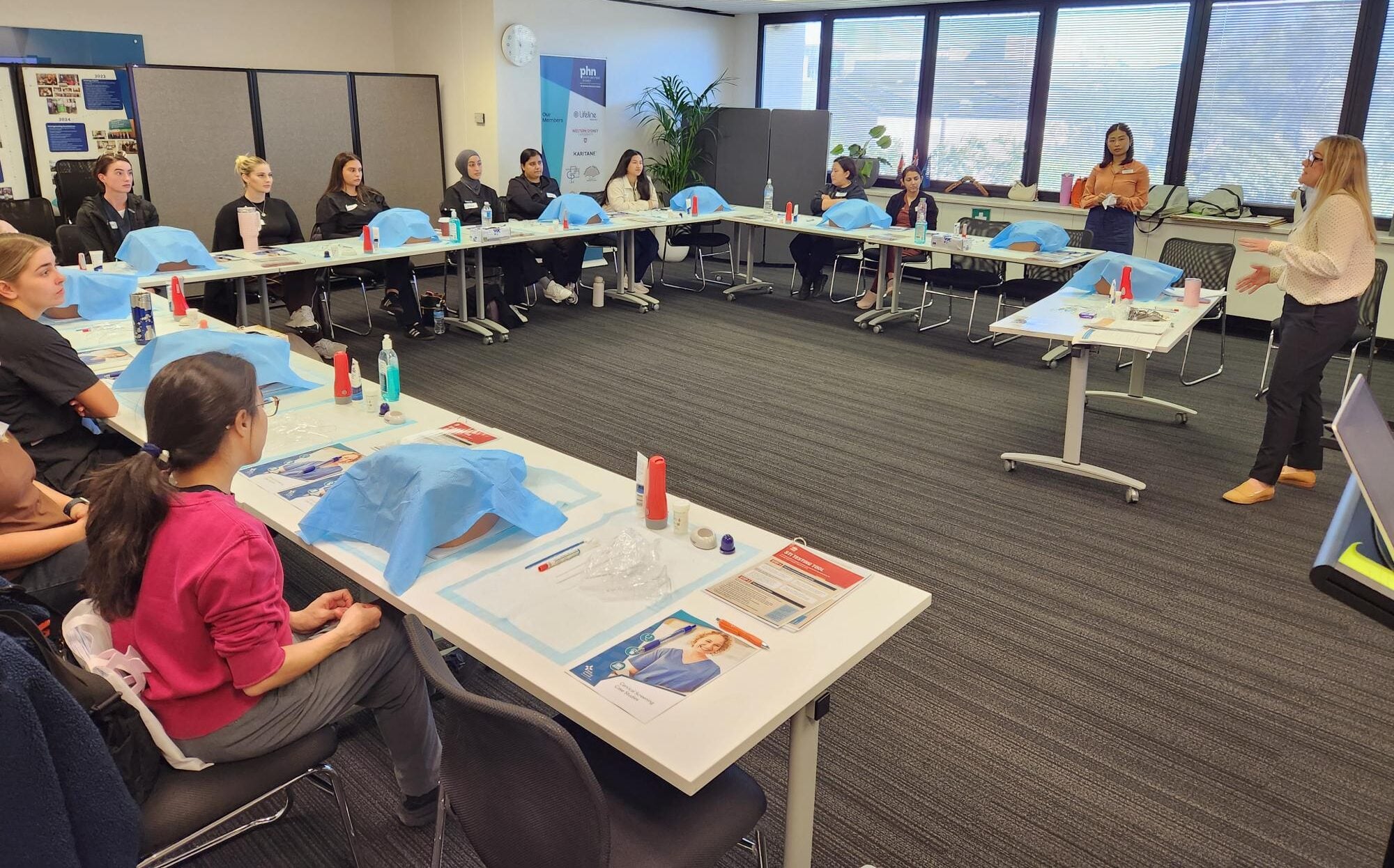
Practice nurses from across South Western Sydney have built their skills, confidence and capacity to perform cervical screening after completing Cervical Screening Comprehensive Skills Training.
SWSPHN has awarded 70 scholarships to nurses to undertake the training, with funding support from the Cancer Institute NSW. The scholarships aim to increase cervical screening participation in general practice using both speculum-based and self-collection options.
Family Planning Australia clinical facilitators deliver the course, which combines online learning with hands-on, face-to-face skills practice. Two sessions were held at the SWSPHN office in Campbelltown in April and June, providing training locally to 36 nurses.
Family Planning Australia regularly holds the training at sites across Sydney.
Caption: Nurse Educators Emily and Emma from Family Planning Australia facilitated cervical skills training for practice nurses in April.
14 January 2026
Providers registered for the Bulk Billing Practice Incentive Program (BBPIP) are reminded they must add bank account details on the Services Australia website to receive their first BBPIP incentive payment in January 2026.
Providers must add bank account details for the MyMedicare Incentives program at each BBPIP participating practice location where they work.
General practices and providers can now monitor and confirm eligibility for Bulk Billing Practice Incentive Program (BBPIP) incentive payments with new BBPIP eligibility assessments available through Services Australia.
Practices and providers can use:
forecast assessments to monitor and confirm eligibility for BBPIP incentive payments and check if there are any issues with registration or eligible item claims
final assessments to confirm if they have met all BBPIP requirements and view the corresponding incentive payment after the end of the quarter
BBPIP payment details to view the Services Australia incentive payment for each quarterly assessment period, available after the quarter ends
If a practice is registered and meets program requirements, its first BBPIP incentive payment will be made in January 2026.
To ensure smooth payment, practices should:
check the registration start date
provide bank details for the practice and all linked providers for BBPIP, even if they previously provided bank account details for other programs
keep accreditation up-to-date.
link all providers with separate provider numbers for each site.
The Nurse Re-entry Program is an Australian Government initiative supporting general practices to build their capability by hosting nurses in supervised placements.
The program helps nurses who haven’t practised in the last five to 10 years to return to the workforce through paid, supervised placements in general practice. The program also supports nurse practitioners transitioning into general practice.
Eligible nurses are matched with accredited general practices to complete their placement, meet Nursing Midwifery Board of Australia requirements and regain full registration.
The program also benefits practices by strengthening their teams, training nurses in-house and creating efficiencies.
Eligible practices may receive a grant to support participation and there is no obligation to employ the nurse permanently after the placement is complete. * Please note: for practices to be eligible for the $2,000 grant, they must employ the re-entry nurse for the duration of the supervised placement.
Wentworth Healthcare, provider of the Nepean Blue Mountains Primary Health Network, has been selected to lead the delivery of the Nurse Re-entry Program at a national level.
Wentworth Healthcare coordinates the matching process, confirms supervision requirements and provides resources to guide you.
Expressions of interest are now open for the Nurse Re-entry Program
A new calculator has been released for general practice owners, managers and individual GPs to estimate annual earnings from Medicare BBIs and the new BBPIP. Access the Bulk Billing Incentives Calculator.
A Bulk Billing Incentives Calculator User Guide is also available explaining how to use the calculator.
The calculator uses MBS information about BBPIP MBS eligible services only. It uses data to build an average annual provider and practice payment estimate for BBPIP MBS eligible services for your practice type and location. The payment model can be used as a baseline to estimate if you will benefit from joining BBPIP.
To get the most accurate estimate, have these details handy before you commence using the calculator:
select your role as a GP or a practice manager (or equivalent)
practice location by Modified Monash Model (MMM) classification
percentage of billings paid to the practice
billing type – bulk billing only, mixed billing or private billing
percentage of BBPIP MBS eligible services provided to concession card holders or children under 16 years old
your bulk billing rates, average privately billed fees and annual proportion of BBPIP MBS eligible service types, including:
short (level A)
standard (level B)
long (level C)
extended/Prolonged (level D/E)
management plans and reviews
other BBPIP MBS eligible services
These details can be found in your practice management system. Please refer to the User Guide for step-by-step instructions to support use of the calculator.
An Expression of Interest (EOI) form is also available here for providers who intend to join the BBPIP. Practices that complete the EOI form will be mailed communications material for their practice to display from 1 November when they register for BBPIP.
Further details and instructions on how to register in BBPIP will be provided later this year, and registration for BBPIP will be available from 1 November 2025.
To participate in BBBPIP, practices will need to be registered for MyMedicare. Instructions on how to register for MyMedicare are available on the Services Australia Health Professional Education Resources website.
Participation in BBPIP is voluntary for practices. If a practice chooses to participate, all GP at your practice must bulk bill all eligible services. For practices continuing to operate a mixed billing model, the RACGP has materials for practices to help them plan and communicate their billing arrangements to patients.
For practice support please contact your Practice Support Officer or Practice Advancement Officer.
This article appeared in Practice Pulse on Wednesday, 1 October 2025. If you are a GP, practice nurse or practice manager in South Western Sydney and do not get the weekly Practice Pulse email, speak to your Practice Support Officer.
16 September 2025
SWSPHN has developed a Chronic Conditions Management (CCM) toolkit which offers resources designed to support general practices in managing patients with chronic conditions more effectively.
In July the government introduced changes in how general practice can help patients manage their chronic conditions.
The existing model has been expanded to include all chronic conditions and is now known as Chronic Conditions Management (CCM). This new model includes an updated streamlined management plan called the GP Chronic Conditions Management Plan (GPCCMP).
The GPCCMP replaces the previous GP management plan (GPMP) and team care arrangements (TCA), with new care plan templates and referrals, MBS item numbers and equalised Medicare rebates.
Proposed changes to Medicare Benefits Schedule (MBS) items for chronic conditions management aim to simplify, streamline and modernise the arrangements for healthcare professionals and patients while promoting continuity of care.
They also encourage the regular review of chronic conditions management plans, support communication between a patient’s multidisciplinary care team and ensure existing patients can continue to access the care they need.
Living with a chronic condition requires long-term management and general practice is well suited to assist people in managing their chronic condition while helping to prevent deterioration or development of other chronic conditions. This also reduces the risk of hospitalisation.
Eligibility for a GPCCMP is at the discretion of the treating GP who, in collaboration with the patient, determines whether the patient would benefit from a multidisciplinary care approach to managing their chronic condition.
The toolkit was developed by SWSPHN’s Clinical and Quality Improvement (CQI) team to assist practices participating in the quality improvement in primary care (QIPC) program. The QIPC program has three aims: to improve data quality, utilise practice data to improve patient care and identify potential business revenue for the practice.
In line with these three aims, one of the quality improvement focus areas often chosen by practices is identifying patients with a chronic condition who are potentially eligible for care plans and reviews.
SWSPHN’s Chronic Conditions Management toolkit (CCM) includes ideas, resources and useful information which can assist your practice in identifying and implementing chronic conditions management quality improvement activities.
The online resource includes sections on the foundation of quality improvement, quality improvement activities, tips and tricks and helpful resources.
There’s also an Allied Health Tracker for patients to record their visits to their Medicare-subsidised appointments with allied health providers. They are allowed five each year if they have a GPCCMP. The tracker enables them to plan ahead and make the most of the sessions they have left.
This article appeared in Practice Pulse on Wednesday, 17 September 2025. If you are a GP, practice nurse or practice manager in South Western Sydney and do not get the weekly Practice Pulse email, speak to your Practice Support Officer.
Currently, GPs only receive Medicare bulk billing incentives if they bulk bill children under 16 years old and Commonwealth concession card holders.
Last week, Minister for Health, Disability and Ageing, Mark Butler, announced from 1 November 2025,practices and GPs registering for the Bulk Billing Practice Incentive Program (BBPIP) will equally share in the additional incentive payment of 12.5 per cent of MBS billings for eligible services.
The even BBPIP payment split recognises the roles played by both practices and providers in delivering bulk billed services to patients.
Practices which join the BBPIP must bulk bill every eligible service for every patient, to receive the incentive payment. The BBPIP payment will be in addition to MBS benefits paid (including bulk billing incentives).
Further details and instructions on how to register in BBPIP will be provided later this year, and registration for BBPIP will be available from 1 November 2025.
For practice support, please contact your Practice Support Officer or Practice Advancement Officer.
20 May 2025
Dr Thoa-Van Le
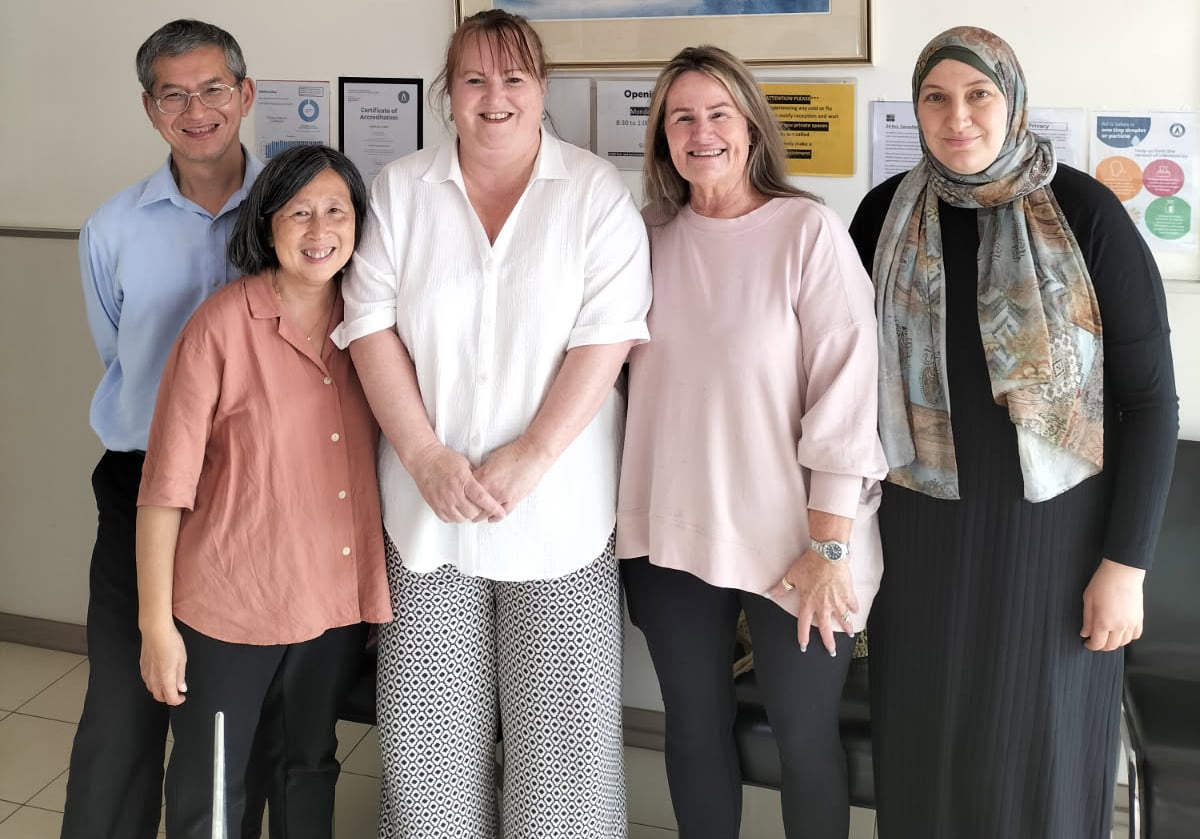
Helen (Truc) Huynh, second from the left in pink
Medical practices play a crucial role in the health of their community – and ensuring everything is done the right way is about more than booking appointments and issuing prescriptions. That’s why general practice accreditation is more than just policy folders and recall and reminder systems. It’s a fail-safe, structured and systematic way to embed quality and safety, improve accountability, reduce risk and improve practice viability.
More than 275 practices across South Western Sydney are currently accredited and a further 22 have started the journey.
Dr Thoa-Van Le from Cabramatta, and practice manager Helen (Truc) Huynh in Padstow, are just two of the happy cohort who completed accreditation in the past 12 months.
While acknowledging accreditation was a thorough process which seemed daunting at first, both experienced professionals reflected on how much they learned through the process and how small, but important, improvements ultimately resulted in better patient care.
Accreditation has a range of benefits for practices, along with its goal of ensuring accountability and promoting a culture of quality and safety. It enables the practice to develop the skill level of their staff and engage their team in continuous quality improvement which increases practice efficiency as well as their patients’ overall health outcomes.
Accreditation reduces risk, improves safety and offers patients assurance a high level of care is always provided. It also increases a practice’s eligibility to access government schemes and financial incentives such as the Practice Incentives Program (PIP), Workforce Incentive Program (WIP) and MyMedicare.
General practices are assessed for accreditation against the Royal Australian College of General Practitioners (RACGP) Standards for General Practice, which are considered the benchmark for high quality care. It is voluntary and valid for three years.
Practices can choose from four independent approved agencies: AGPAL, Quality Practice Accreditation (QPA), Global Mark and The Australian Council on Healthcare Standards. The two most used by practices in SWSPHN’s region are AGPAL and QPA.
Dr Thoa-Van Le has a medical centre in Cabramatta. His practice gained its first accreditation on 1 August 2024. Helen (Truc) Huynh is the practice manager at MD Plus Clinic in Padstow. Her practice received its first accreditation on 14 November 2024.
They were happy to share their accreditation experiences with their peers and talk about why they would encourage others to follow their lead.
Why is the accreditation process important?
Dr Le: Because it ensures we are providing safe, high-quality and patient-centred care, and it gives us an opportunity to reflect on our systems, processes and clinical care, and then benchmark our practice against national standards. Accreditation is not just about meeting requirements; it’s about ongoing quality improvement and creating a culture of excellence within the practice.
Mrs Huynh: It helps to ensure all medical practices in Australia are up to good practice standards and helps to mitigate changes in the working environment, for example Medicare and digital requirements.
What prompted your practice to undertake accreditation?
Dr Le: We wanted to ensure our practice met the highest standards of care for our patients and we were compliant with current regulations and best practices. It was also a way to identify areas where we could improve and grow as a team, ensuring long-term sustainability and trust with our patient community.
Mrs Huynh: We wanted our surgery and staff to be recognised for the great work they have done and to bring our surgery up to date with the changes in Medicare and other legislation requirements.
What did it involve?
Dr Le: The process involved reviewing and updating our policies, procedures and clinical practices to ensure alignment with the RACGP Standards. It also included staff training, reviewing infection control measures, quality improvement activities and ensuring appropriate documentation in both clinical and administrative areas. It required team collaboration and commitment across the entire practice.
Mrs Huynh: It involved all our staff looking at our daily practices, physical environment, procedures and equipment, and comparing it to the good practice standards, then making changes or upgrading to these standards if necessary.
How did your PSO help you understand the accreditation requirements and support you through the process?
Dr Le: Our PSO was incredibly helpful throughout the entire process. She broke down complex requirements into manageable steps, provided clear explanations and offered guidance tailored to our specific needs. Her support was practical and hands-on: from helping us organise our documentation to advising on risk management strategies. Her approach made the process less daunting and far more achievable.
Mrs Huynh: Our PSO helped us greatly in navigating the accreditation procedure by breaking it down to logical, smaller and easy to understand sections. She provided us with all the necessary resources and templates and gave us a good framework to start with.
What were the challenges presented by the accreditation process?
Dr Le: One of the main challenges was balancing the accreditation preparation with our daily clinical workload. It required time, dedication and the ability to manage change without disrupting patient care. Some of the documentation and evidence gathering was time-consuming, but with good planning and support we were able to manage it effectively.
Mrs Huynh: We were quite anxious as this was our first accreditation, and we did not know what to expect. Also, we didn’t know where to obtain some of the requirements. But the greatest challenge was finding time to do the paperwork while still running the busy surgery.
What PHN resources and tools did you find most useful to assist with your accreditation?
Dr Le: The templates and checklists provided by the PHN were very helpful. Most importantly, the one-on-one guidance and personalised support from our PSO made all the difference.
Mrs Huynh: Definitely the templates sent by the PSO and AGPAL. These helped cut down so much writing and typing. Also, the posters were helpful, as some of those are hard to find and take a long time to arrive if ordered online.
What did the accreditation process highlight for you?
Dr Le: It highlighted the importance of clear systems, clinical governance and risk management in supporting safe and effective patient care. It also reminded me of the value of teamwork and regular communication among staff to maintain high standards and respond to changing needs.
Mrs Huynh: It highlighted the gaps in some of our workflow and procedures and showed how the surgery can be better managed.
What areas did you, personally, find out you could improve?
Dr Le: I realised I could improve in areas such as structured quality improvement planning, consistent documentation of clinical actions and formalising internal communication processes. Accreditation gave me the motivation and tools to strengthen these areas.
Mrs Huynh: I found I need to be more organised and streamlining procedures could also help.
What overall impact did your PSO have on your practice’s accreditation outcome?
Dr Le: Our PSO had a significant positive impact on our outcome. Her professionalism, knowledge and patient support enabled us to stay on track and confident throughout the process. I truly believe her involvement was key to our successful accreditation.
Mrs Huynh: The interviewers were most impressed with our clinic performance, especially our paperwork, thanks to our PSO.
Would you encourage other practices to take part? If so, why?
Dr Le: Absolutely. It’s a valuable opportunity for growth, improvement and assurance to patients that their care is being delivered in a safe and high-quality environment. With the right support, especially from a dedicated PSO, the process is very manageable and ultimately rewarding.
Mrs Huynh: I would encourage other practices to take part in the accreditation process. I have learned so much. It also helps to improve our workflow and make it more efficient. Our staff have learned new skills and take more pride in their work, all of which ensures our surgery is functioning better than ever before.
Want to learn about the accreditation process and how SWSPHN can help you? Contact your Practice Support Officer or Practice Advancement Officer for more information.
The Australian Government has announced its intention to expand bulk billing eligibility to all Australians and introduce a Bulk Billing Practice Incentive Program for practices registered with MyMedicare, starting 1 November 2025.
The following information has been provided for general practice:
Information on bulk billing eligibility:
The new measure expands eligibility for bulk billing to all Australians with a Medicare card, expanding the existing program which is currently limited to children under 16 and Commonwealth Concession Card holders. This measure will be available for all practices to participate in from 1 November 2025. More information can be found via the following link – Strengthening Medicare with more bulk billing.
Information on the Bulk Billing Practice Incentive Program (PIP):
The new practice incentive program will introduce a 12.5 per cent loading payment on every $1 of MBS benefit earned from GP NRA (non-referred attendance) services, to be split between the GP and the practice. Details on the split are yet to be released.
To participate in the program, a GP practice will need to:
Commit to bulk bill all GP NRA (non-referred attendance) services
Advertise their participation in the program within the practice and on Healthdirect’s National Health Services Directory
Be registered with MyMedicare (accreditation requirements will be waived for two years for practices joining the program)
Practices would need to register in the Organisation Register and further details on the registration process are yet to be published.
Payments will commence in 2026 and will be issued quarterly.
For support on MyMedicare, please contact your Practice Advancement or Practice Support Officer.
03 September 2024
From 1 September this year, all general practices across Australia will receive a new standardised accreditation certificate with a unique accreditation certificate number when becoming accredited or re-accredited.
Why?
The Department of Health and Aged Care has called for a consistent accreditation certificate number to be allocated to all practices currently accredited under the National General Practice Accreditation Scheme.
By implementing a standardised certificate format and an easily identifiable and consistent accreditation number, the department aims to ensure a practice’s accreditation status is easily verifiable by Services Australia and other relevant bodies.
What does it mean for accredited practices?
Consistent accreditation certificate numbers will ensure a practice’s accreditation status can be quickly and accurately verified. The design of the certificate is more user-friendly and easier to understand, reducing the risk of errors or misinterpretation.
What’s next for practices?
No immediate action is required and your practice’s accreditation status remains unchanged.
For practices already accredited:
Your accreditation agency will have already contacted practices currently accredited, via email.
This email will include details of your new certificate number and information about the next steps provided by the Department. You will not receive a new physical certificate.
If you’re currently registered with MyMedicare, please update your accreditation certificate number on the Organisation Register of MyMedicare.
For practices currently undergoing the accreditation process:
Your accreditation agency will begin issuing the new standardised certificates to newly accredited and re-accredited general practices, from 1 September.
Practices will automatically receive their new certificate, which should be displayed prominently as the official proof of accreditation.
Gain accreditation within 12 months of registering for MyMedicare, before updating the certificate number on the Organisation Register of MyMedicare.


 Practice nurses from across South Western Sydney have built their skills, confidence and capacity to perform cervical screening after completing Cervical Screening Comprehensive Skills Training.