20 August 2021

The Transcultural Mental Health Centre has organised a number of online workshops on Keeping Well during the Pandemic to support multicultural communities.

They include:


Arabic

Date: Tuesday, 24 August

Time: from 10.30am to 12pm

Places are limited to 35 people

To RSVP click on the link below and complete the form.

Click here to register for the webinar in Arabic


Filipino

Date: Wednesday, 25 August

Time: from 10.30am to 12pm

Places are limited to 35 people

To RSVP click on the link below and complete the form.

Click here to register for the webinar for the Filipino community


Spanish speaking

Date: Thursday, 26 August

Time: from 10.30am to 12pm

Places are limited to 35 people

To RSVP click on the link below and complete the form.

Click here to register for the webinar in Spanish


Vietnamese

Date:  Friday, 27 August

Time: from 10.30am to 12pm

Places are limited to 35 people

To RSVP click on the link below and complete the form.

Click here to register for the webinar is Vietnamese


27 July 2021

GP Respiratory Clinics (GPRCs) at Fairfield, Campbelltown, Picton and Mittagong are conducting asymptomatic COVID-19 testing on patients who have been directed by public health authorities to get tested.

Asymptomatic testing at GPRCs will take place until Monday, 30 August 2021 and will be reviewed before this date.

Any appropriate patients should attend via a HotDoc booking.

Please note, this allowance is not intended to provide generalised asymptomatic testing. This should also not displace access for people with symptoms.

In anticipation of increased testing loads at GPRCs, it is critical that while meeting demand GPRCs are still able to maintain the required separation between their vaccine facilities/sessions and testing facilities/sessions.

Any logistical concerns over the ability to meet these requirements can be raised as a matter of priority with Aspen Medical via email at RCInfo@aspenmedical.com.

The continuation of vaccine delivery is paramount, but GPRCs are free to use clinical judgement to modify the model of operation for their clinics (extended hours, change of hours, different session times, additional days etc) to meet demand and to assist with separating your vaccine and testing facilities/sessions.

Please make the GP Respiratory Clinic Team aware of any changes made to operating models via email at gprc@health.gov.au and update those details on HotDoc.

Any concerns with PPE can be raised through SWSPHN’s COVID-19 Response Team via email at covid19@swsphn.com.au

19 July 2021

Given the high number of cases in the community, restrictions have been tightened across greater Sydney to limit transmission of COVID-19’s highly infectious Delta strain.


Key restrictions:

  • Greater Sydney, including the Central Coast, Blue Mountains, Wollongong and Shellharbour is in lock down until at least 11.59pm on Friday, 30 July
  • If you live in the Fairfield, Liverpool, or Canterbury-Bankstown local government areas you cannot leave the local government area that you live in for work unless you are an authorised worker
  • You can go to work in the same local government area you live in if
  • You live and work in the Fairfield, Liverpool, or Canterbury-Bankstown local government areas
  • the business is allowed to be open
  • you cannot work from home
  • Where Fairfield LGA residents are authorised to leave their LGA for work, they are required to be tested for COVID-19 every three days, even if they do not have symptoms
  • Many retail premises must close, with some exceptions
  • Anyone who leaves their home must carry a mask with them at all times. They must be worn when working outdoors, by all school staff, by all people in outdoor markets, outdoor shopping strips, and in an outdoor queue waiting for products such as coffee and food
  • Employers must allow employees to work from home if the employee is able to do so, failure to do so can result in a fine of up to $10,000


Key statistics:

  • NSW recorded 98 new locally acquired cases of COVID-19 – 67 from South Western Sydney Local Health District – in the 24 hours to 8pm last night
  • There have been 1,340 locally acquired cases reported since 16 June when the first case in the Bondi cluster was reported
  • There are currently 82 COVID-19 cases admitted to hospital, with 24 people in intensive care, seven of whom require ventilation
  • There were 75,845 COVID-19 tests reported to 8pm last night, compared with the previous day’s total of 66,671
  • The total number of vaccines administered in NSW is now 3,064,158, with 1,188,887 doses administered by NSW Health to 8pm last night and 1,875,271 administered by the GP network and other providers, to 11.59pm on Saturday 17 July


More information:

COVID-19 – main page
Updates on restrictions 
Updates on case locations
Testing options in South Western Sydney

Check your eligibility and make vaccine bookings via the

Vaccine Eligibility Checker

15 July 2021

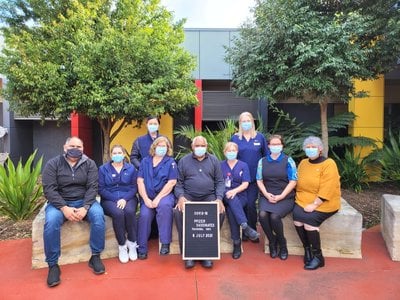
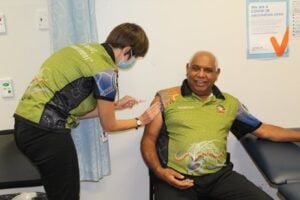
More than 220 young Indigenous people have had their first COVID-19 shot after Tharawal Aboriginal Medical Service (AMS) partnered with NSW Health last week to co-ordinate a Pfizer clinic at the AMS in Airds.

Tharawal Aboriginal Corporation Chief Executive Officer, Darryl Wright, who led by example receiving the AstraZeneca vaccine on the first day it was rolled out through general practices in March, said he was happy to see so many young people turn up to be vaccinated, including 130 on the first day.

“As I said when I got my jab in March, don’t be afraid, it’s not only for your own good but for your family,” he said.

All Aboriginal and Torres Strait Islander people aged 16 and over are now able to access a COVID-19 vaccine. Getting a COVID-19 vaccine is a safe and effective way of protecting yourself from getting really sick from COVID-19.

Check with your local healthcare worker to make an appointment.

Find information for Aboriginal and Torres Strait Islander peoples about COVID-19 vaccines

Pictured are the vaccination team: Sandra Castle, Rose Gordon, Amelia Tran-Bencio and Tracy Burnett (NSW Health – vaccination team); Karen Beetson and Natalie Sabuncuoglu (NSW Health – Aboriginal Health); and Darry Wright CEO, Dwayne Knight and Joanne Ross (Tharawal AMS).

14 July 2021
  • Sydney’s lockdown extended for at least another two weeks
  • 97 new locally acquired cases in NSW overnight


COVID-19 – main page

COVID-19 (Coronavirus) statistics (including information about the Fairfield LGA)

Updates on restrictions 

Updates on case locations

Testing options in South Western Sydney


Other key points from the Premier’s update:

Of the 97 locally acquired cases reported to 8pm last night, 70 are from South Western Sydney Local Health District (LHD).

The high number of COVID-19 cases and exposure venues in the Fairfield LGA means Fairfield residents who work in other LGAs must now be tested for COVID-19 every three days, even if they do not have symptoms.

People who don’t have symptoms who will be travelling outside of the Fairfield area for essential work have until the end of Friday 16 July to get tested.

These people, who do not have symptoms, do not need to wait for a negative test before going to work although they must carry proof of the test and then after 16 July, they must get a test every three days. They are allowed to get tested near their workplace to take pressure off local testing clinics.

If you do have symptoms, don’t go to work, get tested as soon as possible and go home and isolate.  If you are in the line when testing clinics are busy, please stay in link and tell staff that you have symptoms.

A 24/7 COVID-19 testing clinic has opened in the car park of the Endeavour Sports Park on Maud Street, Fairfield West.

A number of existing COVID-19 testing clinics in Fairfield LGA are also extending their opening hours, including:

  • Fairfield Showground Syd-Path Drive-Through Clinic, 443 Smithfield Road, Prairiewood – open every day from 6.30am to 10pm until further notice
  • Smithfield Douglass Hanly Moir Drive-Through Clinic, Brenan Park, Bourke Street, Smithfield – open every day from 6am to 8pm until further notice
  • Bossley Park Laverty Pathology Drive-Through Clinic, Club Marconi, 121-133 Prairie Vale Road (enter via Restwell Road to underground park), Bossley Park – open every day from 8.30am to 6pm until further notice
  • Wetherill Park 4Cyte Drive-Through Clinic, 22-30 Mansfield Street (enter via 31 Rosetti Street), Wetherill Park – open every day except Saturdays from 8am to 8pm until further notice


Also of note:

Premier Berejiklian praised and thanked the Fairfield community for turning out in large numbers to be tested and for limiting their mobility in response to the health concerns.

“Fairfield has responded in an outstanding way,” the Premier said.

Ms Berejiklian urged residents in the Canterbury-Bankstown and Liverpool LGAs to also reduce their mobility.

“We want to make sure those adjoining council areas also respond in the same way because we don’t want to see community transmission extend to other parts of Sydney,” the Premier said.

“At this stage, three quarters of the cases are still in the Fairfield local government area. There’s a smattering all over the place, including the Eastern Suburbs and elsewhere but at this stage given the majority of cases are in the Fairfield we need those adjoining council areas where people interact between to also reduce their mobility. That means stay at home. Don’t leave the house unless you absolutely have to.’’

07 July 2021

If you want to get your COVID-19 vaccination but do not have access to transport – South West Community Transport can get you there.
NSW Health COVID-19 restrictions allow you to leave your home to receive your COVID-19 vaccination. South West Community Transport provides individualised, door-to-door transport to your local doctor, medical or vaccination centre, with care and support.
Find out the steps to make an appointment

06 July 2021

On 10 June 2021 the Infection Control Expert Group released revised guidance on the use of personal protective equipment (PPE) for healthcare workers in the context of COVID-19.

Healthcare workers providing direct patient care or working within the patient zone for individuals with suspected or confirmed COVID-19 should have access to P2/N95 respirators.

For these healthcare workers, the choice between P2/N95 respirator or surgical mask should be based on an assessment of the risk of transmission.

The risk assessment should include whether there is known community transmission of COVID-19, the individual patient’s pre-existing likelihood of COVID-19 and individual patient factors. 

All jurisdictions have their own guidelines in determining the risk of COVID-19, which in turn guides the level of PPE healthcare workers need when treating patients.

If a healthcare worker has determined they require a P2/N95 respirator, the healthcare worker should be appropriately trained in the use of a P2/N95 respirator.

This includes fit-testing and complying with any jurisdictional requirements for appropriate P2/N95 respirator use.

Further information on fit testing is available from health websites for each jurisdiction. In situations where fit testing has not yet been carried out, and a P2/N95 respirator is recommended for use, it is preferred to use a fit-checked P2/N95 respirator rather than a surgical mask.

To read the full statement

10 June 2021

When SWSPHN staff pitched in to help prepare and deliver 423 packs of surgical and P2/N95 masks for general practices across our region in January 2020, we didn’t imagine almost 18 months later we would still be supporting our GPs, and our community, through the challenges of “the novel coronavirus”.

While our support has evolved with the changing needs of our primary carers over the past year, our commitment to ensuring our community has the access to care and information needed to help them through this pandemic, has not.


Our role has included:


Mask delivery

SWSPHN staff have supported general practice by supplying personal protective equipment (PPE) from the national stockpile since the start of the pandemic.

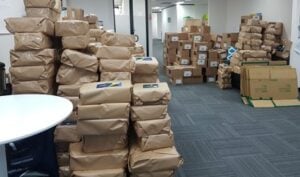
In January 2020 staff pulled together to get the packs ready and out to practices as soon as possible. It was an incredible logistical challenge for staff to tailor each pack according to practice size and carefully package at different workstations.

Since those early days, we have overseen the distribution of 24,151 boxes of surgical masks, 2,523 boxes of P2 masks and 15,350 gowns (as of 31 May 2021).
 

Appointment of a COVID-19 Response Coordinator

SWSPHN appointed a COVID-19 Response Coordinator in April 2020 to liaise with the South Western Sydney Local Health District (SWSLHD) on training for general practice and assist in increasing community testing; liaise with the Department of Health on our region’s four general practice respiratory clinics; liaise with the GP respiratory clinics and other practices who are testing; organise mask allocations and deliveries from the national stockpile; facilitate a team of COVID-19 response dispatchers; source masks and gowns; respond to enquiries from GPs, allied health, pharmacies and specialists; and work with our communications team to ensure correct and up-to-date information is conveyed.


Working with GPs to establish testing clinics

SWSPHN helped identify and consult with existing, suitable general practices to establish four GP respiratory clinics across the region. We distributed an expression of interest to GPs; and provided the Department of Health with feedback on locations and the suitability of sites which expressed interest. We are continuing to: liaise with the clinics at Mittagong, Picton, Campbelltown and Fairfield; supply clinics with PPE; and communicate locations, times and how to book an appointment at these clinics to our community.
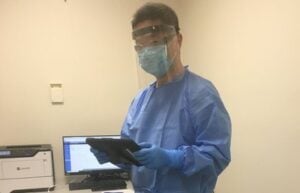
We are also supporting the 36 general practices in our region testing for COVID-19. This includes two Wollondilly practices; two Camden practices; one Campbelltown practice; eight Fairfield practices; eight Liverpool practices; 11 Bankstown practices; and four practices in the Wingecarribee Shire.

This support includes P2 mask and gown deliveries; organising infection control training for practices; and promoting the times those practices are testing via our website, social media and through translated information sheets.


Supporting the vaccine rollout

We are supporting the vaccine rollout to general practices, GP-led respiratory clinics, Residential Aged Care Facilities (RACFs) and disability accommodation facilities.

In Phase 1a, we supported 68 RACFs in the vaccine rollout with to date 68 sites having received their first dose of the COVID-19 vaccination and 64 having received both doses.

We distributed Expressions of Interest for general practice participation in Phase 1b of COVID-19 vaccine rollout in January and June 2021 and have provided the 241and four GP respiratory clinics selected to participate with updates and information about the AstraZeneca and Pfizer vaccines.

In Phase 2a, we’ve supported 42 general practices to start vaccinating over 50s early.

Fifty seven per cent of general practices in South Western Sydney are currently vaccinating patients with AstraZeneca as part of Phase 1a, 1b and 2a of the national vaccine rollout.
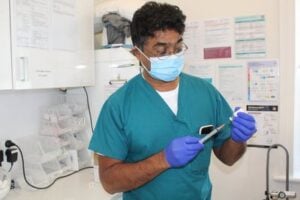
 

SWSPHN also assisted 912 general practice staff and healthcare workers book their COVID-19 vaccination at SWSLHD’s Liverpool/Oran Park hubs prior to automation of the registration system.

SWSPHN has also been contacting disability accommodation providers to support vaccine pathways for residential facilities, including GP in-reach, and communicating eligibility and options to this workforce.


Other support provided to general practices in 2020

  • Transition of Continuing Professional Development (CPD) to Zoom instead of face-to-face meetings
  • Hosted COVID-19-specific CPD and meetings linking the Public Health Unit with GPs who consulted in languages including Vietnamese, Khmer and Arabic when there were clusters in those communities
  • Weekly Practice Pulse newsletter focusing on COVID-19 to ensure healthcare providers had the most up-to-date information on the pandemic
  • The development of a wealth of new HealthPathways to support GPs in providing care during COVID-19
  • Translated testing options factsheets in a variety of languages
07 June 2021

The Chief Health Officer has provided an update regarding COVID-19 immunisation and the current understanding of the Thrombosis with Thrombocytopaenia Syndrome (TTS).


Updated guidance – diagnosis and management of TTS


Webinar catch-up for GPs

To watch the webinar


Updated ATAGI advice regarding the risk of TTS following COVID-19 vaccine AstraZeneca – 4 June

To read the full update

ATAGI examined estimates of risk of TTS by age group in Australia and note that there have been 31 confirmed cases reported and a further 10 are considered probable in around 2.2 million doses of COVID-19 Vaccine AstraZeneca given up to 19 May 2021.

Although estimates of risk based on small numbers of cases are imprecise, the risk of TTS is estimated in Australia at around:

  • 3.1 per 100,000 in those <50 years; and
  • 1.8 per 100,000 in those ≥50 years.

There were no significant differences in estimated risk by sex in those ≥50 years of age.

A breakdown of current rates by decade of age for those aged ≥ 50 years is included here:

Age bracket (years)

Estimated rate (per 100,000 AZ vaccinations)

<50

3.1

50-59

1.9

60-69

1.7

70-79

1.9

≥80

1.5

ATAGI discussed the case summary and clinical data of TTS cases. It was noted that TTS outcomes occur across a spectrum of severity from more mild cases to cases with long-term morbidity and can result in death, with one fatal case recorded to date in Australia.

ATAGI emphasised the ATAGI/THANZ joint statement on TTS and the use of the COVID-19 Vaccine AstraZeneca is an important resource. The statement provides updated information about TTS and reaffirms ATAGI’s previous advice regarding the safe use of the COVID-19 Vaccine AstraZeneca.


TGA weekly safety report – 3 June

To read the full report

Updated reporting rates of TTS in Australia were published in the statement from ATAGI on 26 May. These reporting rates remain consistent with what is being seen internationally, including in Europe, the UK, the Middle East and Canada.

While TTS is very rare, some people will have concerns that they can discuss with their doctor. This is essential to allow people to make an informed choice. Anyone who has been vaccinated should seek immediate medical attention if they develop any of the following symptoms after vaccination:

  • severe or persistent headache or blurred vision
  • shortness of breath, chest pain, leg swelling or persistent abdominal pain
  • unusual skin bruising and/or pinpoint round spots beyond the site of vaccination

The most common time period for onset of TTS symptoms is four to 30 days after vaccination.


Reminder – reporting Adverse Events Following Immunisation

Serious adverse events in the six weeks following immunisation are notifiable conditions in NSW. You should urgently notify your local Public Health Unit if you are concerned a patient has presented with a serious event in the six weeks following any immunisation.

27 April 2021

The below information provides a summary of recent clinical updates and clarifications that address specific questions COVID-19 vaccination providers have raised.

Clinical updates and considerations can be found on the clinical considerations page on the Department of Health website.


Interruption to COVID-19 vaccination and advice for re-vaccination

  • If the process of administering a vaccine intramuscularly is interrupted (such as by syringe–needle disconnection) and most of the dose has not been given, repeat the whole dose as soon as practicable. If most of the dose has been given, repeat dosing is not required. If there is uncertainty, it is acceptable to administer a repeat whole dose.


Timing for administration of the second dose of COVID-19 vaccine when COVID-19 is contracted between the first and second dose

Where an individual contracts COVID-19 between the first and second dose of the COVID-19 vaccine, in general the following is recommended:

  • The second dose of Pfizer vaccine should be given a minimum of eight weeks after the individual has recovered from their acute illness
  • The second dose of AstraZeneca COVID-19 vaccine should be given a minimum of 12 weeks after the individual has recovered from their acute illness

Where an individual is very likely to be in contact with cases of COVID-19 (eg an individual working in quarantine), consideration may be given to shortening the above recommended intervals. In this instance, clinicians may wish to seek advice from a specialist immunisation service.