05 October 2021

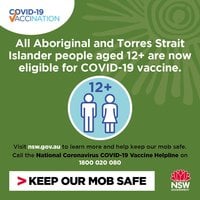
Thanks to the contribution of general practice, half of all eligible Aboriginal people in NSW received their first COVID-19 vaccine by mid-September. But with easing of restrictions in NSW fast approaching, it’s important Aboriginal people aren’t left behind in double-dose vaccination targets.

Aboriginal people are at increased risk of acquiring and developing serious illness from COVID-19, yet vaccination rates of Aboriginal people in NSW lag behind non-Aboriginal people, in some areas by up to 30 per cent (first dose coverage, Source: Australia Immunisation Register, 30 September 2021).  Because of this, Aboriginal people still require priority access to a COVID-19 vaccine.

NSW Health asked GPs, practice nurses and practice managers to share strategies to increase vaccination rates among their Aboriginal patients. This is what they recommend:


Contact your Aboriginal patients and offer priority vaccination

Advertising your vaccine-provider status helps, but pro-actively contacting your Aboriginal patients for a vaccination appointment will have a bigger impact: a phone call for some, SMS for others.

Use the opportunity to encourage your Aboriginal patients to bring their whole family/household to get vaccinated, and consider including web links to patient vaccine information in SMS message, including Q&A’s and information flyers.

Consider setting aside dedicated vaccination appointments for Aboriginal people each week, and ensure they are a priority when creating waitlists or when filling cancellations.


Give people the opportunity to identify as Aboriginal by asking the question

When people enquire about or book in for COVID-19 vaccination, asking the Aboriginal status question enables you to prioritise Aboriginal patients for appointments.

Accurate Aboriginal identification allows you to provide quality clinical care and is an opportunity to register patients for the CTG PBS Co-payment program. Aboriginal identification is also key to accessing funding under the Practice Incentives Program Indigenous Health Incentive. All patients should be asked the standard identification status question, consistent with RACGP recommendations and Standards for General Practice.

Making your practice inclusive and welcoming for Aboriginal people encourages self-identification (for vaccination and visits for other reasons). These practical steps will help in providing culturally safe healthcare and this printable reminder will keep Aboriginal patient identification top of mind.


Initiate conversations about vaccination with Aboriginal patients when they attend for other reasons

Use practice software prompts and action lists to identify Aboriginal patients during consultations, and ask about vaccination.

Information to help you discuss vaccination with Aboriginal people is available here. Aboriginal Health Workers in local Aboriginal Community Controlled Health Services can also support conversations about vaccination.


Promote vaccination to Aboriginal patients inside your practice and through other patient communications

Take advantage of your patients’ focused attention and run videos on your waiting room TV screens. The NSW Health “Yarn-Up” series is popular, so use Episode 1Episode 2 and Episode 3 on rotation.

Displaying posters designed for Aboriginal people and having patient brochures available helps, as does posting about vaccination on your website and social media. You can share posts from the NSW Health pages (FacebookTwitterInstagram and TikTok) or create your own using our social tiles and videos.


If you don’t offer the preferred vaccine, help Aboriginal patients find another provider

If you’re not providing COVID-19 vaccination, or don’t have the preferred vaccine available, refer your Aboriginal patient to a local Aboriginal Community Controlled Health Service, an Aboriginal-specific Local Health District service or a local pharmacy vaccine provider (this may involve helping your patient make an appointment).

Not all patients will be comfortable attending mass vaccination clinics, so finding a clinic that suits their needs is important. Being familiar with other vaccine providers in your area will help. More options are coming on-line each week.

Recent improvements mean it’s now easier for patients to find a clinic, register and book an appointment via the Vaccination Clinic Finder. This requires internet access, so offering help to access the portal will assist.


If transport is an issue for your Aboriginal patients, consider offering in-home visits

Earlier this year, the Australian Government implemented MBS new funding arrangements to improve the viability of administering of COVID-19 vaccines via in-home settings. The new MBS item number (90005), when combined with an assessment to determine a patient’s suitability and administering the dose itself, makes a home-visit delivery model more feasible.


Additional information/support

And finally, if you have questions or would like additional resources to support Aboriginal people around COVID-19 vaccination, get in touch with NSW Health.

26 September 2021

The COVID-19 global health crisis has significantly affected countries worldwide since the end of 2019. A well-coordinated vaccination program is essential to facing the unprecedented challenges of the pandemic and to minimising hospitalisation and death from COVID-19.

General practices are playing a significant role in the mass vaccine rollout in Australia. According to the Australian Government Department of Health data, as of 5 August 2021, 7,007,815 Commonwealth vaccine doses had been administered in the primary care setting.

Infographic showing total vaccine doses in Australia as at 5 AUgust 2021 being 13,270,296

Resources and coordination at the general practice level will be required to achieve the goal of vaccinating eligible Australians by the end of 2021. Continuous quality improvement (CQI) in running the COVID-19 vaccine program is vital to achieving this goal and ensuring efficiency, effectiveness, consumer satisfaction, fewer vaccine safety incidents and lower resource wastage with better planning.

Actively participating in South Western Sydney PHN’s (SWSPHN) Quality Improvement In Primary Care (QIPC) program enables general practices in our region to work on their COVID-19 vaccine program as a quality improvement activity, with simple and practical guidance provided by their Practice Support Officer or Health Systems Improvement Officer.


How can QIPC assist with the COVID-19 vaccine program?

The QIPC program aims to improve the quality and efficiency of patient care in general practice by identifying areas for improvement, assisting with goal setting, and providing progress reports and feedback based on practice-based data extraction.

POLAR, the clinical audit tool, helps to utilise practice data in a meaningful manner. In early 2021, POLAR developed a COVID-19 Vaccine Planning report which is available to all eligible practices in the region, and provides an opportunity for practices to plan their COVID-19 vaccine program more effectively and efficiently.


How to make use of the COVID-19 Vaccine Planning report

Selecting a suitable patient cohort to start the vaccination program can be challenging for many practices. The COVID-19 Vaccine Planning report gives practices a quick performance overview and the characteristic of the practice population. The report has two core functions:

  • Patient cohort identification based on phases, age and chronic diseases
  • Vaccination status tracing

It enables the practice to select and focus on those patients who can benefit the most from having the vaccine first or even to chase up a patient who has overdue vaccines.


Patient cohort identification

As seen from the screenshot above, the main interface provides an overview of how your practice is progressing in the vaccine program based on each age group. The active patient count shown on top represents active patients within your practice system; patients marked inactive are not being counted. The interaction on the left-hand side has clickable buttons that enable your practice to select the patient cohort you need; hover text clarifies what each button means.

If your practice would like to focus on a specific phase, vaccine status or age group, simply click on the button, “Active Patient Count” and the number of patients in the selected patient cohort will appear.


Vaccination status tracing

The above screenshot is one of the most useful pages in this report, located under the tab “Patient Phase Details”. It provides your practice with all the information you require to view a patient’s vaccination status. All the vaccination data is based on the information within your clinical software. To enhance the report’s accuracy, it is important to keep records up-to-date even if one of the vaccines is done elsewhere.

Each description on top of the table has a magnifying icon. By clicking on that, you can filter each item down to the patient cohort you want. Once all the required filters are applied, a patient list can be generated and exported to Excel.


Examples walkthrough:

Identify patients aged between 30 to 49 years old who have not had the COVID-19 vaccine ever

Identify patients aged 60 years old and above who are overdue for a second dose of AstraZeneca vaccine


Additional information:

For a detailed explanation on this report, please refer to the POLAR webinar April 2021 and fast forward to 28:35 – 42:00 minutes, alternatively contact your support officer or email enquiries to HSIsupport@swsphn.com.au

23 September 2021

You can get proof of your COVID-19 vaccinations online and it’s free!

You can access your immunisation history statement or COVID-19 digital certificate using your Medicare online account through myGov.

Once you’ve linked Medicare to your myGov account, you’ll be able to see your immunisation history statement.

You can get a copy of your statement online at any time.

If you’re fully vaccinated, you’ll also be able to access the COVID-19 digital certificate.

You’ll get an email to your myGov Inbox or a text to your mobile when your certificate’s there.

Once you have your digital certificate, you can add it to your Apple Wallet or Google Pay.

 You can also easily add your COVID-19 digital certificate to the Service NSW app. This means you can quickly check in and show proof of your COVID-19 vaccination wherever it’s required.       

Follow these steps

If you’re 14 years or older, you’ll need to get your own immunisation history statement or digital certificate using your own Medicare online account through myGov.

If you’re not eligible for Medicare, you can use the Individual Healthcare Identifiers service through myGov to get proof of your COVID-19 vaccinations.

For more information:

Services Australia – How to get proof

Additional resources, including specific resources for Indigenous and Culturally and Linguistically Diverse Communities:

Services Australia – Employees and customers


21 September 2021

It’s been a challenging time for people in South Western Sydney living in COVID hotspots but our region’s residents have shown their grit and turned out in high numbers to get vaccinated.

From 27 June, we’ve gone from 53,934 locals fully vaccinated against COVID-19 to 443,275 locals fully vaccinated. In the same three months, we’ve gone from 162,098 people having received one dose of vaccine to 747,898  people getting their first jab.

These figures show we’re well on our way to having 650,000 residents fully vaccinated and moving towards some freedoms from lockdown.

If you’re not vaccinated, now’s the time to make a booking and roll up your sleeve to get the COVID-19 vaccination.

Don’t miss out on getting out and about to visit friends and family, eat out, travel and enjoy events. But most importantly, protect yourself, the people you love and your community from the severe effects of COVID-19 and hospitalisation.

There are plenty of places nearby to get vaccinated, including:

  • your GP
  • GP respiratory clinics
  • walk-in clinics
  • local pharmacies
  • South Western Sydney Local Health District vaccination hubs and pop-up clinics
  • Aboriginal community-controlled health services

Please visit the Vaccine Eligibility Checker to find the most appropriate vaccination option for you.

A big thanks goes out to those who’ve been vaccinated so far.

Wollondilly local government area (LGA) had the highest percentage of first doses last week compared to other LGAs in South Western Sydney, with vaccinations jumping by 5.8 per cent compared to between 3.3 per cent to 4.1 per cent in our other LGAs. Fairfield, Camden, Liverpool and Bankstown LGAs also did themselves proud with second doses, with the vaccination rates jumping by between 8 per cent to 9 per cent last week.


As of Monday, 20 September, in South Western Sydney:

  • 747,898 first doses (81 per cent) and 443,275 (48 per cent) of second doses had been administered
  • General practices have administered 342,700 doses and NSW Health has administered 315,300 doses
  • Male versus female – each have had 373,000 first doses; females are ahead in second doses with 226,000 women and girls fully vaccinated compared with 217,000 men and boys fully vaccinated
  • General practice administered 51,190 doses last week (the biggest week so far)
  • By age group –
  • More than 90 per cent of people 30 to 39 and people aged 60 and over have had their first COVID-19 vaccination
  • More than 70 per cent of people aged 60 and over are fully vaccinated

Let’s do this South Western Sydney!


Why should I have a COVID vaccination?

  • Vaccination is the best way to protect yourself and your community from COVID-19.
  • COVID-19 can spread quickly and widely. It has resulted in more than 1,000 deaths in Australia.
  • When enough people in the community are vaccinated, it slows down the spread of disease.
  • This reduces the need for preventive measures, such as border closures and travel restrictions.
  • Achieving herd immunity is our long-term goal. This requires a large amount of the population to be vaccinated.


Who should have a COVID vaccination?

  • Vaccination against COVID-19 is recommended for all individuals 12 years of age and older.


Is it safe to have a COVID vaccination?

All vaccines are thoroughly tested for safety before they are approved for use in Australia. This includes careful analysis of clinical trial data, ingredients, chemistry, manufacturing and other factors.

Side effects:

  • You may experience minor side effects following vaccination. Most side effects last no more than a couple of days and you will recover without any problems.
  • Some people will experience more significant flu-like symptoms from the vaccine compared to other common vaccinations and may need time away from normal activities.
  • For the Pfizer vaccine, these symptoms are more common after the second dose. For the AstraZeneca vaccine, these symptoms are more common after the first dose.

Link between AstraZeneca and TTS:

  • There has been a link between the AstraZeneca vaccine and a syndrome called thrombosis in combination with thrombocytopenia (TTS). This is an extremely rare blood clotting syndrome.
  • There is a very low chance of this side effect, which may occur in around one to two people in every 100,000 after being vaccinated.
  • The medical advice remains that the AstraZeneca COVID-19 vaccine is safe and recommended for people over 60.
09 September 2021

Food relief in NSW is available for people who are experiencing hardship and do not have the means to obtain their own groceries.  

Food relief is also available for people who have been directed to self-isolate by NSW Health and do not have the means to obtain their own groceries during the period of isolation. 

Download this factsheet to learn more

09 September 2021

Any patient who receives an invoice from NSW Ambulance and their reason for treatment and/or transport is related to COVID-19, is exempt from paying the invoice. The same applies for patients who have had an adverse reaction to a COVID-19 vaccine.

Patients who receive an invoice can contact NSW Ambulance on 1300 655 200 to request an exemption. An exemption can be lodged online – please login with your invoice number and follow the prompts.

Source: NSW Ambulance

03 September 2021

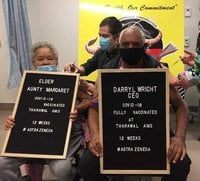
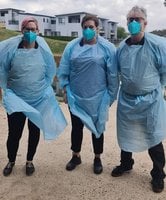
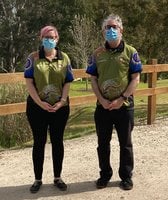
Tharawal Aboriginal Medical Service (AMS) in Campbelltown has been doing some incredible work in ensuring our Indigenous people and the wider community are vaccinated against COVID-19.

Tharawal AMS joined general practices across South Western Sydney in March to be among the first GP services to vaccinate when the rollout began through primary care.

Tharawal Aboriginal Corporation Chief Executive Officer, Darryl Wright, was also among the first to roll up his sleeve for the jab.

At the time, Mr Wright told South Western Sydney PHN the service had 80 Elders aged 55 and over booked for vaccinations within 10 minutes of opening bookings.

“It’s about keeping healthy – we want to ensure our Elders and those with chronic disease in particular, don’t get the coronavirus,” he said.

Since March, Tharawal AMS has continued to educate local Aboriginal people about the benefits of vaccination and has held a number of vaccination clinics to ensure as many people as possible – including young people – are vaccinated.

This included a drive aimed at 12 to 18-year-olds which saw around 160 Aboriginal teenagers vaccinated, once the opportunity was opened to First Nations people aged 12 and over in August.

Mr Wright told SBS on 20 August now that Indigenous young people were eligible for vaccination, they had showed up with their parents and grandparents.

“Even now, with the young ones between 12 and 18, we advertised and within an hour we had 90 (vaccine) bookings, so that’s a good sign,” he told SBS.

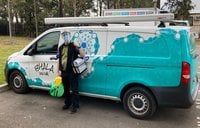
Now Tharawal AMS’s vaccination service has gone mobile, taking to the road to vaccinate vulnerable communities regardless of background.

SWSPHN’s COVID-19 Response Team is helping facilitate the vaccinations, providing Tharawal AMS with the names of vulnerable individuals in Campbelltown and Camden who face barriers to accessing the vaccine.


Dr Tim Senior, Dr Allison Thorn and nurse Paige Leech (pictured right) visited Mount Gilead retirement village on Thursday, 2 September to vaccinate 10 residents.

During the past week, staff have also administered vaccines to 12 teenagers in a group home, a 16-year-old boy living with disability and a bed-bound elderly man in Campbelltown.

Mr Wright told SBS Tharawal AMS was lending a hand to boost vaccinations for non-Indigenous people living in the area.
 

“We’ll go out with the van and do anyone walking around the street in Campbelltown, because we want everyone to be vaccinated, because they’re living in the community.”

  • General practices across South Western Sydney are working to support vulnerable people who are struggling to access the COVID-19 vaccine by administering vaccinations in homes and work places. If you are aware of someone in the community who is immobile or living with disability, and wants to be vaccinated, please email SWSPHN’s COVID-19 Response Team at covid19@swsphn.com.au to be connected to a local general practice providing vaccine in-reach services.


30 August 2021

Healthcare workers

A Public Health Order requiring healthcare workers and aged care workers to be vaccinated against COVID-19 is now in effect.

The  Public Health (COVID 19 Vaccination of Health Care Workers) Order 2021 requires the first dose of a vaccine by 30 September 2021, with a second dose required by 30 November 2021.

The order applies to:

  • in the public sector, persons who work for the NSW Health Service, for a public health organisation, the Health Administration Corporation and Ambulance Service of NSW, as well as staff of the Ministry of Health
  • in the private sector a person who does work in a private health facility, being a private hospital or day procedure centre
  • in the private sector, registered paramedics whose work involves transporting, or assessing whether to transport, persons to and from a public or private health facility

Work is defined broadly to cover employees, contractors, VMOs, visiting practitioners, volunteers and students undertaking clinical placements.

The order does not now include private primary care providers such as GPs.


Aged care facilities

The Public Health (COVID-19 Aged Care Facilities) Order 2021 requires staff (including contractors) of a residential aged care facility (RACF) and people engaged by the operator to provide services, including health practitioners engaged by the operator, (other than students and certain maintenance contractors) to have received the first dose of the COVID-19 vaccination in order to enter or remain at the RACF after 9am on 17 September 2021.

The order also requires students on placement and health practitioners engaged by a resident to have received the first dose of the COVID-19 vaccination in order to enter or remain at the RACF after 9am on 31 October 2021.


Under both orders, employers are responsible for taking reasonable steps to ensure workers comply with the order.

Workers will need to provide evidence of having received a COVID-19 vaccination if requested to do so by their employer. Employers will be able to request this information.

An exemption is available for a worker if they are unable to be vaccinated a due to a medical contraindication.

Workers will be required to provide evidence of a medical contraindication via a certificate from a medical practitioner, in a form approved by the Chief Health Officer which specifies the medical contraindication.

There is an exemption which will apply if a person needs to do work in a medical emergency or non-medical emergency.

The Health Minister may exempt other persons from these requirements but only if satisfied it is necessary to protect the health and well-being of patients in the facility.

25 August 2021

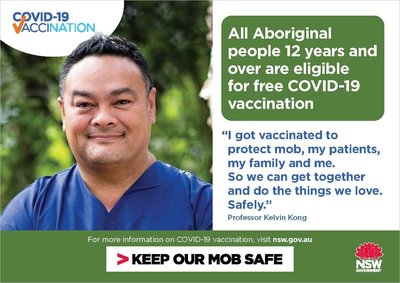
All Aboriginal people 12 years and over are eligible and a priority population for COVID-19 vaccination, yet the current vaccination rate among Aboriginal people in NSW is significantly lower than non-Aboriginal people. Outbreaks affecting Aboriginal communities in different parts of NSW have increased the urgency for vaccination.

Building on trusted relationships with your patients and the local community, general practice is well placed to overcome barriers to vaccination among Aboriginal people, including misunderstanding about eligibility and concerns about adverse reactions.

NSW Health suggests the following to increase COVID-19 vaccination rates among Aboriginal people:

  • Ensure eligible Aboriginal people are prioritised for a vaccination appointment
  • Contact existing eligible Aboriginal patients and offer priority vaccination
  • Ensure people who enquire about COVID-19 vaccination are asked if they identify as Aboriginal, to confirm their vaccination eligibility
  • Offer vaccination to Aboriginal patients when attending for other reasons
  • If you are not providing COVID-19 vaccination, refer Aboriginal patients to another provider
  • Display/use hardcopy posters and social media images to encourage vaccination

Information to support health professionals to talk to Aboriginal people about vaccination is available here.

Please contact NSW Health if you have questions or would like additional resources to support Aboriginal people around COVID-19 vaccination.

NSW Health appreciates the significant contribution general practice in South Western Sydney is making to the COVID-19 control and prevention efforts – thank you.


20 August 2021

COVID-19 has impacted many people living and working in aged care, including aged care residents, home care recipients, their families, families of choice, friends, loved ones, community visitors and aged care staff.

Many people living, working, or caring for those in aged care may be suffering grief from the death of a loved one due to COVID-19 or from missing their visitors, their routines, and loss of important life events. People in and around aged care may also be experiencing trauma as a response to traumatic events, isolation, physical distancing, COVID-19 hotspot lockdowns, ongoing uncertainty, and visitor restrictions.

It’s ok to seek help. The Australian Government has funded mental health, grief, trauma, and education experts to produce online resources and support you either in-person or on the phone.

These include:


Support for grief, loss and bereavement

The Australian Centre for Grief and Bereavement provides support, advice, and counselling in a one-to-one or group setting through video calls and in person. Call 1800 222 200, 9am to 5pm, Monday to Friday or visit www.aged.grief.org.au


Resources about the impacts of trauma

Phoenix Australia offers information and resources for older people impacted by trauma and their families, loved ones and aged care staff. Visit www.phoenixaustralia.org/aged-care 


Help for people living with dementia where behaviours are impacting their care

Dementia Support Australia has a free national service providing 24-hour help, 365 days a year.  Their dementia consultants provide support to people who care for someone living with dementia. Call 1800 699 799, 24-hours, seven days a week. Visit www.dementia.com.au


Advocacy and support

The Older Persons Advocacy Network (OPAN) is a free, confidential, and independent service supporting people receiving or applying for government-subsidised aged care. OPAN helps people resolve any aged care issues and understand their aged care rights. Call 1800 700 600, 6am to 10pm, seven days a week. Visit www.opan.org.au


Free, confidential, and accessible

All services and resources are free, confidential and respect your culture, religion, identity, and lifestyles. Translated brochures and posters are available for download and to order in print on the program resources page.

Interpreting is also available, call 131 450 for Translating and Interpreting Service (TIS) and ask for your language to connect. Or call 1300 010 877 for Auslan Connections, email interpreter.bookings@deafservices.org.au, fax 07 3892 8511 or SMS 0407 647 591.

For more information, visit the Australian Government Department of Health website or contact: ageing.and.diversity@health.gov.au