21 October 2022

After years of screaming from the rooftops, “if you’re in crisis call Lifeline, if you’ve got a problem, please put your hand up and ask for help” we are now seeing people reach out in numbers we’ve never seen before.

Lifeline International President and keynote speaker, John Brogden AM had this positive message for attendees at SWSPHN’s Mental Health Symposium 2022 at Rydges, Campbelltown on Wednesday, 19 October.

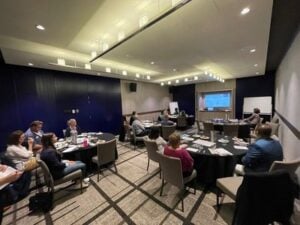
The symposium aimed to highlight a range of innovative local programs, initiatives and supports to address the needs of South Western Sydney, and work towards improved mental health outcomes.

It was facilitated by Adam Holstein who has been working in the community services sector for more than 20 years in the areas of youth work, disability services, training and mental health.  

Mr Brogden joined Anthea Raven, from the Mental Health Access Branch of the Department of Health and Aged Care, as the two keynote speakers for the event.

The former NSW Opposition Leader shared his personal experiences “living” with mental illness and suicidal ideation with an audience of almost 200 attendees via Zoom from Ghana, West Africa where he is supporting the establishment of a Lifeline-style helpline.

“Early in my time at Lifeline, when our call numbers used to go up, I used to think there was something wrong – there’s a problem in Australia,” he told the audience. “But now I think the more calls we get, the better the situation is.

“After years and years of telling people to reach out, we are now seeing them reach out. We are now seeing them in numbers we’ve never seen before.

“Lifeline is an anonymous service. What people can’t tell mum, dad, boyfriend, girlfriend, husband, wife, best friend, boss, whoever it might be, they can ring a complete stranger. We practice nonjudgmental listening – that’s an important element of what we do.”

The symposium was held face-to-face for the first time since 2019, due to the COVID-19 pandemic.

Opening the event, SWSPHN Director of Planning and Performance, Amy Prince, said she was struck by how much the landscape had changed in the face of pandemic since our last symposium.

“Service providers have adapted and changed their service models to address the increasing needs of consumers,” she said.

“The community in South Western Sydney has experienced fires, floods, tragic accidents and some of the harshest lockdown restrictions in the state.

“Over the past few years our communities have lived through what is hopefully the most challenging social and political environment they will face in their lifetime.

“And our frontline mental health service providers have been right alongside them. I want to say a heartfelt thank you to each of you.”

The symposium’s morning session included presentations from commissioned service providers including One Door Mental Health (Connector Hub), Odyssey House NSW (services available for Alcohol and Other Drugs and mental health comorbidity) and headspace Bankstown (Flourish Australia).

SWSPHN Mental Health and AOD Manager, Jade Weidner, gave an implementation overview of the South Western Sydney Regional Mental Health and Suicide Prevention Plan before attendees broke into groups for workshops.

The afternoon session included presentations on the You in Mind Peer Support Program, supports for bushfire affected communities, Changing Life Keep Your Balance Bilingual Community Education Program and the Workforce Capacity Building Project at Gandangara Local Aboriginal Land Council.

The event concluded with a panel discussion with experts on suicide prevention and aftercare, a self-care session presented by South Western Sydney Recovery College and a raffle draw.

After the symposium, Ms Weidner thanked all those who contributed to making the event such a success, including the keynote speakers, the wonderful Welcome to Country by the Koomurri Dance Group, presenters and workshop facilitators.

“It was fantastic to be back in the room with so many people committed to improving mental health outcomes in our region, to share experiences and knowledge,” she said.

“Feedback on the day has been positive with attendees describing the symposium as informative, educational, fun and inspiring.”

The symposium attracted participation from across the South Western Sydney community, SWSPHN commissioned service providers and government and non-government mental health-related organisations.

06 September 2022

Odyssey NSW will begin delivering alcohol and other drug (AOD) services for culturally and linguistically diverse communities in South Western Sydney this month, following the imminent closure of Drug and Alcohol Multicultural Education Centre (DAMEC).

SWSPHN has funded DAMEC to deliver AOD counselling and case management in the region since 2017.

DAMEC works with culturally and linguistically diverse communities in South Western Sydney, with people speaking a range of languages, primarily Farsi, Vietnamese, Arabic, Mandarin and Cantonese. It employs multi-lingual counsellors in these and other languages.

After more than 30 years of service in the community, DAMEC has decided to cease operations and will not provide services after 30 September 2022.

SWSPHN will now fund Odyssey NSW to deliver AOD services in South Western Sydney. Transfer of services is ongoing and Odyssey NSW is expected to commence delivery on 12 September 2022.

In recognition of the high level of service provided by DAMEC over the years and to provide continuity of care to clients, Odyssey has retained existing staff where possible, to deliver the same model of care from existing phone numbers and address in Liverpool.

Where possible, clients will continue with the same counsellor.

Odyssey will recruit suitably qualified and culturally appropriate staff as required. 

Odyssey is a well-known and respected service in South Western Sydney, with alcohol and other drug treatment services operating in the region for more than 45 years.

In addition to their residential rehabilitation and withdrawal services, Odyssey operates community programs in Fairfield, Campbelltown and Bowral, as well as services in Western Sydney and throughout the Greater Sydney region.

SWSPHN looks forward to continuing an existing close relationship with Odyssey NSW and will provide ongoing support and funding for transition of care and ongoing culturally and linguistically diverse services.

Please direct questions to:

Val Burge, SWSPHN, Val.Burge@swsphn.com.au

David Kelly, Odyssey House, David.Kelly@odysseyhouse.com.au

24 June 2022

Cancer Council is seeking expressions of interest from community service organisations and Aboriginal Community Controlled Health Organisations to join its Tackling Tobacco program to help continue to decrease smoking rates in the local communities which require the most support.

no to smoking

Tackling Tobacco is a step-by-step program which aims to reduce smoking-related harm among priority populations which experience high levels of social and economic disadvantage.

Through Tackling Tobacco, Cancer Council helps organisations address smoking, and support people who access their services and their staff to quit.

The program is free to join and works by delivering training for staff and volunteers, providing a dedicated Cancer Council representative for 12 months, offering financial grants based on need, sharing resources and facilitating monthly steering group meetings.

To express your interest in joining the program, email tacklingtobacco@nswcc.org.au, call 9334 1911 by Thursday, June 30. Alternatively, organisations can complete the Expression of Interest form.

Find out more

22 June 2022

A new system to help improve the safe use of high-risk medicines, SafeScript NSW, is now accessible in South Western Sydney.

What is SafeScript NSW?

SafeScript NSW is computer software which provides prescribers (general practitioners, other medical specialists and nurse practitioners) and pharmacists with real-time information about a patient’s prescribing and dispensing history for certain high-risk medicines. These are known as monitored medicines and include opioids (eg codeine, morphine or oxycodone) and benzodiazepines (eg alprazolam, diazepam or nitrazepam).

How will SafeScript NSW help make the use of high-risk medicines safer?

Some monitored medicines taken in high doses or when taken with other medicines, can be dangerous, and even cause death. In 2019, there were 1,644 unintentional deaths due to drug overdoses in Australia. There were 429 (26 per cent) deaths due to pharmaceutical opioids and 582 (35 per cent) deaths involving benzodiazepines. SafeScript NSW aims to help reduce harm from monitored medicines and save lives.

How will SafeScript NSW affect what medicines I’ll be prescribed?

SafeScript NSW does not tell a health practitioner what to do or whether a medicine should or should not be prescribed or dispensed. This decision remains with the prescriber and pharmacist as they are best placed to consult with their patient and determine the safest and best option based on their individual health needs.

What is included in the monitored medicines list?

An expert panel was established to advise NSW Health on the medicines that should be monitored in SafeScript NSW.

NSW monitored medicines includes:

Category

Medicine

Opioids

Including but not limited to buprenorphine, codeine, fentanyl, hydromorphone, methadone, morphine, oxycodone, pethidine, tapentadol, tramadol

Benzodiazepines (prescribed for anxiety or sleep)

Including but not limited to alprazolam, bromazepam, clobazam, clonazepam, diazepam, flunitrazepam, lorazepam, midazolam, nitrazepam, oxazepam, temazepam

Other sleeping aids

zolpidem, zopiclone

Psychostimulants (prescribed for ADHD and narcolepsy)

dexamfetamine, lisdexamfetamine, methylphenidate

Other

ketamine, pregabalin, quetiapine, cannabis based medicines in Schedule 8
All other Schedule 8 medicines (Controlled Drugs) not listed above

Where to find more information

Visit SafeScript NSW for more information.

13 July 2021

Did you know?

  • 25.9 per cent of adults over 16 drink alcohol at levels which puts their health at risk (compared to 22.1 per cent across NSW)
  • More people are misusing pharmacy medications across Australia, with a large increase in men aged 30 to 39 years and women aged 40 to 49 years
  • Methamphetamine related hospitalisations have risen
  • Cannabis and binge drinking are the main concern in young people
  • People who use drug and alcohol are more likely to experience a mental health problem

Source: Drug and Alcohol Needs Assessment in 2016


One of SWSPHN’s key priorities is to reduce the impacts of Alcohol and Other Drug (AOD) use on the South Western Sydney community.

With this goal in mind, we commission a range of AOD treatment services and work with the local AOD sector, GPs and community to co-design services which are tailored to the unique needs of our community.

Another important feature of SWSPHN’s work in this area, is the support and education we provide to local primary carers.

This month Under the Microscope looks at some of the ways in which we work with general practices in South Western Sydney to improve their care of patients with AOD concerns.


GP Drug and Alcohol Advice and Support Service 

SWSPHN works with South Western Sydney Local Health District (SWSLHD) to provide the GP Drug and Alcohol Advice and Support Service.

The service includes: 

  • Direct real-time access to local drug health clinicians. Further input can be sought from medical specialists as required. 
  • Available weekdays 9am to 5pm (excluding public holidays)
  • Advice on clinical issues, from screening through to management and referral pathways

GP AOD Advice and Support Helpline: 0455 079 436


The 5As framework

There is evidence Australian GPs may not be identifying up to 70 per cent of risky/high-risk drinkers. To support early intervention, SWSPHN supports GPs to use the 5As framework which encourages screening assessment and brief intervention, and has been proven as an effective approach.

The framework provides health professionals with an evidence-based approach to identifying and supporting high-risk behaviours. The 5As consist of:

  • Ask: systematic identification of risk factors
  • Assess: multiple risk, readiness to change, health literacy
  • Advise/Agree: tailored information, motivational interviewing, goal setting
  • Assist: referral to intensive intervention
  • Arrange: follow up, maintenance

AOD localised HealthPathways have been developed to help guide health professionals in providing appropriate care through clinical referral pathways and support services. The service directory of local AOD support services can also help support GPs with the implementation of the 5As framework.

Tools for implementing 5As:


Learning opportunities

SWSPHN works with the AOD sector to develop suitable educational opportunities for primary carers to increase their skills, knowledge and confidence in managing patients with substance abuse issues. Visit our CPD events page.

The Opioid Treatment Program (OTP) requires medical practitioners to become accredited OTP prescribers by completing the Opioid Treatment Accreditation Course (OTAC). All patients must be initiated and stabilised on the OTP by an accredited prescriber before they can be transferred to the care of a non-accredited provider. 

Download a form to apply for authorisation


Other helpful resources for primary carers

13 July 2021

SWSPHN recently asked our commissioned mental health and Alcohol and Other Drug (AOD) service providers about their experiences engaging with and supporting culturally and linguistically diverse communities. We hope these shared collective experiences will support other services to develop their own strategies for engaging these communities.

For support and guidance on how to work effectively with multicultural communities, consider implementing the Embrace Multicultural Framework in your organisation. The free framework, developed by Mental Health Australia, has a range of resources which support organisations and individual practitioners to evaluate and enhance their cultural responsiveness. It is mapped against national standards to help organisations meet their existing requirements.


What do we mean by culturally and linguistically diverse (CALD)?

The Ethnic Communities Council of Victoria defines ‘culturally and linguistically diverse’ as a broad term used to describe people and communities which have diversity in language, ethnic backgrounds, nationalities, traditional and societal structures, and religions.

The 2016 Census found 43.3 per cent of South Western Sydney’s population was born overseas, higher than the state average. It showed 46.3 per cent speak a language other than English at home and 9.9 per cent speak English ‘not well or not at all’. These communities often have lower levels of health literacy, and lower levels of access or later access to mental health services, than people born in Australia who speak English at home. Therefore, it is important to develop targeted approaches to engage and support people from culturally or linguistically diverse backgrounds.


What approaches or strategies have been used to engage culturally diverse communities and clients?

From service promotion and outreach activities, through to referral and service provision, organisations work to ensure services are accessible, appropriate and meet the range of needs of diverse communities.

“[The] clinician/service viewed her cultural identity with curiosity and asked relevant questions with no judgement.”

Translated resources and promotional materials allow people to understand what support is available and make an informed decision about the care they receive. In addition, flexible referral pathways provide several avenues for people to be referred into a service, including self-referral/referral from carers, GPs including those who work with people from non-English speaking backgrounds, schools, youth services and other clinical and non-clinical support services (e.g. migrant and settlement services).

At referral, the person is offered access to an interpreter if needed. They may also be offered longer appointments to account for cultural and language barriers which need to be addressed during the appointment. Initial screening and assessment also provides insight into a person’s culture and its influence on identity, their understanding of mental illness, psychosocial stress, vulnerability and resilience. A variety of data is collected to understand need and respond accordingly, including preferred language, country of birth, parent/s’ country of birth and ethnic identity.

Some services are offered by bilingual clinicians with the cultural and language competence to work with people from culturally diverse backgrounds, and/or peer workers or peer trainers may be involved in the person’s care. One service even provides childcare to ensure parents can access therapies and engage with the service without worrying about who will care for their children.

Where appropriate, services involve family and extended family, recognising the intergenerational nature of care-giving and creating connection by increasing understanding and empathy towards the person’s experience of mental health issues.

“We felt respected and welcomed. You provided a warm and welcoming environment.” – carer of young person

To ensure a culturally competent workforce, case reviews/supervision may also be provided to support clinicians and case workers to work effectively with culturally diverse clients. Training provided may include trauma-informed care, person-centred care, recovery and strengths models, inter-cultural communication, graded language and reflective practice. Such training aims to develop an understanding of how mental health is understood in a person’s culture of origin to ensure a culturally responsive service is delivered.


What local organisations do services work with to engage culturally diverse communities?

A number of these services have established collaborative relationships with local organisations which support culturally diverse communities, including:

  • STARTTS
  • Transcultural Mental Health
  • Western Sydney Migrant Resource Centre
  • Settlement Services International (SSI)
  • CORE Community Services
  • Woodville Alliance
  • Multicultural Disability Advocacy Association
  • Muslim Women’s Association
  • Lebanese Muslim Association
  • Lebanese Women’s Association
  • NAVITAS
  • Flourish Australia
  • Focus Connect
  • Educaid Liverpool

In addition, there are committees like the Multicultural Network and Liverpool Migrant and Refugee Network where services can connect with each other, share their experiences, workshop common issues and promote their services.


What barriers influence help seeking and service delivery?

The stigmatisation of mental illness is the greatest barrier to people seeking help. This is seen to be most significant in smaller communities. In one example, a service was told not to discuss suicide as it would influence others to suicide. They also found young people had problems with parents not believing in mental health issues or not wanting to discuss the topic, even after a suicide attempt.

“[The client] reported feeling comfortable in how the clinician did not make assumptions and approached his views from a learner-observer perspective.”

Other barriers are in relation to language and communication. For example, although interpreters are used when delivering services, interpreters are not available when booking appointments which is a barrier to initial engagement.

To encourage people to seek help and ensure they are able to access services once they decide to seek support, these barriers need to be addressed within the service system and in the community.


How is the lived experience of those from a culturally diverse background engaged with and promoted?

Engaging with people who have lived experience is vital to service development, implementation and evaluation, and empowers others to access services. It also builds the capacity of service providers to support people from culturally diverse backgrounds. During service design, some organisations consult with consumers and carers from culturally diverse communities to co-design approaches. Culturally diverse people may also participate in advisory committees, steering committees and other governance committees.

“I certainly learnt a lot and will cascade the information to my tutors who work with new migrants and refugees one on one. There are many salient points that can assist people with settlement and coping in their everyday life as they face many challenges.”

Some services employ people from culturally diverse backgrounds who have a lived experience of mental illness, or as a carer, in peer work or peer trainer roles. A mental health peer worker is someone employed on the basis of their personal lived experience of mental illness and recovery, or supporting someone with a mental illness. Growing a culturally diverse peer workforce can ensure culturally diverse communities have access to support which is tailored to their unique cultural and religious needs. Tackling the Challenge: Talking Men’s Health project in South Western Sydney is an example of how people with a lived experience from a culturally diverse background can help breakdown stigma and myths about mental illness which is often a major barrier to people from culturally diverse communities seeking help. The project brought together men from different cultural backgrounds to share their stories of resilience through challenges such as migration, unemployment, mental illness and discrimination.

SWSPHN would like to thank our commissioned programs which contributed case studies; including You in Mind (One Door Mental Health and VT Psychological Services), Star4Kids (Proactive Psychology), headspace Bankstown (Flourish), SWS Recovery College (Macarthur Disability Services),  Lifeline Crisis Support Suicide Aftercare Program (Lifeline Macarthur) and HeadFyrst/Fyrst/Yarnlink (Salvation Army Youthlink).

06 July 2021

The NSW Ministry of Health’s Centre for Alcohol and Other Drugs (CAOD) has provided the following advice for opioid treatment prescribers in response to the recent COVID-19 restrictions:

In light of recently announced restrictions to many parts of NSW, opioid treatment prescribers are encouraged to put in place any reasonable measures which support services and patients to avoid the potential for COVID-19 transmission, to stay at home and to reduce congregation at services.

For patients on opioid agonist treatment, these measures may include increased use of telehealth for patient appointments, arranging for dosing at community pharmacies and prescribing an increased number of unsupervised or ‘takeaway’ doses, based on individual clinical risk assessment.

The Ministry continues to provide guidance to support AOD clinicians respond to the changes in COVID-19 risk. A reminder COVID-19 FAQ for OTP patients is available, and may help reassure patients about their care during the pandemic.

If your service has had to make changes to its availability or access for clients due to impacts from COVID-19, CAOD is asking prescribers to fill out a short questionnaire to assist in relaying the information to consumers via the Opioid Treatment Line (OTL).

Alternatively, prescribers can contact the OTL on 1800 642 428 to provide this information over the phone. The OTL is a helpline providing information, advice and referrals relating to the NSW Opioid Treatment Program. OTL operates from Monday to Friday, 9.30am to 5pm, and temporarily includes weekends and public holidays from 09.30am to 2pm.

In addition to the OTL, consumers can also contact PeerLine, a service operated by the NSW Users and AIDS Association (NUAA) providing peer-based information, support, referrals and advocacy on 1800 644 413 or email peerline@nuaa.org.au

19 May 2021

In this new monthly series we’ll be speaking to the provider of our Alcohol and Other Drug (AOD) commissioned services in South Western Sydney. These services funded by SWSPHN are free for individuals accessing them. For more information or assistance, please contact Nick McGhie – nick.mcghie@swsphn.com.au

In this column we’ll be looking at Odyssey House NSW.


Name of the service provider

Odyssey House NSW


What service/s do you provide?

Odyssey House NSW is a not-for-profit organisation founded in 1977 known for its Medical Withdrawal Unit, Residential Rehabilitation Programs, the Magistrates Early Referral into Treatment (MERIT) Program, Parent’s and Children’s Program and numeracy and literacy education.

Recently, Odyssey House expanded into community services and now offers alcohol and other drug counselling, mental health services and family and parent support programs in locations across Sydney.


Please provide a brief description of the service/s you provide

Odyssey House Community Services (OHCS) delivers a range of free alcohol and other drugs services within a holistic stepped care treatment model. The model includes aftercare support, psychosocial programs for individuals with co-occurring substance misuse and mental health disorders with access to individual care coordination and counselling. Programs are flexible, evidence-based, client centred, and aim to achieve positive client outcomes through an integrated approach.


In which LGAs are your services available?

South Western Sydney, Western Sydney, Central Eastern Sydney and Sydney North.


Who is eligible to access your service?

  • Current or historic alcohol and/or other drug dependencies
  • People residing in South Western Sydney, Western Sydney, Central Eastern Sydney and Sydney North
  • They must be aged 18 or older and affected by their own or a loved one’s alcohol and/or other drug use


Does the service provide support for people who don’t speak English as a first language?

Staff are bilingual in some languages. A translator or interpreter service offered if required.


Who can GPs contact for more information about your service?

Please call 1800 397 739 or email referral@odysseyhouse.com.au


How do GPs refer to your service?

Please call 1800 397 739 or email referral@odysseyhouse.com.au

Or

If you are a GP, a clinician or another service provider, please download the REFERRAL FORM found on our website and then scan to referral@odysseyhouse.com.au

Clients must be aware of the referral and consent by signing the referral form before it is scanned.


Case studies

Please share an experience where a GP has referred a patient to your service


Why were they referred?

Client DF was referred by medical staff at the Whole Family Mental Health Team for assistance with her drinking. DF had a long history of alcohol abuse with associated jaundice and liver damage, and she was seeing a liver specialist. DF had some mental health issues and had also experienced domestic violence in her home in front of her children, and Family and Community Services (FaCS) was involved in protecting DF’s children from same.


How did you interact with the referring GP?

During DF’s engagement with OHCS, we liaised frequently with medical staff at the Whole Family Mental Health Team to seek additional information on DF’s situation and to advocate for DF’s mental health needs and the safety needs of the children. OHCS liaised with the Whole Family Mental Health Team regarding having a case conference with DF’s FaCS workers, in order to address DF’s most immediate needs.


What was the outcome for their patient/client?

DF’s partner ultimately went to prison and DF was scheduled in hospital to address her acute mental health issues. FaCS stepped in to assume care of the children, and OHCS backed out at this point as DF’s mental health needs and the safety of the children were deemed priority over DF’s drinking.


What was your experience like working with the GP?

The Whole Family Mental Health Team were keen to collaborate with OHCS about this family. They willingly shared pertinent information with OHCS and they communicated well with OHCS staff. This was helpful when it came to addressing DF’s acute needs and the needs of the children.


Did you receive any feedback from the GP or patient/client in regard to shared care?

DF gave written consent for OHCS to speak with her workers at FaCS and the Whole Family Mental Health Team. This enabled OHCS to easily exchange information with the relevant services, which was especially pertinent when DF’s mental health started to deteriorate and the risks to the children began to escalate.


Please share what you think the benefits of GP referrals to your service and the referring GP are?

The referral from the Whole Family Mental Health Team was crucial to DF’s care, as it enabled OHCS to flag acute concerns with FaCS about DF’s parenting capacity and worsening mental health. Without this referral, it might have taken much longer for DF to receive the acute mental health treatment she needed, and more concerningly, it might have taken much longer for DF’s children to be placed in a safer situation.

12 May 2021

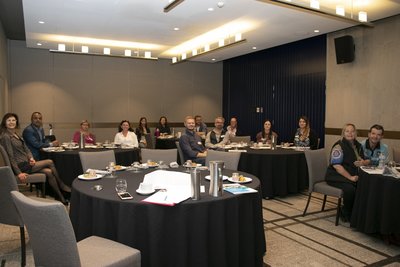
The COVID-19 pandemic forced the postponement of SWSPHN’s successful series of roundtable discussions with the region’s mental health service and alcohol and other drugs (AOD) providers in 2020. Our roundtables have now resumed, with participants at the fifth roundtable at the Rydges Hotel, Campbelltown again appreciating the opportunity to meet face-to-face and learn more about other services in the sector.

In this week’s Under the Microscope, we take a closer look at SWSPHN’s Mental Health and Drug and Alcohol Roundtables.


Why is SWSPHN facilitating these roundtables?

In 2018, SWSPHN began connecting the region’s mental health and drug and alcohol (AOD) services through a series of four roundtables at various locations across South Western Sydney. The workshops aim to improve integration, communication and collaboration between AOD and mental health service providers, and gather expert advice from various disciplines, to improve services and support for people with drug and alcohol, and mental health co-morbidity.

The roundtables were cancelled in 2020 due COVID-19 restrictions but resumed with a fifth roundtable on Thursday, 29 April.


Which organisations were represented at the fifth roundtable?

AOD and mental health services from across the region were represented at the most recent roundtable. The services included: Family Drug Support; Core Community Services; Odyssey House; Iogha Mental Health Services; Tharawal Aboriginal Medical Service (AMS); St Vincent De Paul Society – Rendu House; Salvation Army; CORE Community Services; SWSLHD Drug Health Services; Bankstown Community Resource Group Inc; Drug and Alcohol Multicultural Education Centre (DAMEC); and Salvation Army.


What was discussed at the roundtable?

Participants had the opportunity to learn about telehealth from the Agency for Clinical Innovation, hear from SWSPHN staff about outcomes and client experience measures, share client stories and brainstorm ideas for addressing barriers to AOD and mental health service integration.

Presentations were held both face-to-face and via Zoom.


What feedback have you had from participants?

The feedback from participants to the fifth roundtable has been positive.

Matthew James, a mental health nurse in Tharawal AMS’ SWSPHN-funded Social and Emotional Wellbeing Team, has attended four roundtables.

He said he most appreciated opportunities to network and market his service to others across the large South Western Sydney region. “There are also services that I’m not aware of, so it works both ways.”

Mr James said the virtual healthcare session was of huge relevance to his organisation.

Johan Torsteinsrud, an AOD counsellor at Odyssey House, was attending his first roundtable and said it was good to get input from representatives of other services.

“I heard about the experiences of other people and organisations that I can learn from,” he said.


What’s next? Are there plans for another roundtable?

The next roundtable in the series is planned for October 2021 and will aim to further develop sector collaboration and integration.

05 May 2021

Places are still available for two Drug and Alcohol First Aid online sessions for practice staff and practice nurses on Friday, 14 May and Friday 21 May, 9am to 2pm. The workshop is funded by SWSPHN and is free to participants.
If you would like to improve your knowledge and skills to recognise and respond to alcohol and drug issues, register for one of these sessions.
To learn more about the sessions