


After years of screaming from the rooftops, “if you’re in crisis call Lifeline, if you’ve got a problem, please put your hand up and ask for help” we are now seeing people reach out in numbers we’ve never seen before.
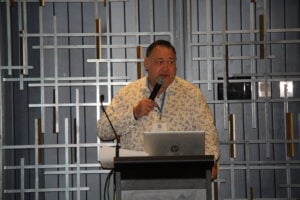
Lifeline International President and keynote speaker, John Brogden AM had this positive message for attendees at SWSPHN’s Mental Health Symposium 2022 at Rydges, Campbelltown on Wednesday, 19 October.
The symposium aimed to highlight a range of innovative local programs, initiatives and supports to address the needs of South Western Sydney, and work towards improved mental health outcomes.
It was facilitated by Adam Holstein who has been working in the community services sector for more than 20 years in the areas of youth work, disability services, training and mental health.
Mr Brogden joined Anthea Raven, from the Mental Health Access Branch of the Department of Health and Aged Care, as the two keynote speakers for the event.
The former NSW Opposition Leader shared his personal experiences “living” with mental illness and suicidal ideation with an audience of almost 200 attendees via Zoom from Ghana, West Africa where he is supporting the establishment of a Lifeline-style helpline.
“Early in my time at Lifeline, when our call numbers used to go up, I used to think there was something wrong – there’s a problem in Australia,” he told the audience. “But now I think the more calls we get, the better the situation is.
“After years and years of telling people to reach out, we are now seeing them reach out. We are now seeing them in numbers we’ve never seen before.
“Lifeline is an anonymous service. What people can’t tell mum, dad, boyfriend, girlfriend, husband, wife, best friend, boss, whoever it might be, they can ring a complete stranger. We practice nonjudgmental listening – that’s an important element of what we do.”
The symposium was held face-to-face for the first time since 2019, due to the COVID-19 pandemic.
Opening the event, SWSPHN Director of Planning and Performance, Amy Prince, said she was struck by how much the landscape had changed in the face of pandemic since our last symposium.
“Service providers have adapted and changed their service models to address the increasing needs of consumers,” she said.
“The community in South Western Sydney has experienced fires, floods, tragic accidents and some of the harshest lockdown restrictions in the state.
“Over the past few years our communities have lived through what is hopefully the most challenging social and political environment they will face in their lifetime.
“And our frontline mental health service providers have been right alongside them. I want to say a heartfelt thank you to each of you.”
The symposium’s morning session included presentations from commissioned service providers including One Door Mental Health (Connector Hub), Odyssey House NSW (services available for Alcohol and Other Drugs and mental health comorbidity) and headspace Bankstown (Flourish Australia).
SWSPHN Mental Health and AOD Manager, Jade Weidner, gave an implementation overview of the South Western Sydney Regional Mental Health and Suicide Prevention Plan before attendees broke into groups for workshops.
The afternoon session included presentations on the You in Mind Peer Support Program, supports for bushfire affected communities, Changing Life Keep Your Balance Bilingual Community Education Program and the Workforce Capacity Building Project at Gandangara Local Aboriginal Land Council.
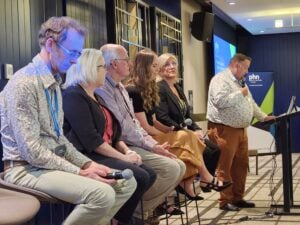
The event concluded with a panel discussion with experts on suicide prevention and aftercare, a self-care session presented by South Western Sydney Recovery College and a raffle draw.
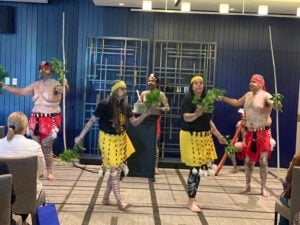
After the symposium, Ms Weidner thanked all those who contributed to making the event such a success, including the keynote speakers, the wonderful Welcome to Country by the Koomurri Dance Group, presenters and workshop facilitators.
“It was fantastic to be back in the room with so many people committed to improving mental health outcomes in our region, to share experiences and knowledge,” she said.
“Feedback on the day has been positive with attendees describing the symposium as informative, educational, fun and inspiring.”
The symposium attracted participation from across the South Western Sydney community, SWSPHN commissioned service providers and government and non-government mental health-related organisations.
Keynote speaker John Brogden shares reflections on difficult years
Lifeline International President and mental health campaigner, John Brogden, streamed in from Ghana – one of 35 countries in the world where suicide or attempted suicide is still a crime – to share his experiences and reflections on the past few difficult years with attendees at SWSPHN’s Mental Health Symposium on Wednesday, 19 October.
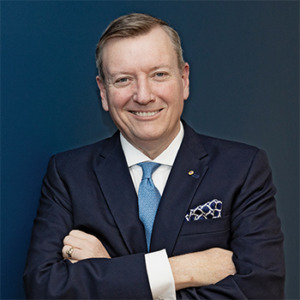
Here is a little of what Mr Brogden shared:
Increase in calls to Lifeline
It’s been incredibly difficult for people over the last two to three years.
It’s been almost three years now since the fires took hold in Australia back in 2019. Back then, the average number of calls received by Lifeline per day was about 2,400 calls a day. We peaked in the middle of COVID, with the highest number in one day being 3,600 calls in one day.
We thought that was extraordinary.
New Year’s Day this year was the highest day on record for Lifeline with 3,700 plus telephone calls. COVID wasn’t particularly an issue then, but I think it was the people of Australia saying, “I thought we were over this, here we are starting a new year and we still have COVID hanging around”.
From three years ago to today, Lifeline has gone from a 12 hours crisis text service a day to 24-hour text service.
If you combine our texts and calls, the new world for us is 3,600 calls on average a day. In the last couple of days, we’ve been receiving just under 4,000 calls and texts a day.
The current increase is due to a combination of things, not the least of which is the deteriorating flood conditions in NSW and Victoria. On top of that is the uncertainty around interest rates, people worrying if they can pay their mortgage and put food on the table.
Optimism about our mental health system
A piece of wonderful evidence we got last year was that men in particular were ringing and saying, “not only is this the first time I’ve called Lifeline, but I never thought I’d call Lifeline in my life”.
I’m sure you’re experiencing that on the ground in your PHN. What that does, of course, is put enormous stress on the system. That’s the downside of more and more people putting their hand up.
I’m an optimist about our mental health system. It’s better than it was 10 years ago, 20 years ago, and certainly 50, 60, 70 years ago. We’re getting better all the time. But we have a workforce issue. We don’t have enough mental health nurses. We don’t have enough counsellors. There is an urgent need to increase the workforce.
Those of you who’ve worked in the mental health system for a long time will have seen improvements. You might be exhausted, you might be angry at the rate of change being too slow but let me tell you, as somebody with living experience, I see an enormous shift in attitude in Australians and in our system towards mental illness.
We cannot underestimate, in Australia, how much further ahead of so many places in the world we are in talking about suicide and in dealing with it.
We need to send a very strong message to people that it’s okay to have a mental illness, that it’s normal to have a mental illness.
Extraordinary experience during COVID
At the beginning of COVID, some people were saying there’ll be an epidemic of suicides in Australia attached to the pandemic but in fact, the reverse happened.
We saw a 5 per cent reduction in suicides.
However, we did see an extraordinary increase in demand for mental health services.
We did a few things that made Australia a psychologically safer place for many people.
Job Keeper was a lifesaver during COVID because as you know people who don’t know whether they can pay the next bill, rent, put food on the table, whatever it might be, electricity, car fuel, are at a high risk of mental illness.
We increased welfare. State governments took homeless people off the streets and put them in empty hotel rooms. Now, pause for a minute to ask yourself, “why can’t we do this all the time?”.
The Federal Government extended Medicare benefits to allow psychological, psychiatric services to be delivered online.
The provision of mental health services online. We also provided organisations like Lifeline, for which I’m very grateful, with millions of dollars of extra funding to allow us to take those extra calls.
We really did come together as a society in a way that we haven’t seen for some time. During our hours of exercise each day (during lockdowns) we stopped at a distance and with our masks on, and talked to the neighbours and talked to the people up the road. Did our elderly neighbours need their garbage taken out or did they need their shopping done for them? We yelled over the back fence to see how the neighbours were. We rang people we haven’t spoken to for a long time.
Advice on handling mental ill-health
I sleep more than I used to. Sleep is really very important to me. I’m medicated and I see my psychiatrist on a regular basis.
I’m more aware of my depression and my suicidal ideation. I have learned to manage crises a lot better. For me, my suicide ideation would manifest if things went wrong.
One of the pieces of advice I give, which some people laugh at, others might be slightly offended at, but I don’t do the things I know will make me depressed. Don’t walk into a situation that you know will be very stressful. I prefer to be well rather than put myself in situations where I will get unwell because of the stress and pressure.
Download Symposium presentations
Department of Health and Aged Care – Anthea Raven
Overview of the Connector Hub Program – ODMH
Alcohol and Other Drugs and Mental Health Comorbidity Supports – Odyssey House NSW
SWS Regional Mental Health and Suicide Prevention Plan and Implementation Overview – SWSPHN
Eating Disorders Research and Supports Available – headspace Bankstown
You in Mind Peer Support Program – ODMH
Changing Your Life Keep Your Balance – Bilingual Community Education Program – SWSLHD