17 June 2022

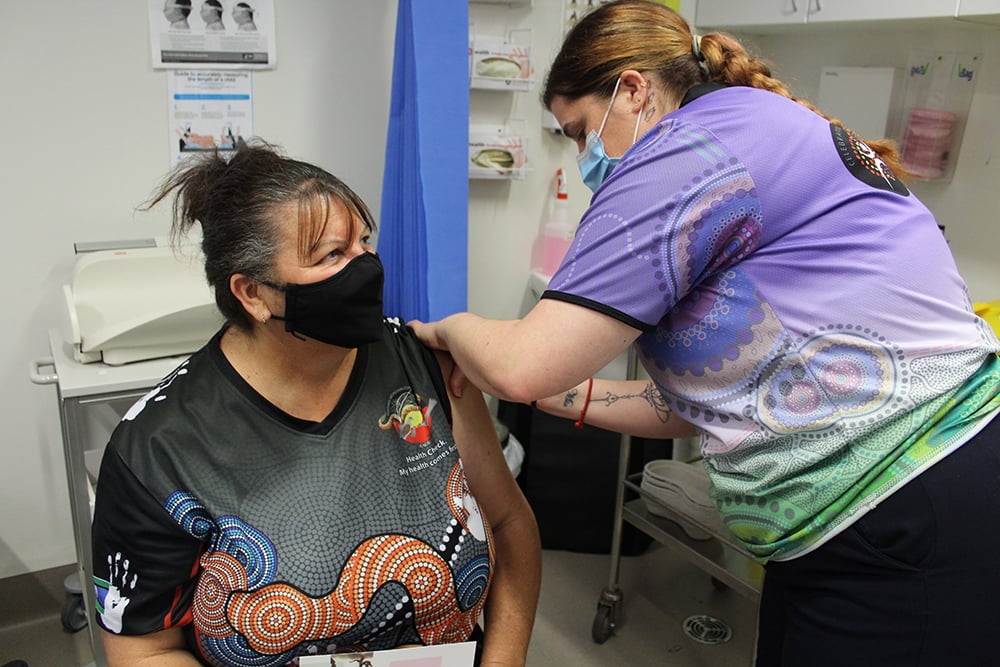
If you are Aboriginal or Torres Strait Islander tell your GP and ask for the free annual 715 health check. The ‘715’ aims to improve the health outcomes of Aboriginal and/or Torres Strait Islander people.

The aim of the Aboriginal and Torres Strait Islander Health Check (MBS item 715) is to help ensure Aboriginal and Torres Strait Islander people receive primary health care matched to their needs, by encouraging early detection, diagnosis and intervention for common and treatable conditions that cause morbidity and early mortality. The health assessment is an annual service and covers the full age spectrum.

Did you know?

  • Having a yearly 715 Health Check is free and takes around 45-60 minutes to complete.
  • The 715 Health Check has been tailored for Aboriginal and Torres Strait Islander people of all ages.
  • Having your 715 will help you to manage your health and prevent chronic diseases.
  • Having your 715 will also give you access to additional bulk-billed Allied Health Services (including podiatry, physiotherapy, dietitians and more).


Who is eligible for a 715 health check?

All Aboriginal and Torres Strait Islander people are eligible for an annual 715 health check.


What happens at the 715 health check?

Health checks might be different depending on your age.

Having the health check should take between 40 to 60 minutes. If you are comfortable, your Aboriginal health worker, nurse or GP might check your:

  • blood pressure
  • blood sugar levels
  • height and weight
  • urine
  • blood test

It is also good to tell your GP about your family medical history or any worries you have about your health.

Follow up care

Once you finish the check, your GP, practice nurse or Aboriginal and Torres Strait Islander health worker might tell you about other ways to help look after your health. They might suggest services to help you with your:

  • heart
  • vision
  • hearing
  • movement
  • mental health

You may also get help with free or discounted medicines you might need. Your GP can give you information about Closing the Gap scripts if you have or at risk of having a chronic disease.


Where can you access a 715 health check?

You can choose where you get your 715 health check, which are free at Aboriginal Medical Services (AMS) and all bulk billing practices.

  • Tharawal Aboriginal Medical Service: Location 21 Deans Road, Airds; Phone: 4628 4837
  • Gandangara Health Services: Location 64 Macquarie Street, Liverpool; Phone: 9601 0700

If you can, try to go to the same doctor or clinic regularly. This helps make sure you are being cared for by people who know about your health needs.


Useful links

Your Health is in Your Hands Visit this Department of Health web page to read how having an annual health check supports the physical, social and emotional wellbeing of Aboriginal and Torres Strait Islander patients of all ages.

715 Health Checks (PDF) Download this brochure for more information including frequently asked questions.


19 May 2022

Local artist, Danielle Mate, was commissioned to create an artwork that represented the role of South Western Sydney PHN. Here is the story:

The centre oval represents South Western Sydney GPs, practice nurses and other primary care providers.

The large U shape that wraps around the central oval represents the support that PHNs provide to local primary care providers.

The seven segments within this U shape represents the seven local government areas that South Western Sydney PHN supports.

The lines that lead from the centre oval to the community symbolise the role of these primary care providers to ‘feed’ information to their clients and the wider community. The connected shapes are people, each shape is represented differently, to symbolise their individual needs. The outer u-shaped layer around the people show the information building that strengthens them, allowing them to make well informed choices.

Seven background layers represent the national health priorities.

Read more about Danielle Mate at www.daniellemate.com.au

22 November 2021

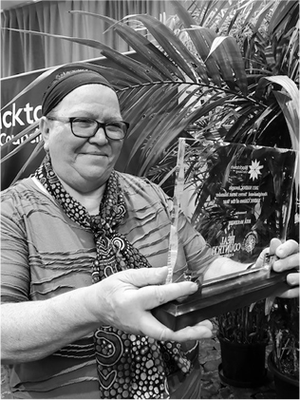
SWSPHN’s external training consultant, Rita McKenzie, was named Aboriginal and Torres Strait Islander NAIDOC Citizen of the Year at Blacktown City Council’s 2021 NAIDOC Awards ceremony on Friday, 29 October.

Aunty Rita, through her consultancy McKenzie Dreaming, has been supporting our Reconciliation Action Plan (RAP) Working Group for almost a year and delivering Cultural Competency Training to staff.

Aunty Rita also appears in our new video campaign which features champions encouraging our community to get vaccinated against COVID-19 and to seek mental health support early.

Vaccination video

Mental health video

Blacktown City Council said:

“Rita was awarded Citizen of the Year for her unwavering dedication in the areas of Indigenous health and welfare.

Rita has long served as a key role model for Indigenous communities across Blacktown City and Western Sydney. 

She has devoted her career to improving the lives and outcomes of Indigenous people and in educating businesses and communities on indigenous cultures, beliefs, and traditions.

Rita has been committed to closing the gap through her role in leading the WentWest Aboriginal Health Team and advising doctors and allied health practitioners on Indigenous health issues.”

Congratulations Aunty Rita, your award is well-deserved!

Read more

05 October 2021

Thanks to the contribution of general practice, half of all eligible Aboriginal people in NSW received their first COVID-19 vaccine by mid-September. But with easing of restrictions in NSW fast approaching, it’s important Aboriginal people aren’t left behind in double-dose vaccination targets.

Aboriginal people are at increased risk of acquiring and developing serious illness from COVID-19, yet vaccination rates of Aboriginal people in NSW lag behind non-Aboriginal people, in some areas by up to 30 per cent (first dose coverage, Source: Australia Immunisation Register, 30 September 2021).  Because of this, Aboriginal people still require priority access to a COVID-19 vaccine.

NSW Health asked GPs, practice nurses and practice managers to share strategies to increase vaccination rates among their Aboriginal patients. This is what they recommend:


Contact your Aboriginal patients and offer priority vaccination

Advertising your vaccine-provider status helps, but pro-actively contacting your Aboriginal patients for a vaccination appointment will have a bigger impact: a phone call for some, SMS for others.

Use the opportunity to encourage your Aboriginal patients to bring their whole family/household to get vaccinated, and consider including web links to patient vaccine information in SMS message, including Q&A’s and information flyers.

Consider setting aside dedicated vaccination appointments for Aboriginal people each week, and ensure they are a priority when creating waitlists or when filling cancellations.


Give people the opportunity to identify as Aboriginal by asking the question

When people enquire about or book in for COVID-19 vaccination, asking the Aboriginal status question enables you to prioritise Aboriginal patients for appointments.

Accurate Aboriginal identification allows you to provide quality clinical care and is an opportunity to register patients for the CTG PBS Co-payment program. Aboriginal identification is also key to accessing funding under the Practice Incentives Program Indigenous Health Incentive. All patients should be asked the standard identification status question, consistent with RACGP recommendations and Standards for General Practice.

Making your practice inclusive and welcoming for Aboriginal people encourages self-identification (for vaccination and visits for other reasons). These practical steps will help in providing culturally safe healthcare and this printable reminder will keep Aboriginal patient identification top of mind.


Initiate conversations about vaccination with Aboriginal patients when they attend for other reasons

Use practice software prompts and action lists to identify Aboriginal patients during consultations, and ask about vaccination.

Information to help you discuss vaccination with Aboriginal people is available here. Aboriginal Health Workers in local Aboriginal Community Controlled Health Services can also support conversations about vaccination.


Promote vaccination to Aboriginal patients inside your practice and through other patient communications

Take advantage of your patients’ focused attention and run videos on your waiting room TV screens. The NSW Health “Yarn-Up” series is popular, so use Episode 1Episode 2 and Episode 3 on rotation.

Displaying posters designed for Aboriginal people and having patient brochures available helps, as does posting about vaccination on your website and social media. You can share posts from the NSW Health pages (FacebookTwitterInstagram and TikTok) or create your own using our social tiles and videos.


If you don’t offer the preferred vaccine, help Aboriginal patients find another provider

If you’re not providing COVID-19 vaccination, or don’t have the preferred vaccine available, refer your Aboriginal patient to a local Aboriginal Community Controlled Health Service, an Aboriginal-specific Local Health District service or a local pharmacy vaccine provider (this may involve helping your patient make an appointment).

Not all patients will be comfortable attending mass vaccination clinics, so finding a clinic that suits their needs is important. Being familiar with other vaccine providers in your area will help. More options are coming on-line each week.

Recent improvements mean it’s now easier for patients to find a clinic, register and book an appointment via the Vaccination Clinic Finder. This requires internet access, so offering help to access the portal will assist.


If transport is an issue for your Aboriginal patients, consider offering in-home visits

Earlier this year, the Australian Government implemented MBS new funding arrangements to improve the viability of administering of COVID-19 vaccines via in-home settings. The new MBS item number (90005), when combined with an assessment to determine a patient’s suitability and administering the dose itself, makes a home-visit delivery model more feasible.


Additional information/support

And finally, if you have questions or would like additional resources to support Aboriginal people around COVID-19 vaccination, get in touch with NSW Health.

03 September 2021

Tharawal Aboriginal Medical Service (AMS) in Campbelltown has been doing some incredible work in ensuring our Indigenous people and the wider community are vaccinated against COVID-19.

Tharawal AMS joined general practices across South Western Sydney in March to be among the first GP services to vaccinate when the rollout began through primary care.

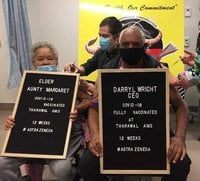
Tharawal Aboriginal Corporation Chief Executive Officer, Darryl Wright, was also among the first to roll up his sleeve for the jab.

At the time, Mr Wright told South Western Sydney PHN the service had 80 Elders aged 55 and over booked for vaccinations within 10 minutes of opening bookings.

“It’s about keeping healthy – we want to ensure our Elders and those with chronic disease in particular, don’t get the coronavirus,” he said.

Since March, Tharawal AMS has continued to educate local Aboriginal people about the benefits of vaccination and has held a number of vaccination clinics to ensure as many people as possible – including young people – are vaccinated.

This included a drive aimed at 12 to 18-year-olds which saw around 160 Aboriginal teenagers vaccinated, once the opportunity was opened to First Nations people aged 12 and over in August.

Mr Wright told SBS on 20 August now that Indigenous young people were eligible for vaccination, they had showed up with their parents and grandparents.

“Even now, with the young ones between 12 and 18, we advertised and within an hour we had 90 (vaccine) bookings, so that’s a good sign,” he told SBS.

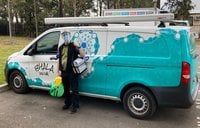
Now Tharawal AMS’s vaccination service has gone mobile, taking to the road to vaccinate vulnerable communities regardless of background.

SWSPHN’s COVID-19 Response Team is helping facilitate the vaccinations, providing Tharawal AMS with the names of vulnerable individuals in Campbelltown and Camden who face barriers to accessing the vaccine.


Dr Tim Senior, Dr Allison Thorn and nurse Paige Leech (pictured right) visited Mount Gilead retirement village on Thursday, 2 September to vaccinate 10 residents.

During the past week, staff have also administered vaccines to 12 teenagers in a group home, a 16-year-old boy living with disability and a bed-bound elderly man in Campbelltown.

Mr Wright told SBS Tharawal AMS was lending a hand to boost vaccinations for non-Indigenous people living in the area.
 

“We’ll go out with the van and do anyone walking around the street in Campbelltown, because we want everyone to be vaccinated, because they’re living in the community.”

  • General practices across South Western Sydney are working to support vulnerable people who are struggling to access the COVID-19 vaccine by administering vaccinations in homes and work places. If you are aware of someone in the community who is immobile or living with disability, and wants to be vaccinated, please email SWSPHN’s COVID-19 Response Team at covid19@swsphn.com.au to be connected to a local general practice providing vaccine in-reach services.


25 August 2021

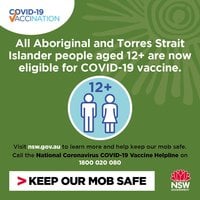
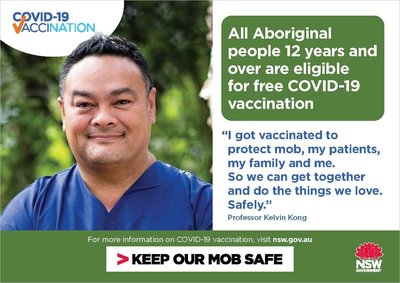
All Aboriginal people 12 years and over are eligible and a priority population for COVID-19 vaccination, yet the current vaccination rate among Aboriginal people in NSW is significantly lower than non-Aboriginal people. Outbreaks affecting Aboriginal communities in different parts of NSW have increased the urgency for vaccination.

Building on trusted relationships with your patients and the local community, general practice is well placed to overcome barriers to vaccination among Aboriginal people, including misunderstanding about eligibility and concerns about adverse reactions.

NSW Health suggests the following to increase COVID-19 vaccination rates among Aboriginal people:

  • Ensure eligible Aboriginal people are prioritised for a vaccination appointment
  • Contact existing eligible Aboriginal patients and offer priority vaccination
  • Ensure people who enquire about COVID-19 vaccination are asked if they identify as Aboriginal, to confirm their vaccination eligibility
  • Offer vaccination to Aboriginal patients when attending for other reasons
  • If you are not providing COVID-19 vaccination, refer Aboriginal patients to another provider
  • Display/use hardcopy posters and social media images to encourage vaccination

Information to support health professionals to talk to Aboriginal people about vaccination is available here.

Please contact NSW Health if you have questions or would like additional resources to support Aboriginal people around COVID-19 vaccination.

NSW Health appreciates the significant contribution general practice in South Western Sydney is making to the COVID-19 control and prevention efforts – thank you.


15 July 2021

More than 220 young Indigenous people have had their first COVID-19 shot after Tharawal Aboriginal Medical Service (AMS) partnered with NSW Health last week to co-ordinate a Pfizer clinic at the AMS in Airds.

Tharawal Aboriginal Corporation Chief Executive Officer, Darryl Wright, who led by example receiving the AstraZeneca vaccine on the first day it was rolled out through general practices in March, said he was happy to see so many young people turn up to be vaccinated, including 130 on the first day.

“As I said when I got my jab in March, don’t be afraid, it’s not only for your own good but for your family,” he said.

All Aboriginal and Torres Strait Islander people aged 16 and over are now able to access a COVID-19 vaccine. Getting a COVID-19 vaccine is a safe and effective way of protecting yourself from getting really sick from COVID-19.

Check with your local healthcare worker to make an appointment.

Find information for Aboriginal and Torres Strait Islander peoples about COVID-19 vaccines

Pictured are the vaccination team: Sandra Castle, Rose Gordon, Amelia Tran-Bencio and Tracy Burnett (NSW Health – vaccination team); Karen Beetson and Natalie Sabuncuoglu (NSW Health – Aboriginal Health); and Darry Wright CEO, Dwayne Knight and Joanne Ross (Tharawal AMS).

21 June 2021

Aboriginal and Torres Strait Islander people in need of palliative care and their carers can now access easy-to-read information specific to South Western Sydney following the launch of a new booklet in Liverpool on Friday, 11 June.

South Western Sydney Primary Health Network (SWSPHN) partnered with local Aboriginal Elders, the Gandangara Local Aboriginal Land Council and South Western Sydney Local Health District (SWSLHD) to develop the booklet.

A journey into Sorry Business supports Aboriginal and Torres Strait Islander people to share their wishes and preferences for their end-of-life care through ‘sorry business’ – cultural practices and protocols associated with death.

SWSPHN Chief Executive Officer, Dr Keith McDonald PhD, thanked everyone who contributed to the development of the booklet.

“This is an important resource and the first of its kind in our region. We would like to thank our Local Elders, Aunties, Uncles, Brothers, Sisters, their families and the community who have shared their insights on the Aboriginal journey through Sorry Business.”


This resource has been developed to provide culturally appropriate, respectful, and mindful information to encourage Aboriginal people to yarn about their rights, wishes and how to plan ahead when circumstances change through their lives.

A Journey into Sorry Business is available at Aboriginal Medical Services and general practices in the South Western Sydney region as a free resource. 

Download A Journey into Sorry Business (updated in 2024)


09 June 2021

As you may be aware, reforms to the Closing the Gap Pharmaceutical Benefits Scheme Co-payment Program were announced on 12 June 2020, as part of the Seventh Community Pharmacy Agreement.

Some of the changes being implemented from 1 July 2021 are:

  • Any PBS prescriber can register eligible Aboriginal and Torres Strait Islander people for the program if they are not already registered.
  • PBS prescribers will no longer be legally required to write or electronically print ‘CTG’ on eligible PBS prescriptions for registered Aboriginal and Torres Strait Islander people. However, annotation of a PBS script will help community pharmacies and Section 94 approved private hospital pharmacists know that the patient is registered for the program, when dispensing the medicines.
  • General Schedule PBS prescriptions issued by PBS prescribers within public hospitals will now be eligible for the program, provided they are dispensed by a community pharmacy or Section 94 approved private hospital pharmacy.

The following fact sheets with more information have been developed:

Frequently Asked Questions are also available.

26 May 2021

Tharawal Aboriginal Medical Service (AMS) at Campbelltown has so far seen ‘outstanding results’ in clients participating in a trial to show type 2 diabetes remission can be achieved through a weight management program provided in primary care.

Eight Tharawal AMS clients aged 49 to 63 are participating in the DiRECT-Aus research trial in two phases, with clients in the first phase already experiencing weight loss of up to 15kg and improving their glycemic control without the use of diabetes medications.

The trial is a partnership between Diabetes NSW & ACT, five primary health networks, including South Western Sydney Primary Health Network (SWSPHN), and the University of Sydney. Five general practices in South Western Sydney are participating in the trial.

It is looking to replicate the active arm of the DiRECT-UK Diabetes Remission Clinical Trial which saw type 2 diabetes remission achieved in 67 per cent of participants with weight loss greater than 10kg.

We spoke to dietitian Renee Zahar (pictured below) who is part of the specialist team – including GP, Dr Eva Constantinidis and practice manager/registered nurse Joanne Ross – overseeing the project at Tharawal AMS.

Ms Zahar said Tharawal AMS got involved in the trial to provide clients with access to a free diet replacement product, the support of a specialist team and education about healthy food choices.


How does the diet replacement product work?

The diet replacement product is designed to cause rapid weight loss. It is used during the first three months of the trial in addition to low energy foods like stir-fries. The diet replacement product provides all the vitamins, minerals and protein that your body requires and is typically used by people who are significantly overweight, particularly when there is another condition that is impacting on their health. Also, it’s typically used prior to having to surgery to reduce operating times, recovery times and reduce some risks associated with surgery.

The diet replacement product is a tool for achieving short-term weight loss only and long-term weight control. Keeping the weight off depends on the long-term changes, behaviour change and attitudes to eating and exercise habits. For this reason, we also include an education element each week. Participants said this was the most valued part of the program in the UK.

The diet replacement product is used for medical reasons and its use should be medically supervised by a healthcare team.


What results are you getting?

The results have been outstanding. With the initial group I have seen weight loss of up to 15kg and excellent glycemic control without the use of diabetes medications. With the second cohort, after the first four weeks there was already weight loss of up to 7.7kg and a drop in blood glucose levels, again without medication or greatly reduced doses to get started.

However, what is most thrilling is the positive impact mentally it’s had on the patients. What I have observed is the sense my patients feel they can take some control back from their diabetes. While some have had huge gains in weight loss and improvements in their glycemic control, the attitude, behaviour change and relationship with food has been incredible from all participants. Not only that, it has had a profound impact on their individual family units and family members have also lost weight because of healthier food choices.

Also, what has been amazing is the support and ideas shared by clients when I developed a WhatsApp group called the Tharawal DiRECT Warriors. It’s been priceless.


What feedback are you getting from patients about the ease/difficulty of sticking with the weight management program?

Client 1

Number one thing is you have to want to do it. The program is magnificent, the encouragement too. I have found it super easy to stick to. The first week I was hungry but it’s mind over matter, getting rid of old unhealthy habits. The healthy options are great too. I’m feeling on top of the world today and have had a massive burst of energy.

Client 2

I wanted to do the program due to the support I was going to get and education to train my mind to choose healthier options instead of quick on-the-run foods. So far, the support and guidance have been really good. I’m not hungry but still have cravings. I’m training my mind to eat something healthy or use movement (walking or cleaning). I’m learning a lot about healthy eating.

Client 3

I have really enjoyed this. I have had so much support which has made it so easy to stick to and I feel great. I find the shakes are nice and all the other people around who are doing the same thing as me will feel the same. I just love it, I have tried everything and nothing has worked until now, so thankyou Renee.

Client 4

I am determined! I haven’t strayed from the program, even refusing chocolate. I love the convenience of this program, how easy it is to have my shakes or bars instead of going to all the takeaway food outlets that I used to. How easy is it to make a lovely vegetable stir-fry? I’m choosing healthy options now. My sugar levels are great at the moment with no medication and it’s because of this wonderful program that has me accountable every fortnight. I love the support groups as well, as they also give me motivation to get healthy and improve my quality of life.

Enquiries about the DiRECT-Aus research trial can be directed to SWSPHN’s Vitor Rocha via email  Vitor.Rocha@swsphn.com.au