20 June 2022

Practice nurse Patrick Arnold has been a nurse at Thirlmere Medical Practice for 18 months and working as a nurse for 13 years. During this time, he has undertaken a number of roles in nursing but by far the most rewarding for Patrick is his role as a practice nurse.


How long have you been a practice nurse and how long have you been working in the Wollondilly LGA?

I worked for two years in private practice within a metropolitan clinic early in my nursing career and upon returning to nursing 18 months ago have been at the Thirlmere Medical Practice; so… coming up on four years.

I nursed for 13 years (11 as an RN) before taking a break and working in manufacturing. Nursing roles have included ward nurse (neuro/spinal/plastics, orthopedics, cardiac care), ICU, theatres and drug and alcohol. Practice nursing feels like the perfect balance of all of these and is by far the most satisfying role to date.


When/why did you decide to pursue a career in nursing and specifically in primary care?

Having volunteered with the SES while completing the HSC I met a number of ambulance officers and an assortment of eccentric healthcare workers. It was always going to be between the ambulance service or nursing. Nursing won out. My rationale has always been you can do just about anything to make money, so why not do something which helps others and feeds the soul.


Tell us about the role of nurses in primary care

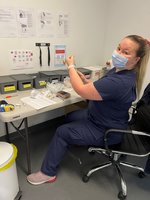
One part of the role is maintaining and operating the treatment room. This involves ensuring equipment, medications and vaccines are all available, calibrated, in date and (where appropriate) cleaned/sanitised. With four doctors on staff and up to three on shift at the same time it can become a juggling act to keep procedures, dressings or diagnostics from overlapping, but that is part of the fun of the role.

The bigger part of the role is building rapport with the patient base. I am very lucky to have joined a practice which services quite a close-knit community. By building trust through wound care and education, vaccination, care plans, health assessments etc it puts me in the position to instigate conversations about health issues and preventative options. The advantage of this approach is those who are reluctant to engage with what they deem “unnecessary” medical interventions (like vaccination for example) can have the time to receive and process best practice information and then make an informed decision. If preventative health is viewed and accepted as a positive choice through the wider community, those on the fence are more likely to engage.

The practice nurse complements the general practitioner through the development and management of care plans and the ongoing management of chronic health issues. An experienced nurse should be able to liaise with doctors and provide (where appropriate) triage and the streamlining of service.


What do you love about nursing/what do you find most fulfilling about your role?

Building relationships with our patients. General practice allows the opportunity to foster a sense of community and engage with patients both on an individual and collective level. It is a very satisfying role and one I am glad I came to with the experience I have. Nursing overall has so many moving parts it can often be hard to define what specifically is most satisfying, but it does always seem to boil down to helping people.


What is your biggest challenge as a PN and how do you overcome this?

Vaccinating children. Babies don’t understand what is happening, and it is over so quickly that levels of distress (for both patient and parent) can be managed and pass quickly. With infants, when you build trust with a small child and then “hurt” them, depending on the child and their ability to comprehend what is happening there is a sense of betrayal. Personally, that hits more because it is a child. I think if this part of the job became easy, I would be concerned.

As much as possible I try and distract the child from crying by preparing them for the experience in a gentle, unrushed manner. Failing this, a stuffed toy, lolly or sticker with some kind words goes a long way. Generally, they have settled before they leave the room, but it is definitely an emotionally taxing experience.


Tell me about your ideal work day

The shift starts by checking the vaccine fridge, stock and doctor’s room for re-stocking. Preparation of medications/vaccines as required. Two or three over 75 health assessments and a handful of care plans. We generally have four to five biopsies or excisions through the day and often iron infusions. Add a few chronic wound patients for dressings and you have a full, satisfying day.


What do you like to do in your spare time?

Spend time with my partner and our beautiful dog, Monroe. She is 60+ kg of anxiety and fur, and loves walks and cuddles. Otherwise, when time allows, I enjoy playing music (I play guitar, piano, bass, drums and sing).


Do you have any role models and why?

Obvious choice, but my parents. They have raised me through leading by example. Both are very kind, generous and infinitely patient. I couldn’t find better role models if I tried.


How do you help educate your patients about maintaining good health?

As non-confrontationally as possible. Due to the repeat nature of our patients’ visits, we have the opportunity to have ongoing discussion regarding best practice and health recommendations, generally tailed by follow-up questions and increased engagement over consequent visits.

Many people who are drastically out of shape are very aware of their situation and are embarrassed and/or ashamed (ie bariatric patients). By approaching recommendations or ideas in a manner which ensures the patient does not feel “attacked”, for me, goes a long way towards positive long-term outcomes.

By providing a supportive port of information and assessment I believe we can (over time) help patients reach better health decisions and outcomes.

31 May 2022

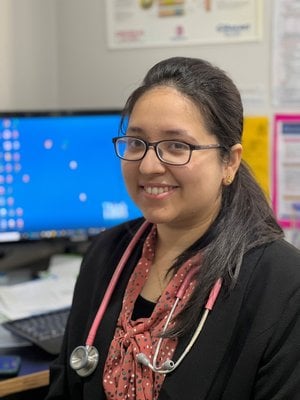
Dr Maimun Shikder has a passion for her patients and for teaching, including working with SWSPHN to provide input about CPD educational activities which will benefit GPs in our region. Dr Shikder has been working at Hill Top Surgery for the past year and is enjoying every minute of it.


How long have you been a GP and how long have you been practicing in this area?

I’ve been a GP since 2019, so three to four years. I was at Goulburn at first, and I’ve been here at Hilltop for a year now.


When and why did you decide to become a GP?

I had a lot of other thoughts before I became a GP.

When I was doing my training I was really interested in emergency medicine initially. I was also interested in women’s health as well and worked for a couple of months at the Royal Hospital for Women and did a Diploma for Women’s Health. I really enjoyed women’s health, but I found the lifestyle wasn’t what I wanted.

I’ve got two children under five, so it wasn’t working well for me.

I felt like I was only seeing women and I felt like I needed to see other people, different conditions.

That’s when I decided general practice would be suitable for me. And I’m glad I made that decision. I’ve enjoyed it so far and I’m looking forward to continuing in this specialty.


What do you love most about being a GP? What gives you the most satisfaction?

Seeing the results of your treatment which you don’t see in the hospital setting. It’s providing care and seeing the patient come back improved or when they haven’t improved, being able to figure out with the patient what’s wrong and what else we can do.

I enjoy providing holistic care. You see patients for one condition, then another condition and another condition so you know the whole person. There’s less anxiety for me as well because I know what’s happening with my patients.

In hospitals you tend to be very focused on one thing and once a patient has left hospital, you don’t know what’s happening with them.


What is the most important thing that you or your practice contributes to this area?

This practice is phenomenal.

It’s a lovely little community here, which I didn’t know before I started working here. There’s quite a lot of people out here so recently our practice increased its hours to include Sundays as well. It just fills up because they are all working people here, a lot of young people. They need a regular GP otherwise they’re going from medical centre to another.

That’s one of the most important things about this practice, we provide continuity of care.

There are some elderly people here as well. We also do home visits for some of the elderly around here.

All of these things are really beneficial to our community.


What do you like to do in your spare time?

Oh, I haven’t got much!

I like spending time with my kids.

I advocate for doctors’ mental health as part of the GP Synergy wellbeing committee. We look at what can be done to look after GPs’ wellbeing.

I also have an interest in education. When I’ve finalised my fellowship, I’m planning to do some teaching and I’m working with the PHN as well providing input about the sorts of CPD educational activities which will benefit GPs.

I’m still quite early in my career but I think in the long-term I’d like to do general practice part-time and teaching part-time.


Is there anything that you’d like to let your fellow primary carers now about you?

Most primary carers are doing an excellent job juggling their busy schedules.

I’d say I’m happy to be contacted by anyone. If someone ends up seeing one of my patients, on weekends or in other areas, I’d like to be kept informed about what’s happening with their care.

I would also love it if my colleague appreciated when I’m calling because I need something.

I guess I’d say, I’d like to stay connected, especially when you’re all working in a small community like this.


What do you love most about this community?

There is a wide variety of people which is refreshing because you’re seeing a little five-year-old now,  then you’re seeing an 80-year-old at the next appointment, and then a pregnant woman. You see a little bit of everything which is satisfying as a general practitioner. The patients are really grateful which makes you feel good about your job as well and you enjoy it. I really like this community.


What advice do you give to your patients about maintaining good health?

One thing I find works for lots of health issues – exercise.

One of the most common things I say to patients is try to get about 30 minutes of walking in each day. Walk your dog, go for a walk with your partner, anything, just walk for 30 minutes a day. It’s beneficial for your heart, your brain, diabetes, blood pressure and mental health.

Just try to keep 30 minutes of time for yourself to go for a walk every day.

23 May 2022

Practice nurse and lifelong learner Anne Stanley brings a wealth of knowledge and passion to Wintergarden Family Practice in Bowral. Anne is instrumental to the practice through her ongoing contribution to updating policy and procedure, promoting the wellness model of health and her ongoing commitment to practice accreditation. Her vibrant and caring nature along with the years of experience in practice, the classroom and the operating theatre makes her a wonderful role model for future nurses.


How long have you been a practice nurse and how long have you been working in the Wintergarden Family Practice?

I have been a practice nurse at Wintergarden Family Practice for a year. I started at the time COVID-19 vaccination began. I quickly settled into the practice, loved the staff, the environment and the patients, and was invited to take on more work at the practice relieving the other nurse on holidays and other leave. I now work several days per week.


When/why did you decide to pursue a career in nursing and specifically in primary care?

In my last year at school, I was undecided whether to pursue a life in nursing or in teaching. I chose nursing, loving my experiences, learning, friendships and adventures nursing provided to me. After working in intensive care, theatre and recovery areas I decided to move into the world of practice nursing while living in Melbourne.

Following this I was director of an Early Childhood Education Centre attached to Monash University.

Returning to Sydney after several years in Melbourne, I decided to move into the world of education and attained a teaching degree, and Masters in Education while I worked at the University of Sydney for 17 years as a lecturer in the Faculty of Nursing. I also had further clinical experience during that time working with a well-known melanoma specialist in specialist rooms. A further career change in education saw me working as a school counsellor as well as joining the School Immunisation Program at the start of the Gardasil program. At this same time, I was also working in aged care at a local retirement village.

This was all about the time COVID-19 appeared and was recognised as a pandemic. So full circle, I am now involved in primary care in general practice at Wintergarden Family Practice and loving it! A major advantage of working in a rural area is that you quickly get to know patients and their families.

I feel privileged to be working with an amazing team of clinical and administrative staff. I have loved my journey and feel there is so much more to learn and be part of and to specifically promote the wellness model of health as a means of illness prevention and assistance with managing chronic disease.


Tell us about the role of nurses in primary care …

Primary care is a huge all-encompassing role where no two days are ever going to be the same. I love the unpredictability of the day and love the challenges which arise during a working week. I enjoy being actively engaged in primary care. While I value the role of everyone in the practice, a special mention goes out to the frontline, that is, the reception staff. They carry a vital, critical role which contributes so much to the daily life of a well-run practice.

As COVID-19 becomes more manageable in general practice, other very important issues (working with the wellness model of health) take a focus including health assessments and management of chronic disease management. Nurses work closely with all practice staff, ensuring patients receive the best management for their health needs. In our practice, a morning meeting on a daily basis prior to opening for the day is part of the overall planning for best outcomes and is part of our care model.

As nurses we are very involved in primary care at Wintergarden Family Practice including assisting with excisions, iron infusions, venesection, INR readings, planning as well as immunisations, management plans, liaising with allied health teams, stock control and ongoing education. These roles are routine and certainly do not cover the entirety of the role of a proactive nurse working in primary care.


What do you love about nursing/what do you find most fulfilling about your role?

I love both nursing and education and have blended both as part of my daily working life. I love being part of a caring, professional team and seeing success for the patient and their family. The satisfaction of knowing we have all been involved in achieving best outcomes for them is fulfilling.

It is only when a dedicated team genuinely cares for each other and the patients entrusted in our care, do we allow the best outcomes to happen. I also love that everything we do is seldom if ever wasted. I have brought many life, nursing and educational pathways into my latest career change and find it fulfilling.


What is your biggest challenge as a practice nurse and how do you overcome this?

Wanting the absolute best outcomes for all patients is paramount in my thought processes and instructs the care I provide. Therefore, while acknowledging there are many challenges in all aspects of life, practice nursing has different challenges which determine how I deal with them.

How we cope with challenges involves several known answers but importantly be open to new strategies to best deal with them. These need to be varied to assist when issues arise. Also being able to step outside the square is beneficial and helps when challenges hit. Having clear and appropriate policies and procedures in place allows a standardised methodology in practice management and care.

Addressing the accreditation process this year was a challenge in the middle of pandemic management but being part of a wonderful team achieving such favourable commentary is paramount to the success of our practice. 


Tell me about your ideal workday…

My ideal workday is one that is busy and meaningful. Having patient contact is important to me and knowing I am part of such a caring knowledgeable team where community is the major focus, is my ideal day.


What do you like to do in your spare time?

I love learning, so part of my spare time is involved in ongoing education and research. I am very fortunate to have a wonderful supportive family, children, and grandchildren to fill my life. I enjoy gardening, reading, and creating healthy recipes.


Do you have any role models and why?

Yes, I do. There are many and varied. Starting with my family, they are role models to me for many reasons and make me aspire to keep achieving new benchmarks. Another is a valued friend, an educational visionary who is doing it ‘his way’ who had a dream about how education should be, had the resilience and drive to make it happen. Also, there are many work colleagues, who have been role models who have been part of my journey for the various qualities they generously shared.


How do you help educate your patients about maintaining good health?

The wellness model of health underpins many health-related programs. Evidence based practices and treatments supporting this model when tailored to the individual patients is where education is vital in providing the best outcome for my patients.

I utilise evidence-based practice using the following principles in my interaction with patients and, it is when the patient accepts ownership of the treatment by becoming actively engaged in their care is when best outcomes can occur.

First, I form a clinical question to identify a problem, and then work closely with the patient to:

  • Gather the best evidence
  • Analyse the evidence
  • Apply the evidence to clinical practice, specifically the patient
  • Assess and review the result
02 May 2022

Saving lives through disease prevention and detecting disease early is the most satisfying part of Dr Brian Cung’s role as a GP. Dr Cung, from Advance Health Medical Centre in Canley Heights, also spends much of his spare time participating in activities outside his general practice which aim to improve the health of his community.


How long have you been a GP and how long have you been practising in Canley Heights?

I have been a GP since 2003 and working in Canley Heights since 2006.


When/why did you decide you wanted to become a GP?

I’ve found general practice is most suitable for me. As the title suggests, as a general practitioner I can care for my patient as a whole person, from physical problems to mental health. Most of the time, I care for the whole family, so, GP also known as “family doctor”.


What do you love most about being a GP/what part of the job gives you the most satisfaction?

I can detect diseases early and save lives.


What is the most important thing you/your practice contributes to this community?

Looking after the people of our community. We’re involved in not only treating disease but screening and preventing disease.


What do you like to do in your spare time?

I participate in community projects. I have been involved in organising Community Health Forums for the Vietnamese community every three months for the past two-and-a-half years. I am a regular speaker on SBS Radio’s Vietnamese health program on Wednesday nights and VietFace TV. I work with the Cancer Institute of NSW on multiple cancer programs. I have also been an ambassador supporting NSW Multicultural Health with COVID-19 video messaging.


Tell me about your ideal work day…

I work from 9am to 5pm with a lunch break. The day includes some time for administration work and reading.


What do you love most about Canley Heights?

It is a vibrant community with a multicultural background. I have been a GP here for 16 years. I witness the transformation of this beautiful suburb with the contribution of all the local people, businesses and Fairfield City Council led by Mayor Frank Carbone.


What advice do you give your patients about maintaining good health?

Good lifestyle and healthy diet. I tell them to talk to their GP early if they are having any abnormal symptoms.

05 April 2022

Caring for patients with humanity and compassion is one of the most important things Dr Land Phan and the team at Eagle Vale Medical Centre contribute to their community.


How long have you been a GP and how long have you been practising in Eagle Vale?

I obtained my FRACGP fellowship in 2017 and this year will be my sixth year as a GP at Eagle Vale Medical Centre.


When/why did you decide you wanted to become a GP?

My GP terms as a medical student, then as a resident, cemented for me that general practice was where I was meant to be. I was fortunate enough to have been taught by some really inspiring doctors – kind, skilled and compassionate. Dr Nick Collins at Campbelltown Hospital was one of them. I always loved the idea of caring for an entire family, from birth to death, and there is no other specialty that would allow me to do what I do today. It’s an incredible privilege and I still learn so much every day. 


What do you love most about being a GP/what part of the job gives you the most satisfaction?

What do you love most about Eagle Vale?

The humanness of the job gives me the biggest feeling of fulfilment. I work with a really lovely team at Eagle Vale and together we try our best to provide care for our community. Having grown up in South Western Sydney, I love that I now have the opportunity to give something back. I never know where the conversation will take me when someone enters the room, and I find it so rewarding when they leave the room better than when they entered. There’s a definitely an art to the science – something I appreciate more and more the longer I am in this profession.


What is the most important thing you/your practice contributes to this community?

Following from above, I’d say our humanity and compassion. We aren’t afraid to show patients that we’re human too, and I think this brings us closer to one another. I walk side by side with my patients through their health journey, and I can appreciate how grateful people have been to have a constant, reliable specialist whom they can trust to have their best interests at heart as they navigate the health system during what can be the most vulnerable times in their life.


What do you like to do in your spare time?

Currently with a six-week-old and two-and-a-half year-old toddler in tow, I don’t have much of that at the moment! I am currently taking some time off to spend with my young family. I really enjoy spending time outdoors when I’m not in the office although I wouldn’t climb Mount Fuji again … I think the new term for what I love is ‘forest bathing’. However, I am equally happy at home brainstorming what my next project will be: last year I achieved my other childhood dream of becoming a published author. I have been described by some (including a high school teacher and my accountant) as someone with ‘quiet determination’ who is quite ‘goal-orientated’. I think they were on to something.


Tell me about your ideal work day…

My ideal workday starts with a goodbye cuddle from my son, driving against traffic and always managing to find a good parking spot. My list is fully booked with patients who could be aged 0 to 99+, most of whom have names I recognise immediately looking at my list because I’ve been caring for them, their families and friends for several years now. I always make time for lunch to catch up with my colleagues so that we can have a laugh (or cry) together, and start the afternoon session with renewed energy, knowing we are working together as a team to serve our community. If I’ve made even one person’s day better, then I’d consider it a successful day. I’m not superhuman: good enough is enough for me. I try to set healthy boundaries so that I can continue being the best version of myself for my patients and my family.


What advice do you give your patients about maintaining good health?

I like to remind people that health comprises more than just physical health – and when their psychological or social wellbeing is suffering, then that can also contribute to their poor health. I think preventative health is key and it starts at pre-conception: it’s never too early or late to change and by improving your own health, you can also improve that of the people you care about – the effects of which can transcend generations. Start small, but be consistent. I’m here to help.

22 March 2022

Practice nurse Brooke Bajac is a keen learner who loves being able to support people in the region with their everyday healthcare needs, as well as in the fight against COVID-19, in her role at Picton Family Medical Centre and Picton Respiratory Clinic as a practice nurse and nurse team leader.

In addition to her passion for nursing, Brooke is instrumental to the practice in her role in leading, coaching and role modeling for the rest of the nursing team on how to carry out their daily tasks in a thoughtful, systemic manner, in order to achieve those wildly important short- and long-term goals for both the patient and for the practice. She exemplifies her practice’s values of #LoveWhatYouDo #MakeADifference #ActWithIntegrity


How long have you been a practice nurse and how long have you been working in the LGA you currently work in?

I have been a practice nurse for one year and two months but have been working as a registered nurse in Wollondilly for two years.


When/why did you decide to pursue a career in nursing and specifically in primary care?

I have a passion for helping people. I especially love caring for the elderly population as I believe they are the most vulnerable. I had epilepsy as a child and I was in and out of hospitals for most of my childhood, I always looked up to the nurses looking after me.


Tell us about the role of nurses in primary care

Every day is very different working in a general practice. We see everything from people with chest pains to people with wounds. However, I have multiple roles within my general practice such as treatment room duties, chronic disease management, respiratory clinic duties and nursing team leader duties.

Treatment room: When I work in the treatment room I assist doctors with procedures such as biopsies, excisions, nail removal and wound suturing. I also assess and attended to wound care both minor and complex. I am skilled in IV cannulation and perform numerous IV treatments such as: iron infusions, venesections, IV fluids and IV antibiotics. I am also responsible for ordering medical supplies, ordering and maintaining vaccines. Other tasks I perform in the treatment room also include ECG, adult and childhood immunisations, INR checks, observations (BP, SP02, HR, RR), ear syringing, suture removal and much more.

Chronic disease management: I am skilled at creating care plans for patients who have chronic disease. I work closely with the patient, their GP, allied health and specialists to help patients achieve their health goals. I also perform other assessments during care planning such as health assessments, diabetes cycle of care and heart health checks.

Respiratory clinic: I also work within a respiratory clinic which is part of our clinic. I have many roles within the respiratory clinic such as swabbing patients, respiratory assessment of patients, COVID-19 vaccinations, care of COVID-19 positive patients and I provide education and advice to unwell patients.

Nursing team leader: As the nurse team leader I manage our nursing staff in both the general practice and respiratory clinic. I do the rostering for general practice and respiratory clinics nurses. I ensure our nursing team are upholding our values. I assist my team with reaching our goals and improving our customer service to our patients. I help coach our nursing team where needed to enhance and improve their performance. I assist our practice principal with the development of procedures and company goals.


What do you love about nursing/what do you find most fulfilling about your role?

I love developing therapeutic relationships with my patients. I love having a direct impact on a person’s health and assisting them to achieve their health goals. The most fulfilling part of my role is to watch my patient’s health improve especially through chronic disease management. It is the best feeling to see a patient three months after their care plan and find that their condition has improved.


What is your biggest challenge as a PN and how do you overcome this?

The COVID-19 pandemic but more specifically COVID-19 vaccinations. I have had many patients who have been very uncomfortable having a COVID-19 vaccine. I overcome this by having one-on-one conversations with the patient and answering any question or concerns they have. If I am unable to answer I specific question I direct them to a doctor. I want my patients to feel safe and comfortable during this experience.


Tell me about your ideal work day.

Every day I come to work I have a great day. But my ideal day would be successfully helping all my patients with their care needs and providing great health outcomes.


What do you like to do in your spare time?

I love to play netball and spend time with my family.


Do you have any role models and why?

I have three main role models in my life. 1) My mother. She is an independent woman who has always put everyone else before herself and her work ethic is amazing. 2) My father. I strive to be the best person I can be because of him. He has taught me the importance kindness and respect. 3) Dr Anna Pham. Dr Anna is an amazing and caring doctor who has achieved so much. She is committed to her staff and patients. I strive every day to be like her.


How do you help educate your patients about maintaining good health?

I re-enforce the importance of seeing your GP on a regular basis. I regularly refer my patients to useful website such as The Heart Foundation. I assess my patients and their needs, for example, in relation to weight gain, diabetes, arthritis etc. Mental health plays a big role in a person’s health outcomes so I always encourage my patients to find someone they can talk to, and I offer my ear if they need it. I also inform my patients about mental health care plans to assist them.

01 March 2022

Fairfield GP Furio Virant was recognised for his service to medicine with the Medal of the Order of Australia (OAM) in this year’s Australia Day Honours. We talked to Dr Virant about his important work in improving primary care standards in Australia during the past 40 years.


How long have you been a GP and how long have you been practising in the Fairfield LGA?

I came to Fairfield in 1978 and that’s how long I’ve been practicing as a GP – 44 years.

Before that I was in the Royal Australian Navy for four years and before that I did my residency.


Were you a doctor while in the navy?

Yes, I was a doctor in the Navy.

I served on the HMAS Vampire, which is now part of the Australian National Maritime Museum – I can go and look at my old ship with my grandkids! Out of the four years I was full-time in the Navy, I spent about one-and-a-half years at sea.

It was quite an eventful time.

It was the end of the Far East Fleet and the British stationing in Hong Kong at this time so I saw the end of colonial rule in South East Asia.

In 1976 we sailed to Timor to evacuate the Australians who were stuck there (after the Indonesian invasion). This was after the five Australian journalists were killed by the Indonesian military. Qantas ended up evacuating the Australians, but we were on our way there to do everything we could for them. 

We were also part of the group that went to America for their bicentenary celebrations in 1976.

Very interesting times!


When/why did you decide you wanted to become a GP?

When I was in the Navy they gave me time to do other things like anaesthetics and psychiatry. I realised that what I found most rewarding was to see people on a continuing basis rather than just sporadically.

General practice really came to the forefront because it suited my personality.

I also had some good mentors. Both of my daughters were delivered by GPs, in those days they were delivering babies. I got to know GPs and they were extremely nice, they were very warm and I got to know about their lives.


Tell us about your work improving primary care in Australia

 
Divisions of General Practice

We started the Divisions of General Practice in our local areas, then we set up state and federal bodies. I was the Chair of the Division of General Practice in Fairfield and I was on the inaugural board of the federal Division of General Practice in Canberra.

We formed the Divisions of General Practice because despite GPs vaccinating kids, we were still getting major outbreaks of measles, mumps, rubella. We looked at our fridges and found they were abysmal as far as keeping temperatures regulated. There was a cold spot here, a warm spot there and it was only really in the middle of the fridge that we could guarantee temperatures were going to be okay.

We set up Standards in general practice in 1993. We tested the Standards in 400 practices across Australia, and they were supposed to be good practices, but we found things like wet towels in the toilets which were never changed. You can imagine what this meant for hand hygiene.

GPs were doing the best we could with what we knew at the time.

 
Australian General Practice Accreditation Limited (AGPAL)

This led to the setting up of a body called AGPAL to audit medical practices. I was on the AGPAL Board in the early days. It has now been going for 20 years.

I’ve audited more than 700 practices across the state.

If a doctor doesn’t meet the Standards in general practice indicators, we reassess the indicators they haven’t met and I write reports for AGPAL to say now they’ve met the indicator or they still haven’t met the indicator.

 
Professional Services Review Committee

I was on the Professional Services Review Committee and the Medicare Participation Review Committee for about 10 years. These committees oversee doctors who have behaved badly. Most of the problems were with documenting and not having good enough records. That was a great learning curve.

 
Medical Benevolent Association

I’ve been on the Medical Benevolent Association Council for 26 years. That’s also been a labour of love because we look after doctors and their families in need and crisis. Over the past 26 years there’s been an enormous change in the needs of those we assist. It used to be doctors with cancers, who had had strokes or road accidents, and we looked after their families. We now have domestic violence, alcohol and drugs, and we have all the other social problems and mental health problems.

 
Sydney University and Western Sydney University

I was involved in the interview processes for prospective doctors at Sydney University and Western Sydney University. Universities have different processes but basically it’s eight interviewers, eight rooms, eight minutes.

That needs to be tickled a bit. We need to look at our workforce and make sure we select people who are willing to be there for the good and the bad, people who will be there for their patients whenever they’re needed. If you’re not going to see patients during a pandemic then you should have gotten into something which was not patient-based.


What does receiving the OAM mean to you?

I was very emotional and humbled by it all. You think about all the people who received it before you.

It’s a wonderful thing. Not all countries have the same Honours system that we have, recognising people of all different classes and backgrounds. Some have recognitions like knighthoods but they forget about the people on the ground who do things like volunteer work.

I feel really proud to have received it and my family feels very proud.

I don’t see it as an end point where you’ve got to retire now. I think it’s nice that people are acknowledged when they still have things to offer.


What do you love most about being a GP/what part of the job gives you the most satisfaction?

General practice is extremely rewarding because it opens up a lot of avenues. You can do a whole range of things. I’ve now been seeing some families for five or six generations. It’s just so rewarding to know about the family, not only about their physical and mental health, but the social economic side of their life and support them through it.

There’s been enormous change in general practice. When I started at Ray Rickard Medical Centre in 1978 we only had three medications for blood pressure. It was sad to see so many people have massive strokes because we couldn’t lower their blood pressure. We also didn’t have the X-ray equipment, there were no brain scans, no ultrasounds. It was a lot of guesswork.

Men weren’t very responsive to coming to a doctor’s surgery. Our surgery was filled with women and children and the men would only come in when they were 65 and retired. By that time they already had chronic obstructive disease from heavy smoking or prostate cancers. Now men are bringing children in and are much more receptive to doctors

It’s also a pleasure to have gotten to where I am now, at 74, and see practices who have transitioned to a professional way of doing things, with practice managers and staff who are trained, infection control measures put in place – and computers!

It’s been rewarding to see the positive changes – they’ve all been positive because we’re living longer and living a better quality of life.

I’m lucky enough to have a very supportive wife who didn’t see too much of me because of all the different hats I was wearing but made sure my bag was packed and I was ready to go.


What is the most important thing you/your practice contributes to this community?

I think it’s the bilinguality. I came here in 1978 when there was a very strong Italian community and even today our staff are bilingual.

We have people who come to our surgery from Serbian backgrounds and Latin American backgrounds. If they speak Spanish and I speak Italian, we understand one another quite well.

I enjoy being able to lock into a culture. They say to me, ‘well, you know what I mean don’t you?’ and I say, ‘yes, I know what you mean’.

Understanding the culture is extremely rewarding and important because patients know you can lock into what they are all about.


What do you love most about Fairfield LGA?

Travelling around for my work I see so many practices – some of them are absolutely marvellous, with all the bells and whistles and financially the rewards can be bigger if you work in areas like Rose Bay or North Sydney. But these things never worried me because I’ve gotten to be with my patients throughout their lives, through the good times and bad times.

You get attached to the people and the area.

I’ve been involved with the Fairfield museum and art gallery where I learned about Fairfield and its history. This gave me a great love for the area. It’s got a such a wonderful history. Sir Henry Parkes lived in Canley Vale. I actually did a house call for a lady who lived on the property where Henry Parkes lived.


What advice do you give your patients about maintaining good health?

Good mental health is the number one driver of good health. If you’re depressed you don’t want to leave the house, you won’t exercise, you won’t eat well.

A lot of it’s got to do with Vitamin D. In societies where there’s a lot of Vitamin D around, people are happier. The less sunlight, the more people will get depressed.

So, my message is: get out in the sunlight, exercise and develop a good circle of friends.

I’m going out tomorrow with my wife to have lunch with Ted who’s 103. He hasn’t stopped going out at any time during the pandemic. He says to me, ‘well, why should I? I’ve gone through the Depression, served in the Second World War and the Korean war, I’ve gone through everything’. You’ve just got to get through it.

He’s got this wonderful, positive way of looking at life. I always like to see him because he’s always got a joke for me, he’s always got a sense of humour.

Friends are very important. I say to people if you haven’t got friends go to church, join a group, there’s so much around. There’s an enormous number of activities people can do to feel rewarded.

Loneliness, isolation – that’s the worst possible thing for good health. Sure enough, if mental health goes down the drain, physical health will follow.

22 February 2022

Practice nurse Donna Simmons loves being able to make a difference and support her local community in her role at Schwarz Family Practice, Elderslie. She says “working in a positive and friendly practice is just an added bonus!”


How long have you been a practice nurse and how long have you been working in the Camden LGA?

I have been practice nursing since 2010 and working as a practice nurse in the Camden LGA at the Schwarz Family Practice, Elderslie since 2013. I initially started practice nursing in Campbelltown in a smaller practice along Queen Street.

When/why did you decide to pursue a career in nursing and specifically primary care?

It was an easy decision for me after my HSC to pursue nursing at university. Growing up, anything Medical or First Aid-related always interested me.

I commenced my now 30-year Registered Nursing career at Concord Hospital, then once married and settled in the Camden LGA, I joined the busy Community Nursing team at Rosemeadow for 10 years, then spent some time at Carrington as an Aged Care Co-Ordinator, then finally decided to give practice nursing a go, and have never looked back.

I knew with my previous experience in different areas of nursing I could utilise my skills each day. Practice nursing has kept me engaged and satisfied, particularly working in an exceptional team environment like I do daily.


Tell us about the role of nurses in primary care

I believe nurses hold a very important role in primary care and we do our best to complement the doctors in their day-to-day role. I hold a Team Leader role at the practice and am well supported by another four talented nurses. We are each diverse with our skills and are able to bring these skills into use regularly.

The role as a practice nurse is very diverse and we are able to support our GPs with many tasks including (but certainly not limited to) the administering of immunisations, setting up of procedures/excisions and assisting with these, triaging calls and dealing with walk-in emergencies, care planning, health assessments, all levels of wound care, post op care, diabetes cycles of care and education, COVID-19 clinic and flu clinics, catch-up schedules, ordering of medical supplies/vaccines, referrals to allied health (Community Nursing, My Aged Care, High Risk Foot Clinic etc.) just to name a few.

I believe the best way to contribute to improving clinical outcomes in our practice is by getting to know your patients’ needs well, listening to their concerns and most importantly, being very proactive with education and sharing this information back to the practice and then onto our patients.


What do you love about nursing/what do you find most fulfilling about your role?

There are so many wonderful and rewarding aspects to love about nursing. To be able to be a caring and nurturing person in times of stress or concern for a family is rewarding but also feeling confident in your role that you are able to help patients and give useful advice and support in times of need. For me, making a difference and supporting my local community is what I love and working in a positive and friendly practice is just an added bonus!


What is your biggest challenge as a practice nurse and how do you overcome this?

Like all practices and nurses world-wide, I feel the challenges of late would likely revolve around COVID and supporting our community during this pandemic. The changing nature of COVID initially, learning how to triage calls and advise and support our community would come close to being overwhelming. But as time has passed so too did the stress of the pandemic (to some degree). We have managed to support our community with COVID vaccine clinics – proving another challenge in itself, being quite a time-consuming process.

Another challenge I personally feel is the lack of support for our vulnerable ageing community. Accessing services eg home-care packages, transport needs, dementia support for families and carers, referring to My Aged Care and the period between referrals and families being able to receive assistance can be very lengthy.


Tell me about your ideal workday?

Working in a positive environment surrounded by an amazing team (which I am daily) but if it was to be truly “ideal” it may need to also include some cake and maybe a little chocolate.


What do you like to do in your spare time?

I enjoy watching and playing netball (definitely in that order), spending time with family and friends, listening to music and podcasts, day trips to new places, eating out and maybe also enjoying a sneaky wine.


Do you have any role models/why?

I do not have any particular role models, but I am in awe of many people who I have met along the way. To those that struggle with day-to-day adversity and continue to stay positive, for those people committed to learning and educating others in their chosen field and I am definitely in awe of all front-line workers who have proven to be so incredibly resilient in recent times.


How do you help educate patients about maintaining good health?

I think the trick to educating patients about maintaining good health is to show a keen interest in someone’s general well-being, build rapport, gain trust and respect, ask plenty of questions and by giving plenty of positive feedback.

We need to take advantage of opportunities in the brief time we spend with patients and discuss basics like medication management, skin care regime (being sun sense), checking they are up-to-date with age-appropriate immunisations, attending BMIs etc …just a couple of simple examples.

29 November 2021

Dr Claire Etheridge’s love of all areas of medicine led her to a career as a country GP. Dr Etheridge, who works at Mount Gibraltar General Practice in Bowral, enjoys the variety of her work and educating her patients about maintaining good health.


How long have you been a GP and how long have you been practising in Bowral/the Wingecarribee Shire?

I’ve been in practice in Bowral since I started as a GP registrar in 2013. I’ve done all of my GP training in the area, mostly at Bowral Street Medical Practice which is now Highlands General Practice. I qualified in 2016 as a fully qualified specialist general practitioner. I’ve really only worked here the whole time I’ve been a GP.


When/why did you decide you wanted to become a GP?

I’d always wanted to be a GP ever since I was a very small child, or I knew I wanted to be a doctor. During medical school I enjoyed doing everything, so the most logical choice was to be a generalist. Being a GP also meant I could live in the country which is what I’d always planned to do. I found Coast City Country Training, which at that stage was the training provider for the Southern Highlands. It was a perfect spot for me and my family because my husband could work in the city and I could work in the country.


What do you love most about being a GP/what part of the job gives you the most satisfaction?

Seeing a different problem with every patient, meeting a pregnant patient and running through their pregnancy, then meeting their baby and seeing their baby grow up. Also the other end of the spectrum, helping people as they get older to stay independent and helping people who are reaching the end of their lives stay at home. I enjoy being able to work in the hospital when I want to, being able to assist with surgeries when I want to, being able to do procedures. I much prefer being a country GP than a city GP because I can do all those different things.


What is the most important thing you/your practice contributes to this community?

Care – we really care about our patients. It’s not so much a job as a calling.


What do you like to do in your spare time?

I work three jobs so I don’t have a lot of spare time! I’ve been a musician in the local symphony orchestra, I’m a gamer so I also play computer games and I have a motorbike. I also like to hang out with my kids and to travel. I really miss travel – I love to do that.


Tell me about your ideal work day…

My ideal workday would be full of interesting procedures to do, catching up with lots of my favourite patients and seeing them improve, and meeting some of the babies I’ve helped care for and seeing how they’re growing up. I also like helping to educate someone on how to improve their own health –so lifestyle and preventative care.


What do you love most about Bowral / the Wingecarribee Shire?

I really enjoy how all the doctors work together. We provide a really good after hours service. Pre-COVID we had some of the best education and collegial activities that I’ve ever seen. It’s a little bit different post COVID, but hopefully it’ll come back someday. That’s what I really enjoy, as well as the lifestyle – country close to the city close to the coast.


What advice do you give your patients about maintaining good health?

Keep active, eat real food and don’t be scared to chat to your GP about ways you can improve your lifestyle, your health and wellness.

23 November 2021

Practice nurse Jasmine Wei from Medclinic Medical Centre at Panania says the ability to help patients and to work towards their health goals together is the most fulfilling part of her role.


How long have you been a practice nurse and how long have you been working in the LGA you currently work in?

I have been a practice nurse since August 2020 (almost 18 months) and I’ve been working in my LGA for five months.


When/why did you decide to pursue a career in nursing and specifically in primary care?

Initially, I got into a Bachelor of Nursing because I didn’t do amazing in HSC and it wasn’t hard to get into nursing because it wasn’t high in demand. I thank God for that every day!

I graduated not wanting to be a nurse, so I went into medical reception.

I’m so very grateful for my boss there because she encouraged me to be a nurse. She paid for my immunisation course and allowed me to take days off for further nursing studies (what kind of boss will do that?). The medical centre eventually hired another nurse and that nurse gave me basic practice nurse training.

The training brought back my spark for nursing and I reminisced about how much I loved being hands-on, helping people, the deep conversations we have, and working out solutions together with the doctor for the best patient-centred care.

I also discovered I wasn’t limited to working in hospitals.

Working as a medical receptionist, I was inspired to work in a GP practice, and I started applying for practice nurse jobs.

It was extremely hard finding a practice nurse job with no experience and connections, but eventually, I got there. A medical centre down the South Coast was able to train me as a newbie. That’s when my nursing career officially started.


Tell us about the role of nurses in primary care …

My day-to-day schedule looks different everyday depending on who comes in on the day. My role generally includes COVID injections, childhood immunisations, adult immunisations, ECGs, blood tests, ear irrigations, health assessments, etc.


What do you love about nursing/what do you find most fulfilling about your role?

The most fulfilling thing about being a nurse is the ability to help those who want/need help and the ability to reach the goal together with the patient and allied health as a team.


What is your biggest challenge as a PN and how do you overcome this?

Working with a variety of doctors is always challenging as every doctor has their own preference of working.

How to overcome this? Having a supportive team makes such a difference, and definitely patience. It takes time for everyone to “get there”. And I encourage other nurses out there to never give up. It takes time for doctors and staff to warm up to you. It takes time for you to learn how every GP works in your clinic.

And once your team knows how everyone works? That’s when you can provide the best patient care. 


Tell me about your ideal work day

I start off my day with logging into Deputy (an app where I have to login or I won’t get paid), attend the fridge log, log into Best Practice and popping on some instrumental cafe music for patients to be more at ease throughout injections and procedures.

Throughout the day, it may get a bit more wild – patients come in and out and doctors may randomly call to attend a minor procedure, ear syringing or an injection. (They do know how to keep my day interesting).

To add some spice, every month there are checks to attend (emergency trolley, doctor’s bag and drug samples) and my favourite part, ordering more equipment/supplies.

I generally end my day with a cuppa tea and doing the reverse of the morning – attending the fridge log again and logging out of Best Practice and logging out of the app.


What do you like to do in your spare time?

Exploring the world together with my family and friends.

I also happen to really like dessert – if you check out my Instagram, you would know what I mean.

I also happen to really enjoy painting and calligraphy.


Do you have any role models and why?

That’s a good question. I’ve got a few.

Firstly, it was my mentor, Kel. She is someone I will forever look up to.

Her heart and intention behind every action (as a nurse) is sincere and she is one of the rarest gems out there. If you’ve met her, you would know what I mean – she would make sure you and your health is well looked after and she would take every little detail into consideration to provide the best healthcare.

Secondly, Kris (now I’m putting you in the spotlight).

Similar to Kel, Kris has taught me so much as a nurse – beyond words and she encourages me to be a better nurse and doing the right thing each and everyday.


How do you help educate your patients about maintaining good health?

This may depend on what we are educating.

When I educate my patients, I usually explain to them about a better lifestyle/way of doing things. I explain to them what the current problem is and how we can improve from our current problem. I also make sure they are willing to make a change – not much point educating if they are not willing.

If possible, I try to find additional educational resources for them to take home or point them back to the GP for further assistance/education.