22 April 2022

National Palliative Care Week, held from 22 to 28 May, aims to assist Australians learn about the many benefits of palliative care.

The theme this year is: Palliative Care It’s your right.

The theme seeks to raise awareness about the rights of all Australians to access high-quality palliative care when and where they need it. One of the great myths about palliative care is that it is only for the last few weeks or days of a person’s life. It is so much more than that:

  • Palliative care helps people living with an illness which cannot be cured and they are likely to die from or a terminal illness 
  • Palliative care helps people, from babies through to older adults, to live their life as well as possible for as long as possible
  • A person can receive palliative care at any stage of their illness even while continuing to receive treatment for their illness 
  • It includes care of a person’s physical, emotional, social and spiritual needs, as well as the needs of their loved ones and carers

Learn more about palliative care

You can join events during National Palliative Care Week online or face-to-face.  

Learn more about palliative care week

22 March 2022

SWSPHN’s Peace of Mind Project is working to improve the end-of-life journey for people with dementia.

As GPs play a fundamental role in the care of people with dementia from diagnosis to palliative and end-of-life care, we would like to support our region’s GPs in the most appropriate forms. 

To achieve this, we are undertaking a needs assessment and co-design of solutions in collaboration with South Western Sydney Local Health District’s Palliative Care Service.

The first step in the process is a survey to find out how GPs are providing palliative care to patients, barriers they encounter to delivering palliative care, and the support they need.

The survey is available from now until 30 April 2022 on our HealthChat platform. 

The survey findings will be used to inform discussions and the co-design of practical solutions at forums with GPs early in the second half of 2022.

We thank you for your interest and we hope to see you at one of our co-design forums.  

Take the survey

25 October 2021
By NSW Ambulance

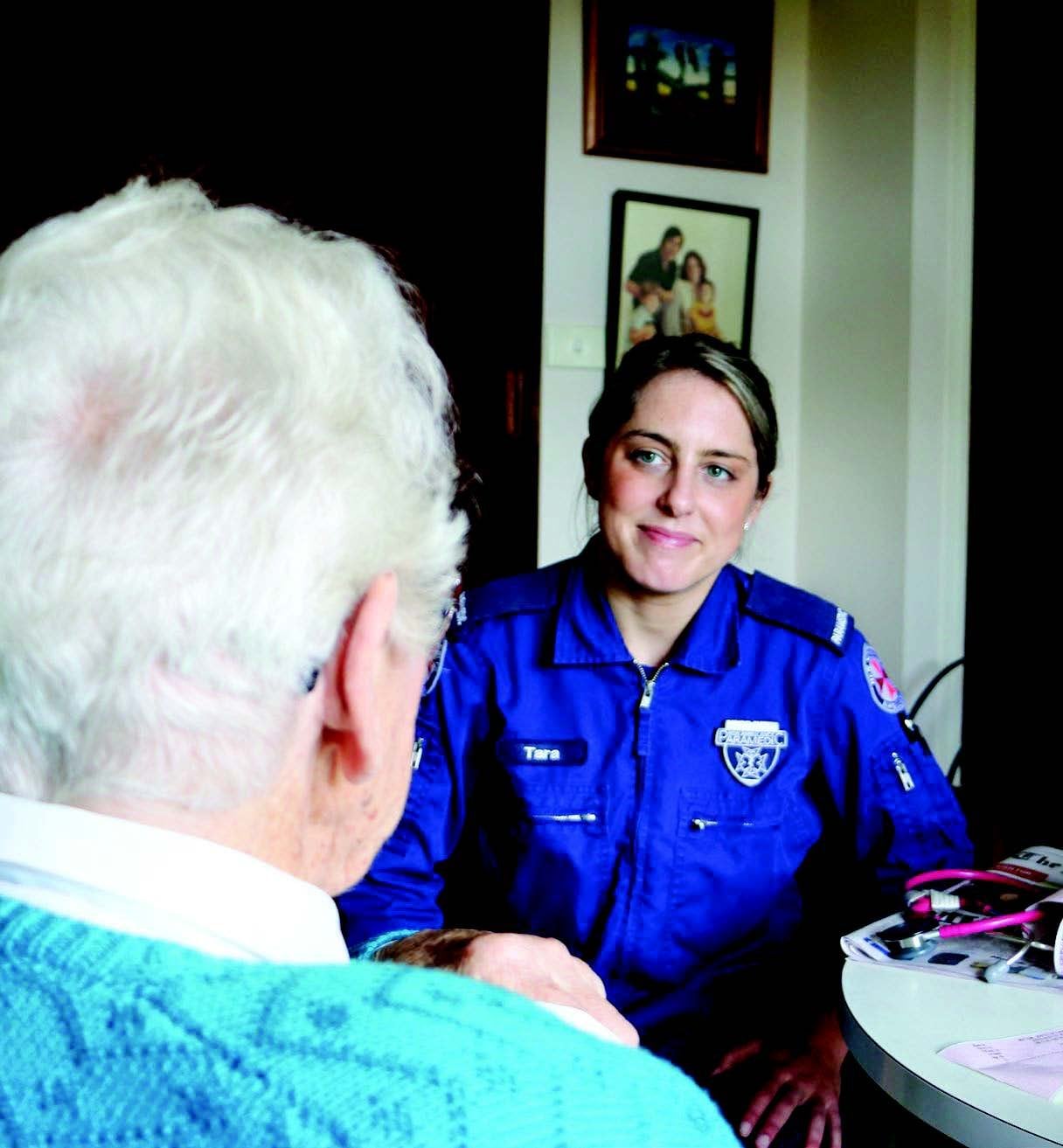
This fact sheet, created by NSW Ambulance, gives health practitioners a better understanding of the role paramedics play in community palliative care.


Paramedic Role

  • Paramedics are highly trained clinicians and registered health professionals who respond to Triple Zero (000) calls and provide patient-centered care in the out-of- hospital setting
  • Paramedics are authorised to work within the NSW Ambulance Protocols and Pharmacology clinical scope. These clinical guidelines provide a robust and evidence- based framework to ensure that paramedics deliver safe and high-quality care to patients


Care Approach

  • When they arrive on the scene, the paramedic will perform a comprehensive clinical assessment, gather information about the patient and initiate the appropriate medical care based on the presenting situation
  • To determine a patient’s need at the point of care, the paramedic will engage in shared decision-making with the patient, and as required, family members, carers, specialist providers and primary health clinicians
  • Following this, the paramedic will assess the patient’s ongoing needs and identify the safest and most appropriate pathway to connect patients to the right level of care

Information that guides paramedic decision making includes (but is not limited to):

  • Advance Care Planning documents including an Advance Care Directive and Enduring Guardian paperwork
  • Conversations with patients, families or caregivers
  • Patient health summary from the existing care provider
  • Referral contact details such as specialist service providers or primary health clinicians
  • Recent discharge summaries
  • Prescribed medications
  • Death Certification Arrangements for Expected Home Death


Palliative Care

Paramedics provide high quality, compassionate palliative care through a combination of:

  • comprehensive assessment, identification and management of reversible conditions
  • administration of medication to manage distressing symptoms
  • non-pharmacological symptom management and support
  • initiating contact with the patient’s existing care providers and referring for ongoing management
  • withholding unwanted interventions
  • supporting families and carers
  • transporting to an emergency department
  • completing a Verification of Death (VoD) assessment


2020 Protocol and Pharmacology enhancement

  • NSW Ambulance expanded the paramedic scope of practice in the 2020 Protocol and Pharmacology update to incorporate medications administration for the management of distressing palliative care symptoms
  • This protocol enhancement provides further flexibility and broadens the paramedic skillset, to respond to and manage patient needs at the point of care
  • Now that palliative care medications are within the paramedic scope of practice, doctors do not need to submit a NSW Ambulance Authorised Care plan for patients to receive palliative care medications


Paramedic Scope of Practice

Palliative Care Protocol

  • Paramedics can provide pharmacological symptom management for the following common end-of-life symptoms:
    • morphine for breathlessness and pain (2.5mg – 5mg subcutaneous. Nil repeat)
    • midazolam for agitation, anxiety or breathlessness (2.5 mg – 5 mg subcutaneous. Nil repeat)
    • droperidol for nausea and vomiting (0.5 mg subcutaneous, repeat after 8 hours)
  • This is in addition to the existing paramedic scope of practice, where paramedics already deliver high quality symptom management for a range of conditions

Pain Management

  • Paramedics can administer a range of analgesic agents including paracetamol, ibuprofen, morphine, fentanyl (intranasal), and methoxyflurane
  • The addition of subcutaneous morphine for breathlessness broadens the paramedic scope to provide symptom relief for palliative care patients experiencing distressing symptoms associated with pain

Nausea and Vomiting

  • For the management of nausea and vomiting, paramedics have a range of anti-emetics within their scope of practice. Paramedics can administer ondansetron, metoclopramide and droperidol

Goals of Care

  • In emergency situations, documented goals of care, or the presence of an individual(s) able to articulate the goals of care if the patient cannot do so, helps to ensure appropriate care is provided
  • The Advance Care Directive is a legally binding, patient initiated document that articulates goals of care and must be adhered to
  • Completing an Advance Care Directive improves the likelihood of matching patient preferences with outcomes and is the preferred format to document patient’s end of life preferences

Authorised Care Plans

  • Now that paramedics can provide palliative care without an endorsed NSW Ambulance Authorised Care Plan, there is no need to submit a plan for your patient.
  • NSW Ambulance Authorised Care Plans are not legally binding unlike an Advance Care Directive. A NSW Ambulance Authorised Care Plan may only be used as guidance for a paramedic to better understand the whole patient picture and facilitate, not instruct, clinical decision making.
  • NSW Ambulance is in the process of further expanding the paramedic palliative model of care. Given the expansion of the paramedic palliative model of care, the NSW Ambulance Authorised Care Plan program will only continue to operate on a much narrower and limited basis. An Authorised Care Plan is not required for patient care that is within the current scope of paramedic practice.
  • Requests for plans outside paramedic scope of practice will be reviewed by the NSW Ambulance MedicalDirector on a case-by-case basis, and the submitting health practitioner will be advised of the endorsement outcome.
  • Health practitioners can be confident that paramedics will continue to advocate for their patients, and provide caring, compassionate palliative and end-of-life care.

WebsiteVisit the NSW Ambulance website for more information on Authorised Care Plans
For more information download this document

25 October 2021
By NSW Ambulance


This article, dated October 2021, is shared by request from NSW Ambulance to help community members gain an understanding of the role paramedics play in end of life care and what you, as a patient or carer can do in preparation.


For patients

Paramedics’ role

  • Paramedics are registered health professionals who respond to Triple Zero (000) calls in the out-of-hospital setting. 
  • They make decisions based on the assessment they complete when they meet you.
  • They don’t know anything about your medical history before they meet you, so they rely on the information you provide them.
  • If you have any medical paperwork from your health practitioner, including a phone number to call them, please give this to the paramedics when they meet you.

Palliative Care and Paramedic Practice

  • Paramedics are highly skilled and equipped with a range of medications they can provide to patients. 
  • In the past, your doctor needed to fill out a NSW Ambulance Authorised Care Plan to tell us that you are receiving palliative care. This allowed the paramedics to give you medication.
  • Now, the process has changed and paramedics can give you medications without a NSW Ambulance Authorised Care Plan.
  • This is a helpful change as it means paramedics may provide you with palliative care at any time. 

End-of-Life Care

  • As patients are approaching the end of their life, family members or carers may need to call Triple Zero (000) for help. This might be because the patient’s condition has changed or their families or carers need some more support.
  • When the paramedic arrives, they will ask about your goals of care to find out how you want to be cared for when you are dying or approaching death.

Goals of Care

  • To provide you with the care that you need, paramedics will talk to you, your family, carers, doctors, nurses and other health workers.

They will try to find out what are your goals of care, which include:

  • What medical treatments you may or may not want.
  • Where you want to receive care (i.e. in hospital or at home).
  • What matters most to you and your family.

You can document your wishes on an Advance Care Directive, which is a legal document to record your wishes and preferences. If you don’t have an Advance Care Directive and if you are unable to speak for yourself, paramedics can speak with a person who you have nominated and authorised to speak on your behalf. This may be your Enduring Guardian if you have appointed one.

Talking about your wishes as early as possible makes it easier for your health practitioners, family, carers and paramedics to respect your wishes in emergency situations. 


For families and carers

Triple Zero (000) call

  • If you need to call Triple Zero (000) for your loved one or client, you will be asked questions by the NSW Ambulance call taker about their problem, current condition and your location
  • It is very important that you answer all of their questions
  • If the person you are calling about has died, please tell the call taker that they are receiving palliative care and whether this was an expected death at home. You may be offered instructions to commence resuscitation
  • If you are the person responsible and know the person doesn’t want to be resuscitated (e.g. receive CPR), please tell the call taker and they will respect your wishes
  • The priority is to send a paramedic to help you, and when they arrive, you can discuss the patient’s goals of care and end of life wishes

Verification of Death (VoD)

  • When paramedics are called to a death they are able to complete a Verification of Death form
  • A completed VoD form enables a person’s body to be transported by a funeral director
  • The funeral director will contact the patient’s treating doctor to get a Medical Certificate Cause of Death (MCCD). If you have the doctor’s details, please provide this to the paramedics and the funeral director
  • Paramedics will give you the VoD form to give to the funeral directors when they arrive

Police

  • Paramedics will not call the police if your loved one or client was expected to die
  • Sometimes due to the way Triple Zero calls are received, the paramedics and police may arrive together. If this happens, it does not mean that anything is wrong. The police are there to support the paramedics and also to help you
  • If the person’s death was not expected or if it is a complicated situation, then police do need to attend

WebsiteVisit the NSW Ambulance website for more information on Authorised Care Plans
For more information download this document

19 October 2021

NSW Ambulance paramedics are able to assist people receiving palliative care.

The following fact sheet has been created to assist patients and their families/carers to better understand the role paramedics play in palliative care. 
To download the community factsheet

Important changes to paramedics’ role in palliative care. 

The paramedic scope of practice was expanded in the NSW Ambulance 2020 Protocol and Pharmacology update to incorporate medications administration for the management of distressing palliative care symptoms. This protocol enhancement provides further flexibility and broadens the paramedic skillset, to respond to and manage patient needs at the point of care. Now that palliative care medications are within the paramedic scope of practice, doctors do not need to submit a NSW Ambulance Authorised Care plan for patients to receive palliative care medications.
To download health practitioners factsheet

21 June 2021

Aboriginal and Torres Strait Islander people in need of palliative care and their carers can now access easy-to-read information specific to South Western Sydney following the launch of a new booklet in Liverpool on Friday, 11 June.

South Western Sydney Primary Health Network (SWSPHN) partnered with local Aboriginal Elders, the Gandangara Local Aboriginal Land Council and South Western Sydney Local Health District (SWSLHD) to develop the booklet.

A journey into Sorry Business supports Aboriginal and Torres Strait Islander people to share their wishes and preferences for their end-of-life care through ‘sorry business’ – cultural practices and protocols associated with death.

SWSPHN Chief Executive Officer, Dr Keith McDonald PhD, thanked everyone who contributed to the development of the booklet.

“This is an important resource and the first of its kind in our region. We would like to thank our Local Elders, Aunties, Uncles, Brothers, Sisters, their families and the community who have shared their insights on the Aboriginal journey through Sorry Business.”


This resource has been developed to provide culturally appropriate, respectful, and mindful information to encourage Aboriginal people to yarn about their rights, wishes and how to plan ahead when circumstances change through their lives.

A Journey into Sorry Business is available at Aboriginal Medical Services and general practices in the South Western Sydney region as a free resource. 

Download A Journey into Sorry Business (updated in 2024)


14 September 2020

Carer Gateway service providers are now delivering a range of support services to Australia’s 2.65 million unpaid carers.
The Australia-wide network of Carer Gateway service providers are providing carers with access to:

Carer Gateway service providers can also help with navigating local services available to carers through government and non-government providers, including the National Disability Insurance Scheme, My Aged Care and palliative care.
These services are free for anyone looking after a family member or friend with disability, a medical condition, a mental health condition or who is frail due to age.
Carers can access services, including in-person services, by calling Carer Gateway on 1800 422 737 or visiting the Carer Gateway website.

03 August 2020

Funding for our Peace of Mind Project extended by 12 months 

Dementia is the leading cause of death among women and the second leading cause of death among all Australians. In South Western Sydney, an estimated 10,513 were living with dementia in 2016 and this is expected to grow by 84.2 per cent to 19,367 by 2031.

Despite the prevalence of dementia, the condition is not well recognised as a life-limiting illness by community or health professionals in South Western Sydney, and people with dementia can find it difficult to access palliative care.

In response, SWSPHN developed the Peace of Mind Project (POMP).

The project’s work is delivering education to the community and health professionals, development of a model of care and HealthPathway for a palliative approach to caring for people with dementia and providing palliative care quality improvement within residential aged care.

Last Thursday, 30 July, the Department of Health announced a 12-month extension to the project which has been heavily impacted by the COVID-19 pandemic. 

 
What are POMP’s objectives?

POMP aims to develop an integrated, person-centred model of end-of-life planning and palliative care delivered in the place of their choice; increase timely diagnosis of dementia; promote early engagement with palliative care education; promote early engagement with Advance Care Planning; to increase community health and death literacy; and develop an approach to Compassionate Communities.

 
What work has been done on POMP so far?

Working with PACCS

In 2018 we worked with the Palliative Aged Care Consultancy Service (PACCS) to identify stakeholders and undertake stakeholder consultation, review literature and write a discussion paper. Last year, working groups were formed and PACCS facilitated meetings where members worked together to develop a vision and a model of improvement to guide ongoing work on the Model of Care development.

Model of Care and HealthPathway development

Considerable work has been completed to further develop our resources for health professionals on HealthPathways. The Cognitive Impairment and Dementia pathway has been refined to form three pathways: Cognitive Impairment, Dementia and End-Stage Dementia. We now have a small working group developing the proposed Model of Care which will be released with the new pathways. The project team will then be working with interested general practices and residential aged care facilities on implementation.

Community information sessions

In 2019, we hosted five well-received information sessions. Following this positive response, we teamed up with three local councils to repeat our community information sessions. In February this year we had a great turnout at our discussion and information session, Dementia is NOT a normal part of ageing, hosted with Campbelltown City Council at Campbelltown during the NSW Seniors Festival.

Participants had the opportunity to learn about:

  • Dementia including what it is, how it can affect future decision-making and prevention
  • Advance Care Planning – what this is and why it is important for people with dementia
  • Palliative care – it is for people with dementia too and not only about dying or cancer
  • What decision should I know about organ and tissue donation.

The COVID-19 pandemic forced the cancellation of the remaining two planned events. These will be rescheduled once it is safe to have a large gathering of senior community members.
Palliative Care quality improvement in residential aged care

POMP partnered with the Palliative Care Outcomes Collaborative (PCOC) based at Wollongong University and two aged care facilities in our region to participate in a national trial of the assessment tools and protocols developed by PCOC. These tools and protocols improve outcomes for elderly people needing palliative care and provide vital data and reporting.

This activity has been postponed due the COVID-19 pandemic.

CPD

The COVID-19 pandemic has caused disruption to our CPD schedule for 2020. In June, we hosted a workshop on embedding Advance Care Planning into everyday general practice. The workshop was delivered by The Advance Project and was well received by 47 participating GPs, practice nurses and practice managers. More events will be provided in the future to complement our community education activities.

 
Why is Advance Care Planning important?

An important part of healthy ageing is being prepared for future events. Advance Care Planning is preparing for future health events in advance so that if you are unable to make decisions for yourself or are unable to communicate the care and treatment you would want, others know what your values and choices would be. It all begins with talking which isn’t always easy. Advance Care Planning Australia can provide more information and ideas to help you or someone you know talk. To visit their website.

If you’d like more information about the Peace of Mind Project, email Anne Harley at anne.harley@swsphn.com.au.

27 March 2020

The 2018 National Palliative Care Strategy’s guiding principles include early planning for and recognition of the need for end-of-life care for all people facing a life limiting illness.

The Australian Commission on Safety and Quality in Health Care has engaged HealthConsult to develop and administer a national survey to assist in guiding quality improvement practices nationally. They wish to determine:

  • the tools used by healthcare workers to identify patients nearing the end of life
  • the extent to which these tools are used within different settings
  • the facilitators and barriers for using the tools.

Please note:

  • The survey will take five to 10 minutes to complete.
  • All healthcare workers are invited to complete this survey.
  • Your responses will be combined with those of all other respondents. The combined responses will form part of the overall data for a report that will go to the Commission.
  • You or your organisation will not be identified in any reports or papers using information from this survey.
  • All information collected will be kept strictly confidential and stored securely and will only be used for the purpose of this particular project.

If you have any questions about this survey, contact HealthConsult Project Manager, Amy Monk, on 9261 3707 or amy.monk@healthconsult.com.au or Angie Dalli from the Commission at angie.dalli@safetyandquality.gov.au

To take the survey

04 February 2020

Do you have a patient with severe respiratory disease?  Ask yourself, “Would you be surprised if that patient died in the next six to 12 months?”

If the answer to this question is “no” the End Stage Respiratory Disease – HealthPathway may assist you to care for your patient by providing practical information

  • on assessment and management of the end stage
  • referral options
  • tools and resources to assist the GPs
  • resources for patients, such as the Shortness of Breath Action Plan.

The HealthPathway and the Shortness of Breath Action Plan were developed in South Western Sydney by local clinicians. The patient resource was trialled in our region and received positive feedback from patients.