28 January 2022

You in Mind – Provisional Referral


Sue – Female – Age 23


Sue is a 23-year-old female living in the Southern highlands with her mother.

Sue has a family history of mental illness, including depression and anxiety. Over the past four years, Sue had been travelling overseas and has spent time attending spiritual retreats and self-help groups. Since returning home, Sue has resumed work in cafes, and works long hours. On her two days’ off, Sue usually meets friends in Sydney or stays local. She has maintained some friendships from school, however describes high school as a source of distress due to targeted and sustained bullying at 14 years of age. Sue believes it was during this time that she became depressed and experienced chronic suicidal thoughts, but did not receive treatment.

Sue became a client of You in Mind after spending a weekend in Sydney. During this time Sue was consuming alcohol and stimulants, and whilst driving home became overwhelmed with memories, causing a panic attack and disorientation. Following this, Sue visited a local GP practice she had never been to before and was seen by the doctor immediately. The doctor assessed her mental state, noting Sue’s uncertainty about receiving mental health treatment. Sue agreed to meet a You in Mind mental health professional under a ‘provisional’ referral, meaning she would be able to attend up to three sessions without a Mental Health Treatment Plan, during which time a therapeutic relationship may be developed between Sue and the clinician and questions around therapy could be answered. Ultimately this option for soft entry, empowered Sue to take control of her health while being provided a quick and responsive service.

After the three sessions were complete, Sue agreed to return to the GP to have a Mental Health Treatment Plan developed so that she could access the remaining nine sessions under You in Mind.

Sue is regularly attending therapy and is making positive progress.

28 January 2022

People with a mental illness often have differences in their thinking, mood or behaviour associated with significant distress and impaired functioning.

 Examples include mood disorders like: 

  • Major depression 
  • Bipolar disorder
  • Schizophrenia
  • Anxiety
  • Personality and eating disorders

In South Western Sydney more than 102,000 people aged 15- 85 years can be diagnosed with a common mental illness in any one year. 

These include: 

  • 44 ,155 with any mood disorder (including depression)
  • 36,321 with any substance disorder,
  • 142,437 with any common mental disorder, and another 
  • 3,560 with a psychotic disorder

South Western Sydney PHN commission a range of free mental health service providers to help people dealing with mental illness. Visit our Mental Health page for details on all commissioned services providers.

28 January 2022

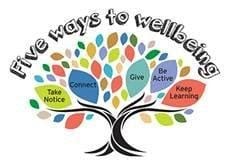
Five Ways to Wellbeing is a mental health campaign from South Western Sydney Local Health District’s mental wellbeing team.

The campaign is based on the following principles. By doing these five things every day, people can achieve better mental wellbeing.


Connect

Connect with the people around you, your family, friends, neighbours, colleagues and spend time developing these relationships.


Give

Give of your time, your presence, your words, volunteering.


Be Active

Do what you can, enjoy what you do, move your mood.


Keep Learning

Embrace new experiences and opportunities.


Take Notice

Be mindful, appreciate little things, savour the moment, be in the moment.

For more information go to South Western Sydney Local Health District’s website.

22 December 2021

The Blackdog Institute, with funding from SWSPHN, is holding free workshops for health professionals in South Western Sydney.

Depression Dilemmas will be held on Sunday, 16 February at Liverpool Catholic Club. Topics covered will include: depression and alcohol; late life depression; and difficult to treat. Register online or at education@blackdog.org.au.

Managing Bipolar Disorder will be held on Sunday, 3 May at Campbelltown Catholic Club. Topics covered will include: assessment and diagnosis; pharmacological management; recovery and wellness; and diagnostic dilemmas. Register online or at education@blackdog.org.au.

Dealing with Anxiety Disorders will be held on Sunday, 14 June at Mercure Liverpool. Topics covered will include: understanding anxiety; assessing anxiety; behavioural strategies; the anxious mind; and pharmacological treatments. Register online or at education@blackdog.org.au.

14 December 2021

Head to Health hubs are providing free and easy-to-access mental health support in South Western Sydney, attendees at the launch of the new Commonwealth-funded service were told on Wednesday, 8 December.

The clinics opened in September and are leading the state in the number of consumers accessing support.

The service provides short-to-medium term support for people experiencing moderate-to-high levels of mental health distress. People who need support can call 1800 595 212 or pop into one of the hubs at any time to discuss their mental health needs and concerns.

Dr Keith McDonald PhD, Chief Executive Officer of South Western Sydney PHN (SWSPHN) which commissions the service, said South Western Sydney was on the frontlines of the pandemic when funding for the service was announced in August.

“The pandemic and the lockdown had a heavy impact on our community, with an increase in psychological distress,” he said. “What was needed was a high quality, flexible service that was open to everyone, with no out-of-pocket costs.

“Together with One Door, we have worked hard to get these services established, and our community has embraced the service with more than 150 individuals already accessing Head to Health.”

Kathi Boorman, Chief Executive Officer of One Door Mental Health which delivers the service, reported a 25 per cent increase in referrals compared to the previous financial year, with the uncertainty, job losses, isolation and stress on relationships caused by the pandemic.

“We really needed the service up and running in a short period of time,” she said. “We needed a service that was more humane and person-centred. Feedback from services users includes: it is helpful, life-saving, staff are friendly and approachable, and it is mental health support which works.”

Program Manager Chris Jones said Head to Health made the first step to seeking support easy.

“We have a skilled and passionate multidisciplinary team providing efficient, effective and navigable support to people of all ages, genders, sexuality and cultural backgrounds,” he said.

More information about Head to Health Pop Up services can be accessed via

  HeadtoHealth.gov.au/PopUp

Head to Health Hubs are open at:

  • Suite 24, 1-5 Jacobs Street, Jacobs Court, Bankstown
  • Level 6, 203 Northumberland Street, Liverpool
08 December 2021

A free mental health program for older Australians across South Western Sydney can now be accessed by people who have been affected by the COVID-19 pandemic.

The program “Continuing to be Me at home” (C2bMe@Home) has been developed to help older Australians who have struggled with mental wellbeing and isolation caused by the COVID-19 pandemic and extended lockdowns. The program is delivered to people who need it from the comfort of their own home either face to face or via telehealth.

The Federal Government has provided funding and support this initiative and make mental health services more accessible for older Australians across South-West with the help of Primary Health Network.  

South Western Sydney PHN has worked closely with primary care services, hospitals, the NSW Mental Health Pandemic Response Taskforce and the State and Federal Governments in identifying Uniting Recovery as a partner in establishing mental health services for seniors in this region.

SWSPHN Chief Executive Officer, Dr Keith McDonald PhD, said “Mental health doesn’t discriminate. Many people in our region may have never experienced mental ill-health before and are facing new challenges due to COVID-19 so it has never been more important to ensure our community can access critical support and mental health services during these challenging times. The service opened in South Western Sydney in October 2021 and is available for anyone over 65 that needs mental health support. The service is available to all Aboriginal and Torres Strait Islanders aged over 50 years.”

The C2bMe@Home service is a new addition to Uniting Recovery’s mental health services which already includes Youth Enhanced Support Service (YESS), C2bMe and NDIS Mental Health Services in South Western Sydney.

Uniting Recovery is excited to be running the C2bMe@Home program and welcomes the funding to support the emotional and mental wellbeing of older Australians. It has become particularly important as many have been impactd by extended lockdowns is South Western Sydney.

The program is currently seeking out allied health professionals and GP to help them identify older persons who may need assistance in the community. The focus of the program is to increase connectedness, develop hope, reinforce identity and purpose, reduce symptomatology, and increase the functioning of participants.
 
Mental health has become an increasingly important health issue across Australia caused by extended lockdowns and as a response to the COVID-19 pandemic. The pandemic has taken a huge toll on the wellbeing of Australians who have been affected through loss of employment, housing, relationship breakdowns and increased financial burden. And hence one of the aims of  program is to provide targeted support for seniors, based on their specific needs.

The free C2bMe@Home program aims to make a real difference for the seniors that have been impacted by the pandemic.

To find out more about the C2bMe@Home SWS program and to make a referral please contact  1800 422 263 or email.

WebsiteRead more about c2bMe

30 November 2021
30th November 2020

A new online course – A GP Framework for Child Mental Health Assessment (5-12 years) – is being held through Emerging Minds Learning.

Emerging Minds offers free resources for practitioners working with families and children to improve child mental health outcomes in Australia.

The course attracts 40 CPD points through the RACGP CPD Accreditation program and is recognised by the General Practice Mental Health Standards Collaboration (GPMHSC) as a stand-alone Clinical Enhancement Module (as part of the MHST modular pathway).

Resources include:

09 November 2021

Mentoring Men provides life mentoring programs for adult men in the community and is presenting The Connection Experience, starting Wednesday, 18 November.

The Connection Experience is designed to give younger men, aged typically 18 to 32, a better idea of what’s involved in mentoring conversations and support.

It aims to help participants find answers to sometimes hard to ask questions such as:

  • How do I connect with the activities I want to do in life?
  • How do I get better connected with friends and groups?
  • What are my options when it comes to living the life I want to live?

Bookings/enquires can be made at info@mentoringmen.org.au

Find out more

08 November 2021

A GP framework for infant and early childhood mental health assessment (0-5 years) aims to enhance the clinical practice in mental health of GPs working with infants and young children aged 0 to five years.

The Emerging Minds online course has been developed in collaboration with a GP consultancy group to equip GPs with knowledge of common child mental health conditions, strengthen their engagement skills for interacting with a child and their family, and develop practical skills for child mental health assessment and management.

The course is accredited with the RACGP as a CPD Accredited Activity (40 CPD points) and with ACRMM as a PDP Activity (6 PDP hours). It is also accredited by the General Practice Mental Health Standards Collaboration (GPMHSC) as stand-alone Clinical Enhancement Module. The course is available to practitioners free of charge.

Below you’ll find:

A summary of the course and its learning outcomes

prescribed GP learning pathway which includes other relevant online courses

Pathways of Care template to download and use to create a central database of services you can reach out to

A promotional video about this course

03 November 2021

In Australia, getting mental health support early is considered a positive thing to do. Getting help early is good for you and the people around you.

There are mental health services for free for anyone living in Australia, and translators available too.

Visit our YouTube playlist and choose your preferred language

Watch the video in your language:

Aboriginal (English)

Arabic

Cantonese

English

Filipino

Greek

Hindi

Korean

Mangdarin

Persian

Punjabi

Tamil

Urdu

Vietnamese

If you or someone you know is struggling with their mental health, speak to a GP, visit the Head To Health Pop Up page on this website or call 1800 595 212. Your mental health and wellbeing depend on it.

WebsiteVisit our YouTube playlist to find a video in your language