19 April 2023

Doing It Tough? is a website created for men in NSW to find local support when they are doing it tough.

There are many factors which lead to men doing it tough.

The website aims to make it easier for men find the right support for their situation.

The website has been designed to connect men with community-led services, based on where they live, the challenges they face and the type of support they want.

Doing It Tough? lists 150 local NSW organisations and services which help men with:

  • Addiction
  • Relationship challenges
  • Financial difficulties
  • Abuse or violence
  • Job-related challenges
  • Mental health challenges
Visit Doing It Tough?
23 March 2023

Amid a worrying spike in syphilis cases, the Australasian Society for HIV, Viral Hepatitis and Sexual Health Medicine (ASHM) has launched an online Syphilis Interactive Tool to guide clinicians through testing and treating syphilis.

The decision-making tool is free and available online, with primary practices encouraged to use the tool in their clinical care. The tool incorporates pathways for diagnosis and treatment in pregnant women, a priority population group of growing concern.

ASHM’s Syphilis Interactive Tool complements existing resources, including the on-demand training module, Syphilis Outbreak Training.

ASHM is encouraging primary care professionals to help combat Australia’s increase in syphilis cases by integrating the Syphilis Interactive Tool into their clinical practice. 

Find out more
30 January 2023

The Youth Health Forum is hosting an online masterclass presented by Jennifer Doggett on Thursday 9 February, 1pm to 3.30pm, on the Australian health system. The forum is an opportunity for young people aged 18 to 30 who are interested in developing a foundational understanding of how our health system works.

Find out more
18 January 2023

SWSPHN has developed a fact sheet to provide general practices with an update on changes to cancer screening recommendations for Aboriginal and Torres Strait Islander people.

Changes include:

National Cancer Screening Register (NCSR)

The NCSR has released a Healthcare Provider Portal which provides a self-service alternative for healthcare providers to access and submit screening data for the bowel and cervical screening programs.

Cervical cancer screening

Self-collection is now available to all people with a cervix.

Bowel cancer screening

Bowel cancer screening kits can now be ordered in bulk to your practice and distributed directly to patients during consultations.

Breast cancer screening

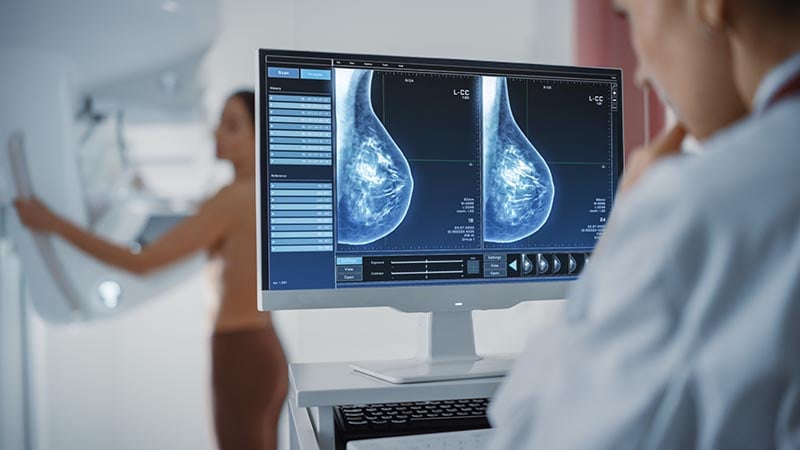
The BreastScreen NSW PUTUWA Project is supporting Aboriginal women to access mammograms from age 40 (previously it was age 50).


National Cancer Screening Register (NCSR)

The NCSR has released a Healthcare Provider Portal which provides a self-service alternative for healthcare providers to access and submit screening data for the bowel and cervical screening programs.

The portal can be integrated into clinical information systems enabling GPs and practice nurses to access and submit data electronically.

It eliminates the need for healthcare providers to contact the National Register via fax, paper and phone, and makes it easier for healthcare providers to submit information.

You can use the National Register in real-time to:

  • order your patient a National Bowel Cancer Screening Program Test Kit (to their home)
  • bulk order National Bowel Cancer Screening Program kits directly to your practice
  • check patient screening histories
  • receive reminders for patients overdue for screening or follow-up
  • check and update patient details
  • manage patient program participation
  • submit information about your patient, such as colonoscopy or colposcopy information
  • nominate other people to assist your patient, including another doctor or a personal representative
Register now
16 August 2022

With monkeypox now declared a public health emergency of international concern, we’ve put together this special feature to support you in providing care and information to your patients.

The feature includes information about who’s at risk, symptoms, specimen collection, how far it has already spread, vaccines and treatment, educational webinars and other resources which may be of interest.

What is it?

Monkeypox, also known as MPX, is a disease caused by the monkeypox virus and is part of the same family of viruses as variola virus which causes smallpox. 

It is a viral zoonotic disease which occurs primarily in tropical rainforest areas of Central and West Africa and is occasionally exported to other regions.

Since May 2022, there has been a global increase in MPX infections in multiple countries where the illness is not usually seen.

What are its symptoms?

The symptoms of monkeypox are similar to those of smallpox but are generally milder. They include:

  • fever
  • headache
  • muscle aches
  • backache
  • swollen lymph nodes (swollen glands)
  • chills
  • extreme tiredness

A rash may appear one to five days after the fever starts. Usually the rash begins as flat, red spots, often in the mouth or on the face first. Then the rash spreads to other parts of the body — usually the arms and legs, rather than the trunk. The rash may also appear on the palms and soles, inside the mouth, on the genitals and on the eyes.

Infection can be confirmed by testing a swab collected from the base of a blister from the skin rash.

Find advice on specimen collection and handling

How does it spread?

MPX spreads from one person to another by direct contact with infected bodily fluids such as contact with the sores, or scabs on the skin, or through touching contaminated objects the infected person has used, such as linen or clothes.

It may also be transmitted during close physical contact, including sex.

It can also be spread through prolonged face-to-face contact by inhaling infected respiratory droplets (for example coughing or sneezing close to another person’s face for a length of time).

Who is at risk of monkeypox?

While the current outbreak has disproportionately impacted men who have sex with men, anyone who has been in close and usually prolonged contact with someone with monkeypox is at risk.

What’s it’s status in the world today?

The World Health Organization (WHO) has declared MPX public health emergency of international concern.

According to the Centers for Disease Control and Prevention, as of 15 August 2022 there have been 31,799 confirmed cases of monkeypox reported in 89 countries.

How many cases are there in Australia?

MPX was declared a Communicable Disease Incident of National Significance in Australia in July.

As of 11 August 2022: 

  • There were 70 cases (confirmed and probable) of MPX in Australia, reflecting cases which have been diagnosed in Australia and reported to the National Notifiable Diseases Surveillance System (NNDSS) by states and territories.
  • This includes 33 in NSW, 30 in Victoria, two in the Australian Capital Territory, two in Queensland, two in Western Australia, and one in South Australia.

On 1 June 2022, MPX became a nationally notifiable disease for six months.

GPs, hospitals and laboratories must notify any suspected cases to the local public health unit immediately. Public health unit staff will initiate a public health investigation, contact tracing and control measures.

You can contact the local public health unit on 1300 066 055 for more information.

What vaccines are available?

There are smallpox vaccines available which are thought to be effective against MPX. Vaccines can be given either before or after a person is exposed to the virus but vaccinating before exposure is recommended for the best protection.

There are two vaccines approved for use in Australia: JYNNEOS and ACAM2000.

JYNNEOS is the preferred vaccine for use in Australia because it has fewer side effects than previous smallpox vaccines and can be safely used by all groups of people, including those who are immunocompromised.

How do patients access the vaccines?

There is a globally limited supply of the JYNNEOS vaccine and high international demand.

NSW Health has begun vaccinating people at highest risk from monkeypox with an initial supply of JYNNEOS.

Doctors and other community partners are identifying people who are most at risk from monkeypox to receive a vaccine when the first supplies of vaccine become available.

NSW Health expects to receive a further 30,000 doses at the end of September and 70,000 doses in early 2023. NSW Health will provide more information about eligibility and access to the vaccine at that time.

If you have patients seeking a monkeypox vaccination, they can register their interest online via NSW Health. Please note: completing the form does not guarantee vaccine access.

What treatment is available?

Most people require no, or only supportive, treatment for MPX. This may include simple pain relief. Antiviral treatment may be needed in patients with more severe disease. Guidance on the use of treatments for MPX in Australia is available in the Monkeypox treatment guidelines.

What resources are available to support GPs manage monkeypox patients?

Who do you talk to for more information?

You can call the Public Health Unit on 1300 066 055 for more information.

Webinars

Monkeypox Update

Deputy Chief Medical Officer, Professor Michael Kidd, held a webinar last Wednesday (10 August 2022) to provide general practices with information about monkeypox. The webinar provided key updates and gave participants the opportunity to answer questions.

Watch the webinar

Infection prevention updates

SWSPHN will host a webinar, Infection prevention control updates, for GPs, practice nurse, practice managers and other practice staff, on Thursday, 8 September, 7pm to 8pm.

Presented by microbiologist and infection prevention and control consultant/educator, Margaret Jennings, the webinar will address:

  • The spread of COVID-19’s current Omicron BA4/5 variants, infectivity, the probability of future variants and the new Moderna vaccine due this month (August)
  • Tips for making face-to-face consultations safer, including improved safer air in your clinic, waiting room safety and the correct use of masks
  • Precautions to reduce transmission of influenza and monkeypox
  • A reviewed 5th Edition RACGP IPC Standards ready for late 2022/early 2023

Register for the webinar

Information sources: Department of Health and Ageing; NSW Health; Healthdirect; Department of Health – Victoria

07 July 2022

Bowel cancer is Australia’s second biggest cancer killer, but if detected early, more than 90 per cent of cases can be successfully treated.

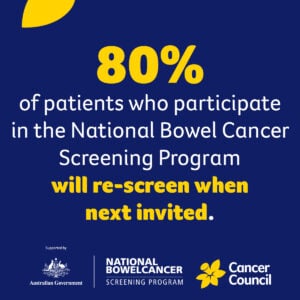
Unfortunately, only 43.5 per cent of all eligible people aged 50 to 74 complete the bowel cancer screening kits sent to them every two years. If the participation rate could be increased to 60 per cent, 84,000 lives could be saved over the next 20 years.80% will rescreen -Get2it

Cancer Council Australia, in partnership with the Australian Government, has launched the Get2it national bowel cancer screening campaign to increase participation in the National Bowel Cancer Screening Program.

The campaign will likely result in a greater number of enquiries to general practices about bowel cancer and screening. This presents an important opportunity for GPs and primary healthcare providers to endorse the program and support their patients’ participation.

GPs are vital in identifying patients who have never screened or are not up-to-date with their screening.

Research undertaken in 2021 by the Centre for Behavioural Research in Cancer identified three types of people who are not participating in bowel screening: refusers, intenders and the FOBT naïve.

Each face specific barriers to participation and GPs and primary healthcare providers are critical in responding to these challenges.

Once people choose to screen, 80 per cent will screen again when next invited.

Cancer Council has produced a GP resource which can be used to identify the best approach to support these reluctant or hesitant screeners in choosing to screen, thereby contributing to improving screening program participation rates.

Download the GP resource to support reluctant and hesitant screeners

Find information for health professionals about bowel cancer screening

16 November 2020

Mentoring Men provides life mentoring programs for men in the community and is presenting The Connection Experience, starting Wednesday, 18 November.

The program is designed to give younger men, aged typically 18 to 32, a better idea of what’s involved in mentoring conversations and support.

It aims to help participants find answers to sometimes hard to ask questions such as:

  • How do I connect with the activities I want to do in life?
  • How do I get better connected with friends and groups?
  • What are my options when it comes to living the life I want to live?

Bookings/enquires can be made at mailto:info@mentoringmen.org.au

Find out more

30 October 2020

Thirty local Indigenous men came together to share their experiences and potential solutions at a recent co-design workshop to develop a proactive approach to suicide prevention among Aboriginal men.

SWSPHN hosted the 6 October workshop which had participants from Gooboora men’s social support group and Dharawal Men’s Aboriginal Corporation, and was facilitated by former NRL player, professional boxer and mental health advocate, Joe Williams, SWSLHD’s Mervyn Taylor and mental health consultant Jenni Campbell.

The workshop took a relaxed rather than structured approach to co-design, allowing attendees to share their experiences and potential solutions in a cultural context.

The co-design process will ultimately fund non-clinical suicide prevention approaches for Indigenous men.


What will the program do?

  • Provide more timely and appropriate access to supports for Aboriginal men experiencing distress
  • Support men in cultivating an improved sense of individual and cultural identity and belonging
  • Support men in developing an improved understanding of, and connection to, culture
  • Strengthen positive support people and networks available to individuals throughout the local community.

26 June 2020

The success of SWSPHN’s region-wide service co-design approach to men’s suicide prevention has caught the attention of the Australian Men’s Health Forum.

SWSPHN was one of only four PHNs asked to discuss our ongoing approaches to men’s mental health to the Men’s Health Connected forum, an online summit throughout June.

Our Mental Health Manager Chris Jones was invited to present to the session: How PHNs are working to prevent male suicide and How PHNs are engaging with men. His presentation attracted more than 120 attendees from across Australia.

Chris focused on the key learnings and perspectives from co-design sessions held at Campbelltown and Mittagong in early February which gave local people an opportunity to contribute to the development of local services.

Chris said our co-design sessions not only attracted one of our largest co-design participation rates to date, with more than 80 people attending, but also encouraged new men’s voices and provided a unique platform for the lived experience of male suicide to be featured and supported.

“This co-design approach has since helped to enable SWSPHN to develop an innovative grants approach through which we’ll provide funding to organisations to foster ideas for helping men become more proactive in seeking and securing support to improve their mental health and reduce rates of male suicide,” he said.

13 March 2020

Tackling the Challenge (TTC) encourages local men to share their stories of overcoming physical, psychological and social health issues with the aim of opening a healthy discussion on men’s health.

TTC is led by the South Western Sydney Mental Wellbeing Health Promotion Team in partnership with government and non-government services including Western Sydney University.

Community Pulse is publishing a series of these stories. If you have a story to share, please contact Brendan Bennett on 8738 5983 or Brendan.Bennett@health.nsw.gov.au


Malcolm reflects on his journey

The Tackling the Challenge: Talking Men’s Health project gives a voice to men’s health and shares stories of overcoming life’s challenges to encourage other men to ask for help.

In this story, Malcolm shares his life journey.

By the age of 30, Malcolm had accomplished many things most would only dream of. He had received all of his engineering qualifications, owned properties, worked a variety of jobs and travelled for three years across 36 countries. Despite this, Malcolm felt adrift.

Returning to Australia from working overseas, Malcolm married for the first time and entered the hotel business as part-owner of an establishment with his family members. “So here I was, early 30’s with my name above the door of a hotel – I was very proud”.

Malcolm and his wife welcomed pregnancy news and opted out of the hotel business to focus on their new family.

They welcomed a baby daughter into their lives who was born with Down syndrome. At the time, Malcolm felt a sense of shock then guilt, despite professional reassurance that a person who has Down syndrome can go on to live quite an ordinary life in the community.

Living with a sense of helplessness and feeling to blame, Malcolm started to unravel.

He made some business decisions which did not go his way and lost financial stability. He felt increasingly low and began to grow disconnected from his family. His relationship ended in divorce and he moved out of the family home. “I was in depression, deep depression,” he said.

Malcolm moved to Sydney and lived with friends, working as a taxi driver to make ends meet. “I reached such a low point, I felt like a total nobody and didn’t know which way to turn,” he said.

During this time, Malcolm disguised the extent of his mental distress to his extended family but a good friend suggested he seek professional support from a nearby counsellor at Catholic Care.

Over time, the counsellor helped Malcolm identify and understand what he was going through. She guided Malcolm away from holding blame for his daughter’s intellectual disability and she provided him with tools to support his recovery from depression.

Malcolm’s recovery journey included non-judgemental support from a life-long friend who understood the depths of his depression; therapeutic support; re-engagement with study; and joining a social group which helped him form new connections with others across Sydney.

“Suddenly, life started to look up because I was mixing with lots of people,” he said. 

He also credits his Christian faith which has grown as a result of facing the highs and lows of life. 

In this social group, Malcolm met his second wife and moved to the Southern Highlands to support her new role as a teacher. Malcolm also credits his second wife for supporting him through his recovery.

Sadly after 26 years of marriage and a second daughter, his wife passed away from cancer.

Now, Malcolm is proudly part of the Bundanoon Men’s group ‘Men at Shop’. This group is mainly retired men from a variety of backgrounds who meet weekly for an hour over a cup of coffee.

“I often sit there and observe four separate conversations happening around the table, it’s never the same blokes together,” he said.

This group helps men connect with the community to combat loneliness, often after their partners have passed away. “It’s a great way for blokes to get out and be with other blokes,” he said.

Malcolm is grateful and content with his life and his advice to other men is to make sure they have people around who they can trust, to talk to about how they feel and why.

Further support can be provided by a GP or heath professional. You can also contact Lifeline on 13 11 14 or the Mental Health Access Line on 1800 011 511.