21 September 2023

Aboriginal and Torres Strait Islander children experience some of the highest rates of Otitis Media and associated hearing loss in the world.

Otitis Media is commonly known as ‘glue ear’ in Aboriginal and Torres Strait Islander communities.

Left untreated, these conditions are directly linked to serious and long-term deficits. These include poor medical health, delayed communication and social skill development, challenging behaviour and learning difficulties.

With the COVID-19 lockdowns behind us, now is the time to complete crucial checks for children including:

  • regular ear checks
  • hearing assessments
  • onward referrals to ENTs / audiologists
Information for families


This article was written by members of the ‘Stronger Seeds, Taller Trees’ project which includes professionals from a number of government and non-government organisations in South Western Sydney. The group aims to support GPs working with families to navigate and access timely services when they have a concern about a child’s development.


30 August 2023

Healthy and Active for Life Online is a free 10-week healthy lifestyle program for NSW adults aged 60 years and over (45 years and over for Aboriginal people) and aims to build participants’ fitness, knowledge, skills and confidence to lead active and healthy lives.

The program will help you learn how to make small, sustainable changes in your lifestyle to improve your health, and includes tips on healthy eating and basic exercise.

Healthy and Active for Life Online participants receive:

  • A Healthy and Active for Life Online account
  • Access to weekly online healthy lifestyle modules
  • Access to two online basic exercise programs for beginners
  • Weekly handouts and an exercise manual
  • Telephone support to keep you motivated
  • Ongoing access to your account for 12 months

The next program starts on 9 October.

Find out more about the program

Please note the exercises included in this program are designed for beginners. This program is not suitable for those who already attend a regular exercise program (excluding walking groups).


UPDATE 16 January 2024:

The HEAL Online program is now freely available on the Active and Healthy website.

Active and Healthy


All NSW older adults also have access to free phone and online-based health coaching through the Get Healthy Service. The Get Healthy Service offers coaching and online support to help people make lifestyle changes and reach their health goals. The program can support people to:

  • eat healthily
  • get active
  • reduce alcohol
  • reach and stay at a healthy weight
  • stay active during and after cancer treatment

For more information on the Get Healthy Service or to enrol in the program, call 1300 806 258 or visit www.gethealthynsw.com.au.

25 August 2023

South Western Sydney Primary Health Network (SWSPHN) has a deep and ongoing commitment to supporting Aboriginal and Torres Strait Islander Health across our communities.

Our activities include commissioning services with our local Aboriginal community organisations; providing cultural awareness training to improve and support primary care; connecting with and planning Aboriginal health initiatives across South Western Sydney; and implementing a Reconciliation Action Plan across the organisation.

More than 20,000 Aboriginal and Torres Strait Islander people live in South Western Sydney. Compared to our non-Aboriginal population there is a distressing gap in life expectancy and health outcomes. The socioeconomic determinants of health and wellbeing must be addressed.

The upcoming referendum proposes to enshrine an Aboriginal and Torres Strait Islander Voice to Parliament in the Constitution. It represents an historic opportunity to implement the recommendations from the Uluru Statement from the Heart, delivered at the First Nations National Constitutional Convention in 2017.

Constitutional recognition will aid self-determination and help resolve the well-recognised inequalities facing First Nations communities.

In line with our commitment to closing the gap and improving the health of Aboriginal and Torres Strait Islander people, and consistent with our Reconciliation Action Plan, SWSPHN endorses the recommendations of the Uluru Statement from the Heart and supports constitutional change to establish the Aboriginal and Torres Strait Islander Voice.

07 August 2023

State-wide Referral Criteria (SRC) are clinical decision-support tools which give health professionals the referral criteria they need to refer their patients to public specialist outpatient services across NSW.

SRC helps people who need to see a health professional in a NSW public specialist outpatient service be referred and prioritised in a safe and timely way.

They support patients and the health professionals looking after them to make a referral and assist NSW public specialist outpatient services with screening and triaging these referrals.

Please visit the NSW Health website for more information.

22 June 2023

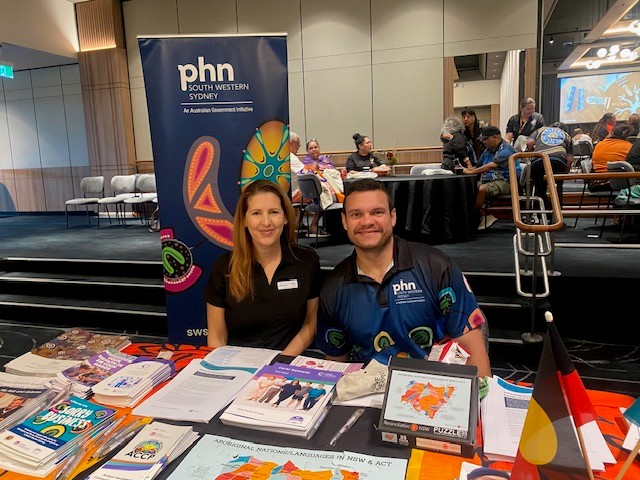
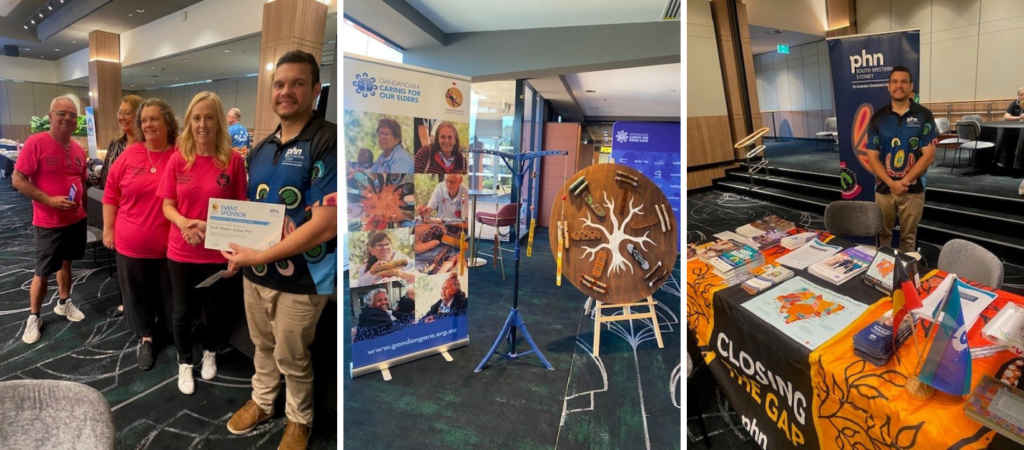
SWSPHN will host a stall at the Tharawal 2023 NAIDOC Family Fun Day as part of NAIDOC Week celebrations on Thursday, 6 July, at Airds High School, Briar Road, Airds.

The free event, from 10am to 2pm, will feature amusement rides, entertainment and stalls, among other things, and will be an opportunity to celebrate this year’s NAIDOC Week theme, “For Our Elders”.

The value of Elders – as cultural knowledge holders, trailblazers, nurturers, advocates, teachers, survivors, leaders, hard workers and loved ones – is the motivation for celebrations, activities and events during NAIDOC Week 2023 from 2 to 9 July.

Each year NAIDOC Week celebrates and recognises the history, culture and achievements of Aboriginal and Torres Strait Islander peoples. The week-long celebration is an opportunity for all Australians to learn about and appreciate First Nations cultures and histories.  

Other NAIDOC Week activities in South Western Sydney include: NAIDOC Fun Day, 1 July, 10am to 3pm, Bankstown City Gardens; NAIDOC Family Fun Day, 4 July, 11am to 3pm, Fairfield Showground; NAIDOC touch football, 5 July, 8am to 4pm, Benham Reserve, Minto.

Find out more
14 June 2023

Under the Microscope

MicroscopeSouth Western Sydney Primary Health Network’s (SWSPHN) cultural training has been refocused following feedback from GPs and practice nurses attending previous sessions.

The new Cultural Responsiveness Training was delivered for the first time in March, replacing the previous cultural awareness sessions. Cultural Responsiveness Training offers more practical advice for GPs and practice staff to have an active involvement in making their practices a place where First Nations people feel welcome and supported.

Some of the feedback from the previous training was that although it was clear Aboriginal people had suffered greatly, there was no guidance on what GP practices could do now to bridge the gap and make primary care more culturally safe and accessible for Aboriginal people.

In previous years, Aboriginal and Torres Strait Islander cultural awareness training was taught with a historical lens. Much of the content focused on the impacts of colonisation, stolen generations, kinships systems, racism and how these have negatively affected Aboriginal people in society and their health today.

While these topics are still important and taught in the new cultural responsiveness training, there is more focus on what can be done about it in a practical sense in general practice.

The changes include teaching GPs and practice staff the importance of a whole of practice approach to cultural safety, which includes having a friendly and welcoming environment and all staff are trained in understanding the issues that prevent Aboriginal people from accessing services.

The new learning outcomes are:

  • Demonstrate an understanding of Aboriginal history, values, beliefs and experiences
  • Define Aboriginal concept of health including barriers to accessing care
  • Apply an appropriate communication style to facilitate a culturally safe environment
  • Implement good practices and appropriately identify Aboriginal and Torres Strait Islander patients within a GP practice setting
  • Prepare a 715 and apply relevant Medicare Item Numbers

At the training sessions, GPs are provided with resources, such as Aboriginal/Torres Strait Islander/Australian flags, identification posters, 715 information, NSW Aboriginal Nation maps and a whole lot of other helpful and practical information and guidance to ensure practices can become culturally safe and responsive to the needs of Aboriginal people.

Two inaugural face-to-face training sessions were held in Mittagong and Warwick Farm in March and April. The first session had eight attendees, mostly practice nurses, while the second session had 48 attendees and was a mix of GPs and practice staff. Another is planned for Wednesday, 12 September, at Warwick Farm and a fourth session pencilled in for 15 November if there is a need for an additional event this year.

The sessions are delivered by Liverpool-based Gandangara Local Aboriginal Land Council, and include topics such as:

  • Historical impacts on Aboriginal and Torres Strait Islander people
  • How to apply a culturally appropriate communication style
  • A whole of practice approach to providing a culturally safe environment
  • Appropriate identification of Aboriginal and Torres Strait Islander people
  • Conducting a 715
  • Identify relevant Medicare items for Aboriginal and Torres Strait Islander people

If you have questions about cultural responsiveness training, please email Priority Populations Program Advisor Anna Dasler at Anna.Dasler@swsphn.com.au

Access Aboriginal health resources

10 May 2023

The strong focus on primary care, with the tripling of the bulk billing incentive and investment in the health workforce to better meet the health needs of the Australians in the 21st century, were among the welcome features of Tuesday’s Federal Budget.

South Western Sydney Primary Health Network (SWSPHN) Acting Chief Executive Officer, Kristen Short, said there was little doubt primary care had been struggling in recent years, with fewer practices in a position to bulk bill, further highlighting the need for strong and ongoing funding commitment for the sector.

“The $3.5 billion committed to bulk billing incentives, $98.2 million for new Medicare rebates for patients who require consultations of longer than 60 minutes and $445.1 million to support team-based care in general practice, are welcome measures to support the revival and protection of a healthcare system which has served us well for decades,” she said.

Other investments of interest to primary care, in particular general practices in South Western Sydney include:

  • $358.5 million for Medicare Urgent Care Clinics
  • $143.9 million for after hours primary care
  • $91.5 million to improve mental health by addressing workforce shortages

Ms Short said SWSPHN had a particular focus on innovative projects like iRAD, the New to General Practice Nursing program and My Care Partners to build capacity and support our general practices in delivering accessible, effective and timely care to our community.

She noted investment in digital health ($951.2 million); increasing the number of nurses in primary care ($10.7 million); and increasing incentives for general practices to employ a range of health professionals to provide team-based primary care ($445.1 million) would support those projects which were already improving the health of our region.

“Primary care is the cornerstone of our healthcare system, and SWSPHN looks forward to continuing to work with and support primary care providers across our region on the projects, services and other activities funded in this budget.

“We particularly welcome the focus in the budget on multidisciplinary team care and voluntary patient enrolment and look forward to seeing how it complements our local medical neighbourhood model of care, My Care Partners, which has been working for the past two years to reduce avoidable hospital admissions and enhance care coordination for people with multiple chronic diseases.”

24 April 2023

Be a voice for generations.

This year’s National Reconciliation Week theme, be a voice for generations, encourages community to keep up the momentum for change in tangible ways in our everyday lives – where we live, work and socialise.

National Reconciliation Week – 27 May to 3 June – is a time for all Australians to learn about our shared histories, cultures, and achievements, and to explore how each of us can contribute to achieving reconciliation in Australia.

The dates for NRW are the same each year; 27 May to 3 June.

These dates commemorate two significant milestones in the reconciliation journey— the successful 1967 referendum, and the High Court Mabo decision respectively.

27 May 1967

On this day, Australia’s most successful referendum saw more than 90 per cent of Australians vote to give the Australian Government power to make laws for Aboriginal and Torres Strait Islander people and recognise them in the Census.

3 June 1992

On this day, the Australian High Court delivered the Mabo decision, the culmination of Eddie Koiki Mabo’s challenge to the legal fiction of ‘terra nullius’ (land belonging to no one) and leading to the legal recognition of Aboriginal and Torres Strait Islander peoples as the Traditional Owners and Custodians of lands. This decision paved the way for Native Title.

Download National Reconciliation Week factsheet
19 April 2023

Paediatrician, Dr Andrew McDonald (pictured with medical student Ellen Court), joined 90 Tharawal Aboriginal Medical Service patients recently for their annual flu jab.

Tharawal AMS held the special flu vaccination clinic and hosted a barbecue for patients on Tuesday, 18 April.

Yearly influenza vaccination is recommended and free for all Aboriginal and Torres Strait Islander people aged six months and over.

Flu vaccination is recommended any time from April onwards to ensure protection for the peak flu season, which is generally June to September.

Flu vaccines can be given on the same day with a COVID-19 vaccine.

Free influenza vaccines are available to eligible people under the National Immunisation Program, including Aboriginal and Torres Strait Islander people, and:

  • children six months to less than five years
  • pregnant women
  • people aged 65 and over
  • people with certain medical conditions

Find out more:

09 March 2023

National Close the Gap Day – on Thursday, 16 March – highlights the campaign to close the health and life expectancy gap between Aboriginal and Torres Strait Islander peoples and non-Indigenous Australians within a generation.

The gap refers to the vast health and life-expectation inequality between Indigenous and non-Indigenous Australians.

This inequality includes:

  • shorter life expectancy
  • higher rates of infant mortality
  • poorer health
  • lower levels of education and employment

SWSPHN works to close the gap by supporting our community to live healthier and longer lives through prevention and better management of chronic diseases.

Find out more about our work

We also hold cultural awareness training for general practice, including upcoming face-to-face sessions in Mittagong on Tuesday, 28 March and Warwick Farm on Thursday, 27 April.

The training aims to equip GPs, practice nurses, practice managers, and other practice staff, with the knowledge and tools to support Aboriginal and Torres Strait Islander people in general practice settings.

It will include:

  • Historical impacts on Aboriginal and Torres Strait Islander people
  • How to apply a culturally appropriate communication style
  • A whole of practice approach to providing a culturally-safe environment
  • Appropriate identification of Aboriginal and Torres Strait Islander people
  • Conducting a 715
  • Identify relevant Medicare items for Aboriginal and Torres Strait Islander people
Register for the Mittagong training Register for the Warwick Farm training