


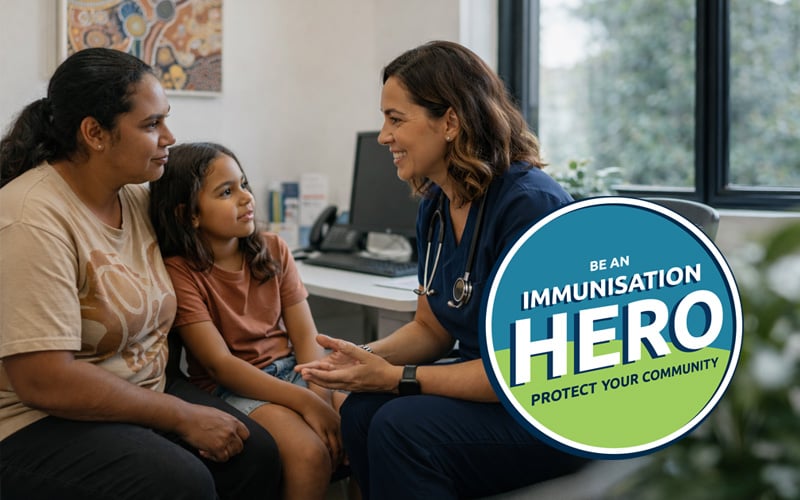
Protecting our mob means looking after your own health and ensuring you remain immunised against vaccine-preventable diseases. Aboriginal and Torres Strait Islander people can be at higher risk of some illnesses, especially diseases which can be prevented through vaccination.
That’s why some immunisations are recommended earlier, or more often, to keep our mob strong.
Why the risk can be higher
There are a few reasons why vaccine-preventable diseases can have a bigger impact on Aboriginal and Torres Strait Islander communities across South Western Sydney.
These include:
- higher rates of some chronic conditions, like diabetes, heart or lung disease
- busy households, where infections can spread more easily
- challenges accessing healthcare at the right time
- the ongoing impacts of colonisation and inequality
Because of this, illnesses like flu, pneumococcal disease, whooping cough and hepatitis B can lead to more serious sickness, hospital stays, or sorry business.
Vaccination is one way to help protect yourself, your family and your community.
Why some vaccines are recommended earlier or more often
To give stronger protection, the National Immunisation Program includes extra recommendations for Aboriginal and Torres Strait Islander people.
For example:
- flu vaccine – recommended every year from six months of age
- pneumococcal vaccines – an extra dose in the first year of life (totalling four doses)
- hepatitis B vaccine – important for protection from birth
- whooping cough (pertussis) – especially important during pregnancy to protect bub
These earlier or additional doses help your body build protection before you’re exposed to serious illness.
Learn more about what’s recommended:
National Immunisation Program Schedule
Aboriginal and Torres Strait Islander immunisation information
Protecting family, Elders and little ones
Getting immunised isn’t just about you. It helps protect:
- Elders, who carry knowledge and are more vulnerable to serious illness
- babies and young children, who need strong protection early
- family members with ongoing health conditions
When more people in the community are immunised, it helps slow the spread of disease and keeps mob strong.
Where to go in South Western Sydney
You can get vaccines at:
- your local GP
- Aboriginal Medical Services and Aboriginal Community Controlled Health Services
- community health clinics
- local pharmacies (for some vaccines like flu)
Many vaccines are free for Aboriginal and Torres Strait Islander peoples under the National Immunisation Program.
For the best protection, it’s a good idea to visit a GP or Aboriginal health service. They can:
- check which vaccines you need under the Aboriginal and Torres Strait Islander schedule
- make sure you get them at the right time
- keep your records up to date
Pharmacies can be a convenient option for some vaccines, like the flu shot, especially if you need something quick.
To find a service near you:
- use the healthdirect Service Finder
- free immunisation clinics near you
- or connect with your local Aboriginal health service in South Western Sydney
Yarn with someone you trust
If you’re not sure what vaccines you or your family need, have a yarn with:
-
- your GP
- a practice nurse
- an Aboriginal health worker
- the NSW Health Local Public Health Unit
They can talk it through in a way that feels right for you.