


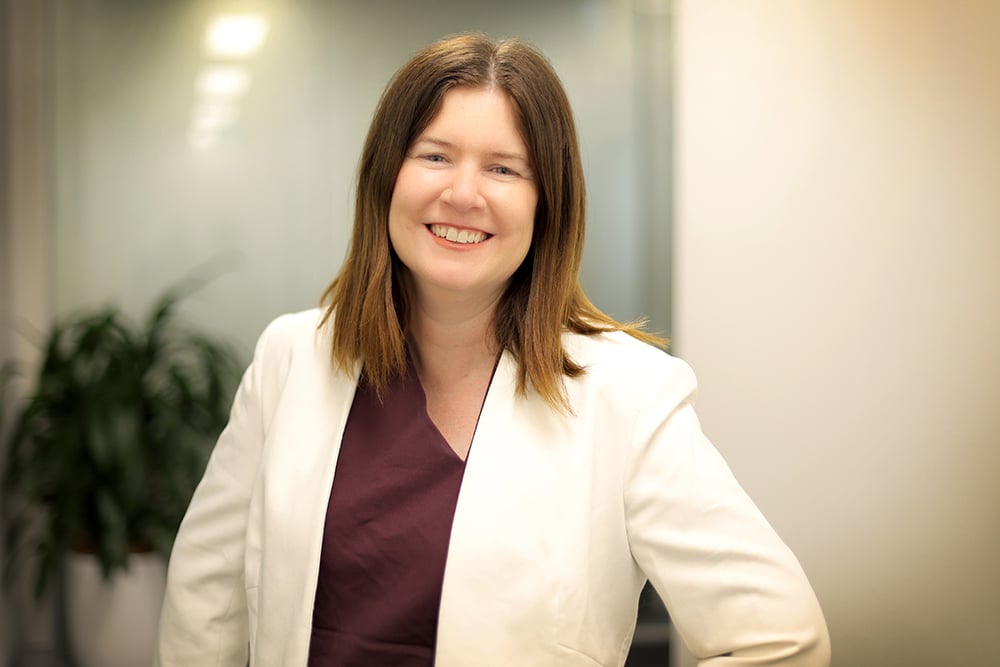
Planning for a sustainable and future-ready healthcare workforce, ensuring our commissioned services generate meaningful outcomes for consumers and strengthening South Western Sydney PHN’s voice as a regional leader, are among the key priorities for newly appointed CEO Amy Prince.
Ms Prince (pictured) was permanently appointed to the role on Monday, 26 October following a competitive external recruitment campaign.
She had served as Acting CEO for 15 months before her permanent appointment, providing steady and stable leadership during a period of transition for SWSPHN, following almost a decade of leadership under the late Dr Keith McDonald PhD.
Ms Prince said she was honoured to be appointed to the CEO role.
“I’ve spent much of my career with SWSPHN and the people in it mean a great deal to me,” she said.
“I have a deep love and connection to South Western Sydney where I’ve lived and worked my whole life. It’s a region that I really care deeply about. I get to work in a great organisation serving my own community – I feel very fortunate for that.
“It is a lot of responsibility, but I’m fortunate to have an incredibly capable team around me and I’m confident about what we can achieve together.”
Ms Prince’s tenure at SWSPHN and its predecessors began in 2009 when she joined the Macarthur Division of General Practice as a Practice Support Officer. Other roles have included Practice Support Team Lead, After Hours Primary Care Officer and Population Health Coordinator/Research Coordinator NSW IMPACT.
Her substantive leadership roles at SWSPHN have been Director of Planning and Performance since November 2017 and Commissioning Manager from 2016.
Ms Prince, who holds a Master of Public Health and Master of Business Management, said her passion for population health and its approach to improving healthcare led her to her first role in Practice Support.
She said Practice Support was the most challenging of her roles, but also rewarding.
“Working with general practices taught me a lot about persistence and building relationships.
“Practices are incredibly busy, and you’re often competing with a lot of other priorities for their time and attention. You have to be prepared to put yourself out there, demonstrate the value you can bring and earn their trust, do what you say you will. Over time, you build some really strong relationships.”
When asked about her leadership style, Ms Prince described herself as “open and collaborative”.
“My team know they can challenge me on things if they think I’ve got it wrong. That’s welcomed and it’s all part of the dynamic.
“I don’t think good leadership is about having all the answers. It’s about bringing different perspectives together, having honest conversations and working towards the best outcome.
“That’s why our new organisational value of ‘collaboration’ – which joins our other organisational values of trust, empathy, courage, fairness and integrity – really resonates with me,” she said.
Ms Prince said her 15 months as acting CEO had taught her to trust her judgement more and given her greater confidence in her decision-making.
“What I’ve learnt is that there are no perfect decisions – you have to weigh up the risks and benefits of each option and make the best decision you can,” she said.
“That was Keith’s parting advice for whoever took this role: ‘be prepared for ambiguity, decisions will often need to be made with incomplete information at hand’.”
Ms Prince said during their 13 years working together, Dr McDonald had shown her the value of being calm, collected and methodical in his approach to leadership.
“I loved working with Keith,” she said. “He taught me it’s okay to make a mistake and to treat people kindly if they come to you with a mistake – you can always work through whatever happens. You could go to him with anything and he would be ‘okay, this is the next thing we’re going to do’.
“When someone is calm and consistent and you know what you’re getting every day, it makes you trust them.
“He had such an impact – both within and outside our organisation – because he listened and gave people just a snippet of good advice exactly when they needed it.”
Ms Prince said she was excited about SWSPHN’s future and the opportunities presented by our new Strategic Plan 2026-2031.
“The strategic plan gives us a clear pathway towards what we want to achieve,” she said.
“It’s about making sure we have the right foundation in South Western Sydney to deliver the best quality care for the residents of our region.”
The plan focuses on delivering a sustainable healthcare system, while ensuring the care provided is high quality. It also highlights SWSPHN’s role in speaking on behalf of our region, leading reform and developing partnerships to drive innovation.
Ms Prince said while SWSPHN’s strategic plan was unique to our organisation, it could not be delivered in isolation, “we definitely need and value the partners that we work with to achieve our objectives”.
She said these partnerships were particularly important given one of the biggest challenges facing South Western Sydney: a shortage of healthcare professionals, including GPs, nurses, allied health professionals and specialists.
“As a system, we need to get better at working together, making the best use of the skills and expertise of our healthcare workforce. That means supporting clinicians to work to their full scope of practice and ensuring patients receive the right care, from the right professional, in the right setting.”
Ms Prince said patients didn’t think about healthcare in organisational silos – they expected the health system to work together to meet their needs.
“Partnerships with stakeholders like South Western Sydney LHD, primary care providers, commissioned providers and community are essential to realising the vision patients have of a health system which shares information and works together for the same goal,” she said.
The funding constraints faced by many organisations in South Western Sydney also underscored the importance of working together, given our region’s growing population and an increase in patients presenting with more complex conditions.
Ms Prince said local organisations used their funding as best they could to get the most positive outcomes for their patients, that meant pitching in and working together.
“I don’t think that happens so much in other regions,” she said. “It’s a really positive thing about working in South Western Sydney where people are so passionate about their region.”