


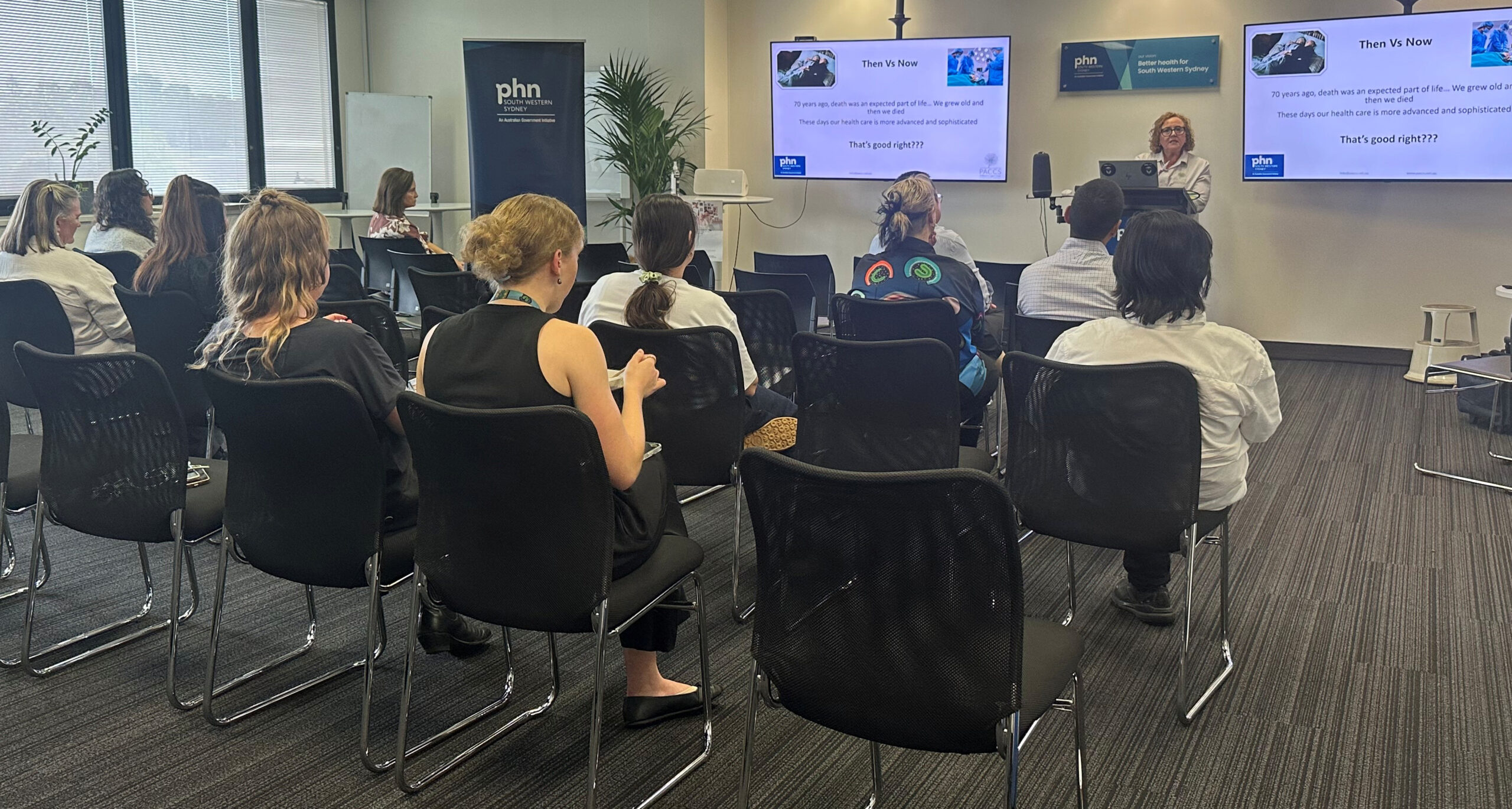
SWSPHN staff benefited from the expertise of one of our new service providers, the Palliative Aged Care Consultancy Service (PACCS), during a workshop held to mark National Advance Care Planning Week on 17 March.
The PACCs team talked about the importance of advance care planning (ACP), myths, benefits, how to start discussions, the consequences of not having an advance care plan and more.
SWSPHN is commissioning PACCS to deliver similar workshops in community setting across our region.
The workshops are run by specially trained staff who discuss with individuals why and how to plan for their future healthcare needs, help them complete an advance care plan and/or ensure the more formal advance care directive is completed and signed. Find out more


Left: SWSPHN staff Tracy Higgins and David Hoang increased their knowledge of advance care planning at the workshop.
Right: Nichole Petrie (from left) and Maxine Krebs and from PACCS join workshop organiser, Kate Noble from our Integration and Priority Populations team.
Advance care planning workshop highlights
What is advance care planning?
- advance care planning is a process in which a person thinks about what is important to them regarding their health and medical treatment
- planning for the future
- communicating with others
- ACP is NOT just for those with a life limiting illness
- ACP may also include planning on behalf of someone who has lost capacity
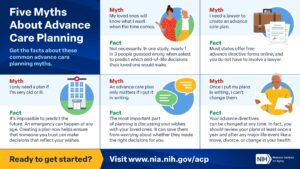
Benefits of advance care planning
- helps ensure people receive care which is consistent with their beliefs, values and preferences
- health outcomes improve when people are able to talk through their concerns, choices and treatment decisions with health professionals and each other
Conversation starters
- I try to talk to all my clients about what they would want if they become more unwell. Have you ever thought about this?
- I am pleased to see you recovering from your recent illness. If you became very sick again, have you thought about the treatment that you would want or not want?
Consequences of NOT having a documented plan
- care misaligned with your wishes
- family distress and/or conflict and clinical escalation by default
- increased clinician moral distress
Learn more by accessing these resources
Online learning
Advance Care Planning Australia: Online modules – Advance Care Planning Australia Learning
Queensland University of Technology – End of Life Law for Clinicians – QUT palliative care education and training resources
The Advance Project: GPs and practice nurses – The Advance Project Educations and Training website
Information
Advance Care Planning Australia
- http://www.advancecareplanning.org.au
- https://learning.advancecareplanning.org.au
- https://palliativecare.org.au/resource/what-matters-most-discussion-starter/
National Advisory Service: 1300 208 582
In language resources: www.mcci.org.au/wp-content/uploads/2026/01/20260120-A5-Planning-Ahead-WEB.pdf
NSW Government: Making an Advance Care Directive – https://www.health.nsw.gov.au/patients/acp/Publications/acd-form-info-book.pdf
End of Life Decisions, the Law and Clinical Practice: http://healthlaw.planningaheadtools.com.au