


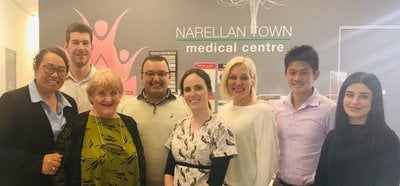
Narellan Town Medical Centre’s Dr Bilal Karime is committed to ensuring the best health outcomes for his diabetic patients through a weekly diabetes clinic which provides education, monitoring, access to allied health staff including a senior diabetic educator, and the time and follow-up care needed to combat a chronic condition.
Dr Karime has shared his experiences with SWSPHN.
Where did your passion for diabetes care originate?
It all started 20 years ago. My mother passed away because of a stroke. She had a background of diabetes and suffered complications – and she did suffer a lot. May she rest in peace.
I was not able to help her as I was away in Australia. I felt the pain of losing the most beloved person in my life – my mother – because of this disease.
It motivated me to do an Honours Degree investigating the effects of maternal renal disease on fetal kidney development and function, followed by a Masters of Medicine researching the development of vascular disease in diabetic pregnant women.
During my residency in the Neurology Department at Liverpool Hospital, I treated a large number of stroke patients with diabetes mellitus. I organised extensive diabetic education, inpatient endocrinology consultations and follow up with GPs.
When I moved to family medicine clinical practice in the country, I started treating large numbers of diabetic patients and found larger numbers of patients with metabolic disorders, obesity, insulin resistance, pre-diabetes and diabetes when I moved to Narellan.
I am focusing on metabolic disorders, in particular obesity, insulin resistance, pre-diabetes and diabetes.
My passion as a doctor is to treat patients and ease suffering. My passion as a person is to dedicate all my achievements in treating diabetes to my mother.
What care do diabetic patients receive at your practice?
For patients
- Screening and identification of diabetic patients.
- Assessing patients for their understanding about the implications of their condition and their readiness to comply with treatment.
- Educating about the condition and its implications, discussing and confirming commitment to the care we are about to offer.
- Explain the diabetic cycle of care step by step to patients while offering written information.
Our team
The diabetic clinic team includes:
- Senior diabetes educator
- Dietician
- Exercise physiologist
- Podiatrist
- Optometrist
- Pharmacist
It all starts with the administration staff/receptionist who books the patients for a diabetic review. The patient starts the review with the nurse who has been trained in the diabetic cycle of care. The nurse does initial assessment and examination, and later discusses the outcome of her review with me with an initial recommendation.
Next, the patient sees one of our allied health staff, depending on their needs.
After reviewing the patient, all allied health team members write a report about the progress and management of the patient.
The last step is a medical review with the doctor. We sit down with the patient and we (doctor and patient) decide on treatment and if a medications review and adjustment is needed, address comorbidities, investigate further or refer depending on needs.
One of the most important steps is giving the patient a diabetic bloods referral
What is key to the success of your clinic?
- Effort and persistence of screening, detecting, educating and treating diabetic patients.
- Teamwork – like well-oiled machine
- Evidence-based medications management and using the most advanced suitable drugs as per RACGP and TGA standards.
- Never give up on education. I have found a large number of diabetic patients are not aware of the consequences of diabetes. Once educated, the results are great. For instance, last year and during a telehealth consult, the patient requested repeats of her medications. I reviewed her clinical notes and found her last HbA1c was done 16 months before and it was 9.6. I talked to her and educated her and convinced her to join the diabetic clinic. Her initial HbA1c was 14.1, associated with peripheral neuropathy, and after three months her HbA1c dropped to 6.7 with all other markers down including symptoms.
- Screening high-risk diabetic patients for other comorbidities. I took over care of a 55-year-old female with diabetes. She suffered end organ damage. One foot was amputated and she had kidney failure. During the first diabetic review I screened her for other end organ damage. Her clinical notes stated chronic pain (neck, back and chest) and she was given painkillers for some time. I ordered a MiBi scan with severe ischemia confirmed. I handed over immediately to my preferred cardiologist and she ended up having bypass surgery within 24 to 48 hours.
- Planned regular follow up. Patients have to do a full review four times a year, exactly every three months and one day. We send them an SMS to remind them and make sure they do their blood tests before hand.
It’s about time – you need to take a lot of time to educate and follow up with patients.
What message would you like to relay to the community and general practice?
The ultimate message is that diabetes is one of the most serious medical conditions. Patients needs to be more involved, and there needs to be more compliance and follow up. For successful diabetes care, we need more community education and a greater commitment from medical professionals.
I welcome communicating with other medical professionals and working together to serve the community and to prevent vascular disease, stroke and ischemia heart disease, and end organ damage
Narellan Town Medical Centre is at Shop 410/326 Camden Valley Way, Narellan; phone: 4623 0775.