


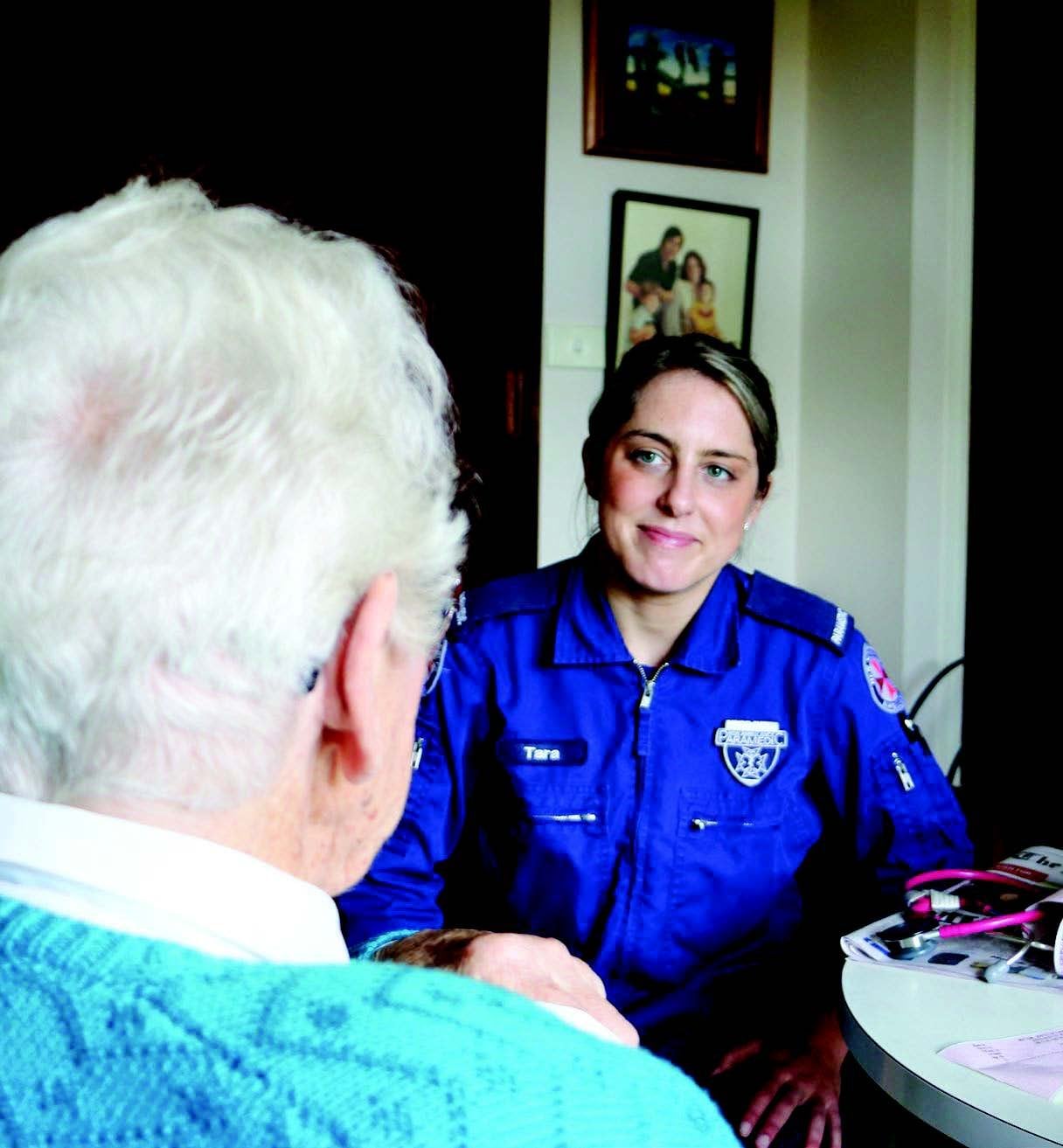
This article, dated October 2021, is shared by request from NSW Ambulance to help community members gain an understanding of the role paramedics play in end of life care and what you, as a patient or carer can do in preparation.
For patients
Paramedics’ role
- Paramedics are registered health professionals who respond to Triple Zero (000) calls in the out-of-hospital setting.
- They make decisions based on the assessment they complete when they meet you.
- They don’t know anything about your medical history before they meet you, so they rely on the information you provide them.
- If you have any medical paperwork from your health practitioner, including a phone number to call them, please give this to the paramedics when they meet you.
Palliative Care and Paramedic Practice
- Paramedics are highly skilled and equipped with a range of medications they can provide to patients.
- In the past, your doctor needed to fill out a NSW Ambulance Authorised Care Plan to tell us that you are receiving palliative care. This allowed the paramedics to give you medication.
- Now, the process has changed and paramedics can give you medications without a NSW Ambulance Authorised Care Plan.
- This is a helpful change as it means paramedics may provide you with palliative care at any time.
End-of-Life Care
- As patients are approaching the end of their life, family members or carers may need to call Triple Zero (000) for help. This might be because the patient’s condition has changed or their families or carers need some more support.
- When the paramedic arrives, they will ask about your goals of care to find out how you want to be cared for when you are dying or approaching death.
Goals of Care
- To provide you with the care that you need, paramedics will talk to you, your family, carers, doctors, nurses and other health workers.
They will try to find out what are your goals of care, which include:
- What medical treatments you may or may not want.
- Where you want to receive care (i.e. in hospital or at home).
- What matters most to you and your family.
You can document your wishes on an Advance Care Directive, which is a legal document to record your wishes and preferences. If you don’t have an Advance Care Directive and if you are unable to speak for yourself, paramedics can speak with a person who you have nominated and authorised to speak on your behalf. This may be your Enduring Guardian if you have appointed one.
Talking about your wishes as early as possible makes it easier for your health practitioners, family, carers and paramedics to respect your wishes in emergency situations.
For families and carers
Triple Zero (000) call
- If you need to call Triple Zero (000) for your loved one or client, you will be asked questions by the NSW Ambulance call taker about their problem, current condition and your location
- It is very important that you answer all of their questions
- If the person you are calling about has died, please tell the call taker that they are receiving palliative care and whether this was an expected death at home. You may be offered instructions to commence resuscitation
- If you are the person responsible and know the person doesn’t want to be resuscitated (e.g. receive CPR), please tell the call taker and they will respect your wishes
- The priority is to send a paramedic to help you, and when they arrive, you can discuss the patient’s goals of care and end of life wishes
Verification of Death (VoD)
- When paramedics are called to a death they are able to complete a Verification of Death form
- A completed VoD form enables a person’s body to be transported by a funeral director
- The funeral director will contact the patient’s treating doctor to get a Medical Certificate Cause of Death (MCCD). If you have the doctor’s details, please provide this to the paramedics and the funeral director
- Paramedics will give you the VoD form to give to the funeral directors when they arrive
Police
- Paramedics will not call the police if your loved one or client was expected to die
- Sometimes due to the way Triple Zero calls are received, the paramedics and police may arrive together. If this happens, it does not mean that anything is wrong. The police are there to support the paramedics and also to help you
- If the person’s death was not expected or if it is a complicated situation, then police do need to attend
Website: Visit the NSW Ambulance website for more information on Authorised Care Plans
For more information download this document