27 March 2020

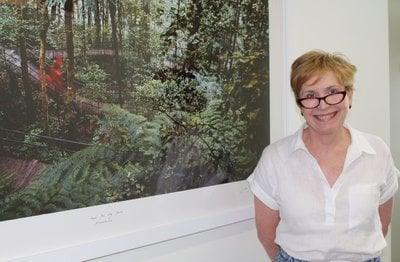
The broadness of general practice attracted Dr Pauline Hector to the profession. The satisfaction of providing stable, long-term care to her patients at Queen Street General Practice, and endless opportunities to learn, has kept her there. 


How long have you been a GP and how long have you been practising in the Campbelltown LGA?

I’ve been practising in Campbelltown for about 29 years, and as a GP for about 35 years.


When/why did you decide you wanted to become a GP?

I wasn’t one of those people that was always driven to do medicine but I did well at school and had the opportunity to do medicine. Once I’d graduated, I worked out pretty quickly that I wanted to do general practice. The broadness of it appealed to me, rather than focusing in on any one particular specialty.


What do you love most about being a GP/what part of the job gives you the most satisfaction?

On a personal level, it’s the breadth of things that you see, that you are exposed to and have to think about – I find that satisfying. Every day there’s something new to learn. I enjoy the challenge of keeping up and learning new things all the time. I also enjoy giving patients continuity of care, being somebody they know they can continue to call on for whatever problem they might have. You are their first port of call – you’re the one that they seek help from first and as you get more experience, you get much better at directing people to who they need to see if you can’t help with their problems. I enjoy the whole cradle to grave side of things, seeing people through different stages of their lives. When you’ve been a GP for a long time you are seeing three and four generations and that’s very satisfying too.


What is the most important thing you/your practice contributes to this community?

It’s about providing quality care and confidence for people. I had my own practice for a long time and I moved into this practice coming up to five years ago. This practice has a very similar ethos to what I had in my own practice – it’s all about seeing the patient in their community, in their culture and providing them with overall care. It’s not just about looking at their medical issues but making sure that what we’re doing fits in with their place in the world. That’s our biggest service to the community. I also have a particular interest in women’s health and mental health. I think the community in general benefits from people receiving holistic care with an emphasis on prevention and well thought out management plans.


What do you like to do in your spare time?

I like being outside, that could be swimming, going to the beach, walking locally or in the bush. I do as much of that as I possibly can in my spare time. Hanging out with friends and family and doing grandparent things with my granddaughter are also highlights of my spare time. One of my other great pleasures is going to the cinema to see all sorts of movies from the mainstream to the oddball to documentaries, I love getting lost in a story for a couple of hours.


Tell me about your ideal day…

My ideal day would start with a swim. An ideal work day is a day where I’m challenged but not too much! It’s an interesting day that’s not overwhelmed by paperwork or red tape or a greater than usual load of those heartsink patients we all have. A day where you can have a little bit of time to share a laugh with your colleagues is a good day, and an ideal day finishes with seeing my family and enjoying a nice cup of tea.


What do you love most about Campbelltown?

For me partly it’s a sense of feeling at home here even though I’m not a Campbelltown native. I grew up in the western suburbs of Newcastle in a very working class area in a single parent household which I feel helps me relate to the various struggles that a lot of our local families are faced with. The demographics of Campbelltown these days is very broad as well and that’s good from a medical point of view because you see a whole range of conditions. I think that what has kept me here is the long-term relationships with patients. Also, when you’ve been in the one area for a long time you start off seeing lots of babies and lots of kids but then you see those kids grow up and you move more into caring for elderly people. Professionally, it’s very rewarding. Interestingly I have recently discovered from my aunt who is interested in family history that when my father’s family first immigrated from England in the 1840s they settled in Campbelltown and my great great grandfather was born here in 1859. Maybe that’s why I feel so at home here.


What advice do you give your patients about maintaining good health?

Lots!

I try really hard to get people to look at their lifestyle and I try to impress on people the importance of activity, whether it’s physical or mental activity. I also try to help them to see the positives, especially when I’m treating patients with mental health concerns. In my own life when I’ve had major setbacks, I have always found looking for small positives a very helpful strategy. I think even when we are at our lowest if we can find some small pleasure to enjoy we can build from there. I try to get people to go outside and get some sunlight and hear the birds singing and occasionally I might throw in a quote from the Dalai Lama!

31 January 2020

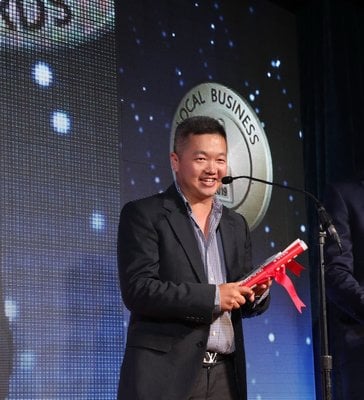
Cabramatta’s Dr Kim Lam understands the importance of a balanced lifestyle to maintaining good physical and mental health. She leads by example for her patients.


How long have you been a GP and how long have you been practising in the Fairfield LGA?

I started practicing in Australia in 1987. On 25 July that year. The reason I remember the exact date is that I had my youngest daughter only six weeks before I opened my surgery. I’ve been in Cabramatta the whole time I’ve been a GP.


When/why did you decide you wanted to become a GP?

Way back … I’m a country girl, I lived in a town in the south of Vietnam. The high school where I studied was located next to the town hospital and at that time the war in Vietnam was expanding. I went to the hospital and saw the young men, with their arms and legs up in the traction and I thought, how can I help these people, what sort of career will help? When you are a student, the teacher is an idol, you want to be a teacher. When I saw that, I wanted to become a nurse. I just felt like I had a mission to do something. I studied and studied and instead of becoming a nurse, I became a doctor in my country. When I escaped Vietnam in 1978, I did not think about my career, but then many things happened that led me to be in that career again in Australia.


What do you love most about being a GP/what part of the job gives you the most satisfaction?

As I mentioned earlier, I felt I had a mission to help. I studied medicine, so I perform what I’ve studied to help patients. About 10 years ago when I was still working full-time, I mainly focused on physical illness. After my parents died, I started to see things very differently. I started to see the way people suffer, not just in the body but in the mind. That thing that I didn’t want or like to happen offered me a new era – it changed how I live and how I serve the community and my patients. The more I go in that direction, the more I understand myself and the more I understand my patients, my neighbours, my children. When patients come to see me now, they see no stress so they feel relaxed when they come and talk to me. The people with breast cancer or terminal illnesses they come in, they cry but when they walk out, they smile. It is a reward for me and when you ask what I like most, that’s what I’ll tell you.


What is the most important thing you/your practice contributes to this community?

I treat patients with kindness and believe understanding the whole patient down to their roots is very important. I don’t just contribute to individual patients but I see them as a family. I’ve been here 30 years and have seen the now elderly patients, then the daughter of the elderly patient and now the children and grandchildren – four generations. I tell my receptionist you’re here to help, you treat the patients in a way that when they think of you, they feel happy, every time they come to the surgery they want to chat or share with you. That is your success. My surgery now is just like a family.


What do you like to do in your spare time?

When I was young, even 15 years ago, I worked seven days a week. Now I work less, so I spend time with my family, my children and do more charity work. I go nearly every year to Vietnam or Cambodia, first with Vietnam Vision, a Vietnamese newspaper group, and later with other groups. I swim, I do yoga and meditation.


Tell me about your ideal day…

Every patient who comes in is happy – happy to come in and happy that I’ve given enough time and care for them when they walk out. My business hours are 9am to 4pm, but I usually come here at 8.30am to do the blood tests and come out of the surgery at nearly 7pm because I cannot say ‘no’ when they need me, I just stay. My ideal day is whatever comes, I just take it as it is, and I fulfil it.


What do you love most about Fairfield/Cabramatta?

My patients are compassionate and not demanding. I also love the food around here! I don’t have to cook – my patients bring me plenty of food which I appreciate.


What advice do you give your patients about maintaining good health?

Just look at me! They know that I have balance in my life. That I do exercise, that I meditate, that I live free of stress and take care of other people. I tell them to have gratitude. I tell them I sit here on this chair and I’m very grateful to the person who made the chair, their parents, their teacher who taught them the technique to build the chair. Feel the connection, that way you never feel alone or depressed. Have kindness, listen and care – you never lose when you have these things.