


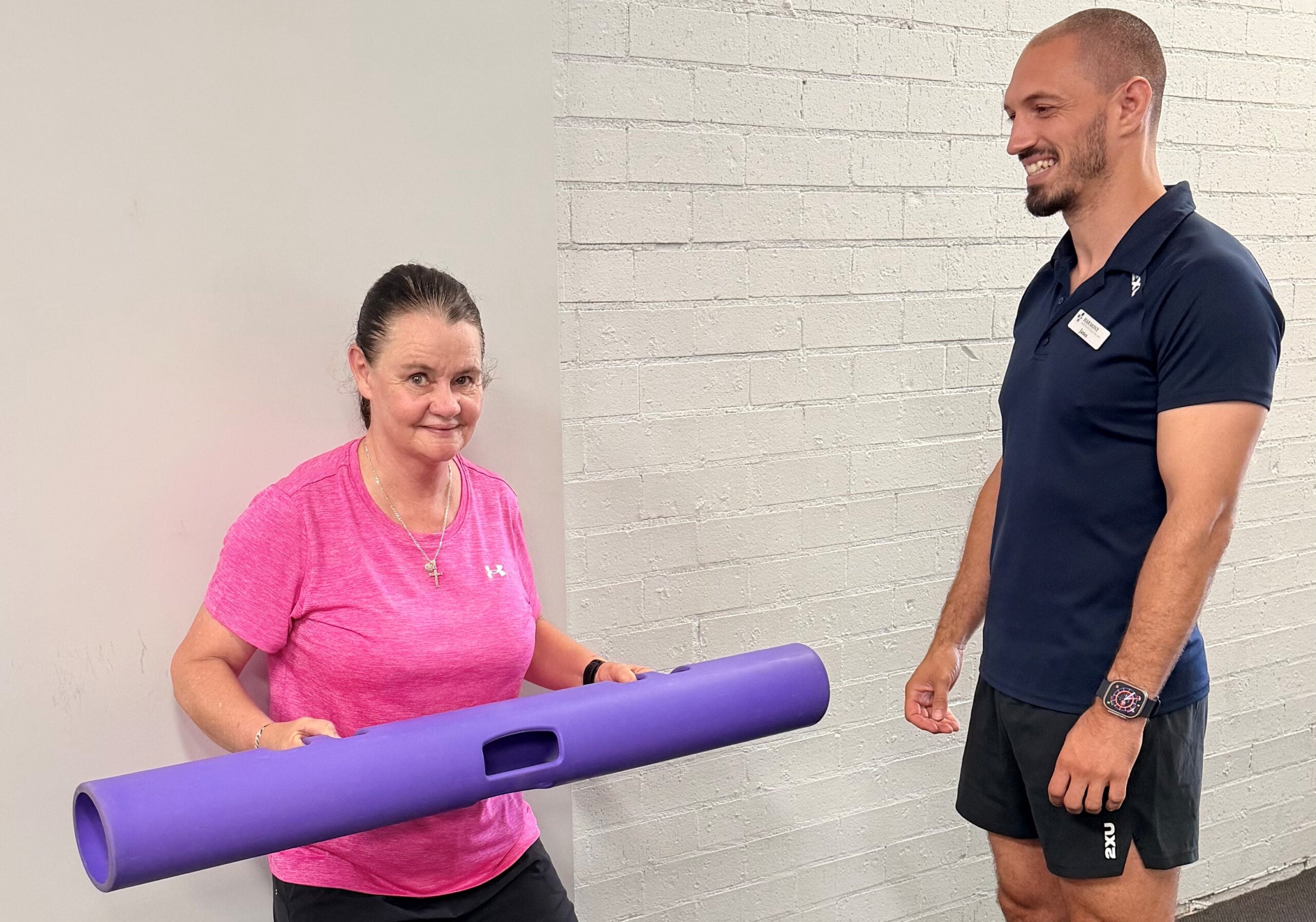
This quarterly feature highlights the incredible work of allied health providers across our community. This time we’re speaking with James Wallace (pictured with a client), Accredited Exercise Physiologist and Director of Harmony Specialist Healthcare at Campbelltown.
Background
Harmony Healthcare is a multidisciplinary clinic specialising in chronic pain, complex rehabilitation and trauma-informed care. Their team of specialist pain physicians, psychologists and exercise physiologists deliver coordinated, evidence-based support for people who benefit from collaborative specialist medical and allied health support. They deliver integrated rehabilitation services and condition-specific programs, including UpGrade, their intensive pain management program, and Advance, a dedicated CRPS program. They work closely with GPs to reduce fragmentation and improve long-term outcomes. Their focus is on accessible, person-centred care which reduces barriers, builds confidence and helps people re-engage with meaningful, valued activities in daily life.
Find out more: www.harmonyhealthcare.com.au
Follow them on Facebook: https://www.facebook.com/HarmonySpecialistHealthcare
What inspired you to become an Exercise Physiologist and what keeps you motivated in your work today?
I was inspired to become an Exercise Physiologist because I saw how movement, education and behavioural change could meaningfully transform people’s lives, especially those facing long-standing health challenges. I’ve always been drawn to helping people rebuild confidence in their bodies, and this profession allows me to combine science with practical, meaningful support. What keeps me motivated is witnessing the small but important wins – patients returning to activities they value, feeling more capable and realising they’re not defined by their condition. Many arrive feeling stuck or unheard, and with the right guidance, they begin to move toward goals they once thought were out of reach. I value working in an interdisciplinary team where each profession brings a different perspective. This collaboration leads to clearer care plans, more consistent messaging and improved outcomes for the people we support.
What do you wish more people understood about the role of your profession in primary care?
Exercise Physiology is most effective when patients are referred early. Early referral allows us to address deconditioning, fear-avoidance and unhelpful movement patterns before they become entrenched. It’s important clinicians feel confident encouraging people to stay active, even when experiencing symptoms, as it is a key part of early, evidence-based management and helps prevent deconditioning and long-term disability. In primary care, Exercise Physiologists play a key role in providing safe, evidence-based guidance which helps patients build confidence, improve function and prevent escalation to more complex or costly interventions.
Can you share an example of when working closely with another health professional improved patient outcomes?
One example is the collaborative work I do with our clinical psychologist, David Batten. Many of our patients present with all-or-nothing thinking, fear-avoidance or underlying mental health challenges which strongly influence their physical progress. David and I regularly case conference, to share observations about a person’s core beliefs, coping strategies and barriers to change. These conversations often give me insight into the psychological drivers behind a person’s behaviour. This allows me to adjust rehabilitation plans, pacing and communication in a way which aligns with what David is addressing in therapy. When we take this unified approach, people feel supported on both fronts and achieve stronger, more stable outcomes.
What kinds of patients or health conditions do you see most often, and what are the key signs or situations where referral to your service makes the biggest difference?
We most often see patients with chronic or complex musculoskeletal conditions, persistent pain, functional decline, and psychological factors such as fear-avoidance or low confidence in movement. Many have relied heavily on passive treatments or have become unsure how to safely increase activity. We also specialise in workers compensation cases, where coordinated communication, functional restoration and graded return-to-work planning are essential. Referral is most effective when a patient is struggling to engage in activity, unsure how to pace themselves, or needs structured, behaviour-change-informed rehabilitation. Early involvement prevents unhelpful patterns from becoming entrenched and allows us to build confidence, improve function and provide clear, coordinated guidance alongside GPs and other providers.
What advice would you give to other providers about collaborating effectively with your profession?
A quick conversation about a patient’s goals, barriers or recent progress can make a big difference, especially when we’re working with complex presentations. Shared understanding and consistent messaging help patients feel supported and reduce mixed advice. Collaboration doesn’t need to be complicated – even brief check-ins allow us to align plans, adjust pacing and ensure our rehabilitation approach fits well with the broader care being provided.
What excites you most about the future of your profession and its role in multidisciplinary care?
What excites me most is the growing evidence supporting safe, movement-based and active therapies as a cornerstone of long-term health. There is also a growing appreciation for trauma-informed, psychologically aware care, which aligns closely with how our multidisciplinary team operates. Exercise Physiology is becoming better integrated into multidisciplinary teams, allowing us to address physical function, behaviour change and health literacy simultaneously. I’m also encouraged by the shift toward early intervention, prevention and lifestyle-based care, which helps people build confidence, improve self-management and avoid escalation to more complex treatments.
How has delivering the HEAL program in partnership with SWSPHN supported your organisation’s work within the community?
Delivering the HEAL program in partnership with SWSPHN has strengthened our connection with the community and broadened our clinical networks. The program has helped us engage with new GPs and specialists who were previously unfamiliar with our services, creating clearer referral pathways and opportunities for ongoing collaboration. Making HEAL free for participants has also been incredibly valuable, as it removed financial barriers and allowed many community members – who may not otherwise access allied health – to participate in structured lifestyle and health education. We’ve had strong feedback from participants, with many asking for ongoing group programs, which highlights the demand for accessible, community-based support.
What does a typical day-in-a-life look like in your role. Is there some aspect about your daily role people may not expect?
A typical day involves a mix of patient appointments, functional assessment, exercise-based rehabilitation, medicolegal assessments and report writing, as well as regular coordination with our team. What people may not expect is how much of my role involves helping people understand their symptoms and addressing the psychological and behavioural factors which influence rehabilitation. Much of the day is spent providing reassurance, education and clear planning, alongside the practical exercise components. I also engage in collaborative discussions with our interdisciplinary team and referring providers to ensure each person has a consistent, structured pathway which supports their progress.
From your perspective, what role can the PHN play in supporting your profession and strengthening primary care in South Western Sydney?
The PHN plays a valuable role in strengthening primary care by continuing to build strong connections between GPs and allied health providers. Their education sessions, networking events and communication channels already make a meaningful difference, and expanding these further would help integrate care even more effectively. It’s also helpful when the PHN actively reaches out to allied health for input, ideas and contributions across programs and initiatives. Ongoing funding for community programs like HEAL is also essential, as it provides equitable access to evidence-based support for people who might not otherwise engage with allied health.
What’s one wellbeing tip or personal practice you’d like to share with your colleagues across primary care?
Prioritise one small, non-negotiable health habit each day – such as a short walk, a stretch routine or a moment of stillness – and build brief micro-breaks between patients to reset your breathing, posture or attention. These small, consistent practices, paired with maintaining at least one clear boundary in your day (like taking lunch away from admin or setting a firm cut-off time), can meaningfully reduce stress and support long-term wellbeing in busy clinical roles.