


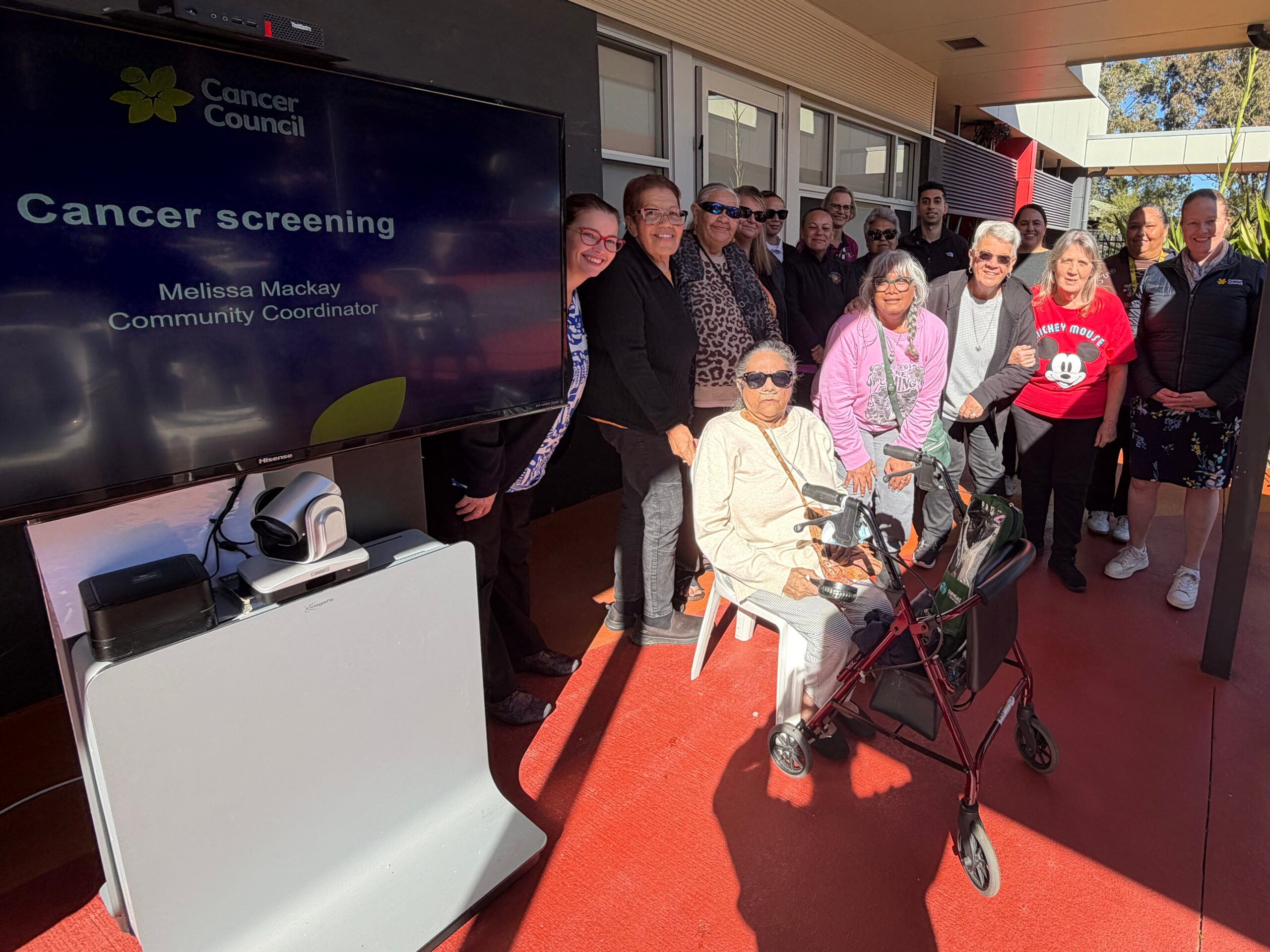
Cancer Council NSW Community Coordinator Melissa Mackay hosted a yarning session on cancer screening at Tharawal Aboriginal Corporation on 6 August.
The session provided an opportunity for community members to yarn, ask questions and learn more about cancer screening in a safe and supportive environment.
Melissa shared information about who is eligible for each screening program, how the different screening tests work, what to expect during the process, and why regular screening is an important part of looking after your health.
Here’s what you need to know.
Why screening matters
Cancer screening can find cancer early or identify changes which may lead to cancer, often before symptoms develop. Finding cancer early may improve the chance of successful treatment.
Screening is intended for people without symptoms. If an invitation, reminder or kit arrives, book the appointment or complete the test rather than putting it aside.
Breast, bowel and cervical screening
Here’s what you need to know about who is eligible, how often to screen and what each test involves.
Breast screening
- women aged 50 to 74 are invited to have a free mammogram every two years
- women aged 40 to 49 and 75 and over can also book for free but are not routinely invited. They are encouraged to speak with their doctor first
- a mammogram is an X-ray of the breasts which can find cancer before it can be seen or felt
Bowel screening
- people aged 45 to 74 can screen every two years. Those aged 50 to 74 receive a kit by mail, while those aged 45 to 49 need to request their first kit
- the at-home test checks small stool samples for blood which may be too tiny to see
- more than 90 per cent of bowel cancer cases can be successfully treated when found early
- blood in a sample does not always mean cancer, but the result should be discussed with your GP
Cervical screening
- women and people with a cervix aged 25 to 74 should have a Cervical Screening Test every five years
- the test detects cancer-causing HPV, the virus which causes most cervical cancers
- you can collect your own sample or have a healthcare provider collect it
- screening is still needed after HPV vaccination because the vaccine does not protect against all types of HPV
Take the next step
If you’re due for screening, book your appointment or complete your bowel screening kit. Speak with your GP or Aboriginal Medical Service if you’re unsure when you are due or how to take part.
If you notice an unusual or persistent change to your body, speak with a healthcare professional rather than waiting for your next screening test. Symptoms don’t necessarily mean cancer, but they should be checked.
Learn more from Cancer Council NSW:
Read about the signs and symptoms of breast cancer, bowel cancer and cervical cancer.
For cancer information and support, call Cancer Council on 13 11 20.