


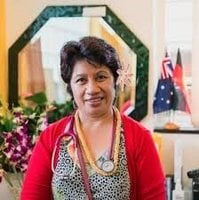
Dr Olataga Alofivae-Doorbinnia from Powell Street Family Practice in Yagoona says good support is a key element to running a successful practice. This support has allowed her to provide comprehensive, long-term care for patients and to create a niche, caring for and improving the health outcomes of Pacific communities in the Bankstown LGA.
How long have you been a GP and how long have you been practising in Yagoona/Bankstown LGA?
Talofa lava! I have been a GP in the Yagoona/Bankstown area since 1995. It was 26 years on 1 September 2020.
When/why did you decide you wanted to become a GP?
I grew up in South Auckland, New Zealand, and came from a poor Samoan family financially, but a family that was rich in terms of spiritual, community and family values. Working hard and getting a good education was the goal in those days, in the mid-1980s. I was so lucky to graduate Auckland Medical School by 1990. I had no idea what I was going to do until I went on holiday to Sydney, Australia, and decided to work a few years as a hospital doctor at Westmead Hospital in the early 1990s. I had also met my future partner and slowly we worked together to build a family and future in Sydney. General practice was the correct choice for me due to the ease of training and after getting fellowship in 1995, my husband Kamal and I brought an existing solo practice in Yagoona which has worked well for us. We’ve developed a good general practice and have set up a good niche caring for Pacific communities. My message to migrant GPs is: you can do it, don’t give up, and most importantly, always have good backup. As long as you have good support and good ethics, you’ll do well.
What do you love most about being a GP/what part of the job gives you the most satisfaction?
General practice can be a daunting challenge for any new doctor starting to run your own business. I love the variety it has brought to my life. My husband – our practice manager – has supported the many roles I have had as a GP – clinical practitioner, teacher for medical students and GP registrars, GP researcher and examiner for our RACGP for many years. I’ve also loved learning how to run a small medical business – you have to learn many other skills not taught at medical school. I’ve loved the challenge, and with God’s grace we have been able to run a safe and viable general practice. It requires a lot teamwork and support by the PHN and RACGP, and work staying up-to-date with the latest medical knowledge and health standards.
What is the most important thing you/your practice contributes to this community?
Our practice has developed from a solo practice to a three-to-four doctor practice, including a GP registrar, registered nurse and good administration staff. We also have a pathology collection centre, visiting allied health and specialists, and a dedicated dental clinic. The practice has two buildings and we’re hoping to expand to the adjacent property for other clinical roles in the near future. We are very blessed as we build and create services in our community and have been fully accredited in general practice for many years.
We service our local community with all the usual GP services – immunisations, chronic care, nursing home care, women’s health – for our local patients. We have a passion for our Pacific communities and we have been involved in research with our local universities to improve health outcomes for new migrant groups such as our Pacific Island communities.
With the current COVID 19 pandemic we have changed the way we practise to improve infection control. We’re back to our old hospital days of living in our scrubs and we don’t see respiratory patients in our rooms. Anyone who has got a cough or other symptoms, we quickly triage. We are lucky that our practice has two buildings and a space in the middle where cars can come in under a carport so our patients with symptoms can be seen there. For example, the day after the cluster of cases was identified at Casula we had quite a few families coming in wanting to be tested. They were coming all the way from Casula. We don’t do a lot of testing but we’re doing enough to service not only our own patients but those that can’t get into other clinics. We are very grateful for the PHN for their help with some PPE to improve screening of our patients. During the pandemic, we’ve also helped to educate our Pacific communities and other at-risk groups about COVID-19 and we’ve offered telehealth to all our regular patients.
What do you like to do in your spare time?
I always enjoy having time with my family, my husband and our two adult children – Leilani our daughter is now a medical resident doctor at Westmead Hospital and Jordan, her younger brother, works for Service NSW. We love going to dinner or attending a family event or catching up for a day out for some exercise. I love reading books and also enjoy attending my local church on a Sunday or just catching up with some friends and family over coffee or a meal.
Tell me about your ideal day…
A good clinical day is knowing what is going to happen – and being prepared for it. Making sure the medical supplies, computers and clinical staff are present. Making sure all the team are in good spirits and working together, and getting to the end of the day knowing you have improved the quality of life of your patients and your clinical team feel they have made a difference in their time with you and are happy to come back the next day. When I am on leave my ideal day is travelling to visit family or a well-earned holiday is a treat to rest and recover from work.
What do you love most about the Yagoona/Bankstown LGA?
We live and work the Yagoona/Bankstown LGA and our children have grown up in this community which is rich in a diversity of cultures. I have got to know many of the other health practitioners over the years in our area and developed good networks with other GPs and specialists and our local hospitals in our LGA. There is lots of work for all the GPs as our area expands with many multicultural populations and we hope to train good GPs for the future in our area.
What advice do you give your patients about good healthcare?
Good healthcare is achieved by developing a caring relationship with your patient over time. It involves the teamwork of your staff to organise recalls for your patients to come in to have their immunisations and follow up of results. It involves appropriate and timely advice when serious and life-threatening diagnosis occurs, and also when the GP can organise good services to our other allied health and specialist services as appropriate to bring about good health outcomes. Our patients enjoy our care as we will look after their families from birth to end of life.