


Dr Konstantin Bosnic from St Johns Park became a GP against the odds but has made the most of every opportunity. Dr Bosnic has had a long and satisfying career treating generations of loyal patients alongside his wife of almost 60 years, Ljubica.
How long have you been a GP and how long have you been practising in St Johns Park/ Fairfield LGA?
I have been a GP for almost 60 years.
I graduated from medical school in 1963, from the University of Zagreb, Croatia and knew from a very young age I wanted to go abroad and build a life that was different to the one my parents had in the former communist Yugoslavia.
In 1964 I arrived in Sydney and was joined by my wife, Ljubica, also a GP, in 1967. Ljubica and I met in medical school, when Ljubica was in first year and I was in third year.
In order to get registered as a medical practitioner I was required to complete a minimum of two years as a resident in hospital followed by a series of examinations. I spent two and a half years at Bankstown District Hospital as the junior and then the senior medical resident, and completed my registration examinations at The University of Sydney covering surgery, obstetrics, general medicine and paediatrics.
At that time Bankstown District Hospital was a small hospital with 320 beds and there was a shortage of residents. We often needed to work 48-hour shifts and over the entire weekend without overtime pay. My fortnightly pay was 14 pounds. For reference, a return train ticket to Melbourne and a week’s stay cost five pounds. You could buy a house in Newtown for 3,000 to 4,000 pounds, and a block of land in St Johns Park for 400 to 800 pounds.
Following registration, I worked as a senior RMO for another year and a half before opening up my own surgery in Newtown. I rented a premises and waited for my first patient to come through the door.
Times were very different then. There were no GP networks, no advertising. All you could do was put a copper plate with your name and your working hours on the door. You built your practice and earned the trust of your patients purely based on the quality of the care you delivered and patient outcomes. It was simple, it was good.
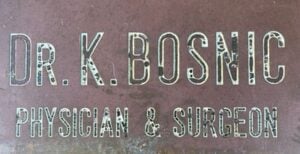
Naturally, we have seen a lot of things change for GPs over the years, for example, our first 10 years of practice were within a healthcare system where there was no Medicare. GPs were private practitioners.
My wife and I were partners in our GP practice and we worked very hard; seven days a week, 12 hours a day. In those early years, most of the immigrants from the former Yugoslavia settled in Newtown, Marrickville, Erskinville and we were the only doctors in the area who could speak their language.
It was a challenge for immigrants in those days. They often did not speak a word of English when they arrived in Australia and there were no free English language courses or government support, no social security, no Centrelink. They came ready to work hard, but it was not easy without speaking English in those days. So as a GP we were really needed by these patients, not only to take care of their health but also to help them assimilate and integrate into Australian society. Our patients were so grateful. I think of those days with such fondness: they were difficult times but so rewarding and most of our patients and subsequently their children and grandchildren have remained loyal patients.
In 1990, we relocated our GP practice to St Johns Park. After so many years, our patients and their families had moved to Western Sydney, yet were still travelling to see us in Newtown. We felt it was time to relocate our practice to better serve our patients. We have been practicing in St Johns Park ever since.
When/why did you decide you wanted to become a GP?
From a young age I aspired to be a doctor. It was following an illness as a child. I grew up in a small village on the island of Korcula in the Adriatic. I was a young boy during World War II, when the former Yugoslavia was occupied by Germans. Everything was scarce (including food) and we were very very poor. When I was seven years old, I became sick with a very high temperature, shivering, vomiting and my parents asked the local doctor to come and see me. Medicine was also scarce, but the doctor came to see me, gave me some medicine and it was like a miracle – the next day I had recovered and was able to run around and play with my friends. I thought ‘how magical is this?’. I decided then that one day, I would become a doctor and help sick individuals, just like this doctor helped me.
From that day on, I never considered anything else, even though, for a young man like me, with delayed schooling due to the war and coming from a village on an island, so removed from education, the major cities and universities, it was not going to be easy. Not to mention the money required to make this happen. You see, my island did not have a high school and so in order for me to get a basic education, let alone university, there would need to be major financial sacrifice, which would impact on my whole family. My family worked hard to save just enough to send me to high school and then university. I lived in the most basic of circumstances, but I was grateful and I promised to make the most of this opportunity.
I think my parents were relieved that, being the youngest of four children, I was the only one who wanted to go to university. I am not sure I would have gotten a chance if my other siblings had the same dreams. But they had other aspirations – they sought a better life by leaving the former Yugoslavia, and while I was studying, my family migrated to Australia.
What do you love most about being a GP/what part of the job gives you the most satisfaction?
There are several aspects of being a GP I both love and find satisfying.
I feel very privileged to be such an important part of the lives of my patients. The relationship I have with them is very important to me. I take this responsibility very seriously and get great satisfaction in looking after their health, and supporting them through the challenges they face in life. I love being the ‘family’ GP and treating generations within the one family. The role of a GP is so important, we are the cornerstone of the health in the community. I love helping patients live healthier and happier lives.
I also love solving clinical problems and as a GP we are presented with many, varied and often complex clinical scenarios. It is rewarding to be able to solve these and to find new solutions as medical discoveries and new pharmaceutical offerings become available.
After all these years, I remain passionate about being a GP, about listening to patients, understanding how they feel, and helping them get better.
What is the most important thing you/your practice contributes to this community?
Experience (almost 60 years of it), clinical expertise and service. We are here for our community, no matter how big the problem, no matter how long it takes and no matter what time it is. My wife comes home from work at 10pm sometimes because her patients are in need. No one gets turned away. We don’t work by appointment so our patients can walk in any time and they will be attended to.
What do you like to do in your spare time?
I have always had many interests outside my work.
I have always enjoyed gardening, reading (particularly the classics) and enjoy being active. I have played tennis on a regular basis for many years. For several years, when I was younger, I was very engaged with the State Government through the NSW Ethnic Community Council. I was vice president for five years.
But probably my most enjoyed pastimes outside of work are photography and watching my grandson play basketball.
I have invested a lot of effort in learning photography and refining my skills and it is something I still get a lot of pleasure out of. I love being immersed in the subject of my photos, and over the years I have been on several photographic tours, which have taken me to many different locations in Australia and around the world. I have also taken a lot of photos of my grandson playing basketball.
My grandson is currently a student-athlete (basketball) at the University of California, Berkeley, USA, so I only get to see him play basketball live when we visit or on TV, but since he was a boy he has loved playing basketball. Nothing has given me greater pleasure than taking him to training and watching him play. I don’t think I have missed a single game and I am so proud of him. I look forward to watching him in this coming college basketball season. You should check him out. His name is Grant Anticevich.
Tell me about your ideal work day…
My ideal work day! That is an interesting question. I think my ideal day comes from being prepared for the day, ready to tackle it, no matter what may come. I think as a GP it is important to have an open mind, to look beyond the easy or obvious and to be ready for challenges. This requires a particular approach and as long as my approach is right, I know it will be a good day at work.
What do you love most about Fairfield?
I love this area because of the people. People in the community of Fairfield come from a range of cultural backgrounds but there are some fundamental things we all have in common. People in Fairfield are down-to-earth, wholesome and genuine. The community is multigenerational and there is a real sense of community. It is such a wonderful part of Sydney.
What advice do you give your patients about maintaining good health?
These days life can be very complex and individuals are under a lot of stress from a young age. So I try to bring some simplicity into their lives. I focus on the importance of both physical and mental well-being and the critical link between the two. I encourage my patients to find pleasure and satisfaction in doing the basics well: good diet, regular exercise, knowing their body and being kind to others.
Now more than ever a holistic approach to life is important and as a GP this is something that I have promoted to my patients for decades.