


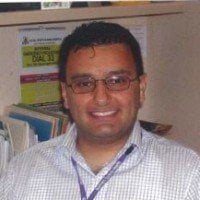
For Dr Bilal Karime from Narellan Town Medical Centre, continuity of care is essential to improving the health outcomes of his patients. This approach has had positive results for patients who attend the diabetes clinic he established at his practice last year.
How long have you been a GP and how long have you been practicing in Narellan?
After being lucky enough to work for several years at Liverpool Hospital, I left the hospital and started family medicine in 2014 (Australian General Practice Training – AGPT – Program). I was fortunate to start as a GP in the Southern Highlands. I started at the Southern Medical Centre in Moss Vale where my learning curve spiked every day. My best time was during the six years I worked in Moss Vale /Bundanoon where I learnt how to treat diabetes, palliative care, skin surgery, geriatrics and caring for nursing home residents. I learnt how to make decisions and be responsible for them. I obtained great confidence and pride from being a country GP.
The number of skills achieved during the above time was great. I had a great mentor, Dr Vincent Roche, who gave me a lot of confidence, pride, education and skills. His fingerprints will always stay in my work.
I moved to Narellan in 2019, initially starting as a part-timer, later on becoming a full time GP – six days a week. I am now the principal family physician and I’m slowly transferring all the skills I learnt in the country to here – a work still in progress…
Why did you decide to become a GP?
During my time at Liverpool Hospital, one rotation affected me significantly – the Medical Assessment Unit with Dr Colin Macarthur (geriatrician and director of medical services) – a great clinician. I wanted to be a caring doctor like him and to cover all aspects of medicine. He supported my vision to be a comprehensive clinician, I was impressed and influenced by his work. I learnt about continuity of care and the importance of family doctors as Dr Macarthur used to call the patients’ GP himself or asked me to do so before discharging the patient to hand over to his regular GP.
Another reason – choosing a balance between work and family. I experienced working very long hours in the hospital, starting between 7am and 8am and finishing late, sometimes 11pm on the weekends. I became a stranger to my family as I was not able to see them much.
What do you love most about being a GP? What gives you the most satisfaction?
I’m satisfied when I practice evidence-based medicine, when I see a patient following up with an evidence-based treatment. I feel we are the cornerstone of medical care as I always see in hospital discharge letters or other clinician’s letters “follow up with GP”, “GP please chase”, “GP to monitor”. I feel most satisfied when calling the ED admitting officer and notifying him of a patient coming to emergency, doing a proper handover and exploring my reasoning for urgent care. I feel satisfied when I come to an agreement with a patient that he has a “substance use disorder” and we agree on a treatment plan to treat it, not just prescribing. Satisfaction comes when I see the diabetic cycle of care completed with all markers down. I feel satisfied when changing our practice protocol to ensure we are a quality practice not just a medical centre – a work still in progress…
I feel satisfied when I spread the fact that the family physician is not a referring service only, we are involved to the bone of medical care.
What do you think the most important thing you and your practice contributes to the community?
We establish very good patient-doctor relationships with this community – in other words, I’m taking the country style of doctor to the city. I always encourage continuity of care and promote a culture of sticking to your doctor and sticking to your medical centre because they know you, even if it means I loose patients sometimes. This is number one. Number two is the diabetic clinic I established last year. We are a member of the National Association of Diabetes Centres. We serve the community, particularly people with metabolic features and diabetes, by helping patients understand what things like vascular disease and diabetes are, and providing good follow up care as per the RACGP guidelines. This prevents or reduces serious outcomes like strokes and ischemia heart disease (IHD) and end organ damage. I also have pregnant patients with gestational diabetes and we help them through pregnancy and even after delivery with their children.
One of the important things we offer to community is the input of the senior diabetic educator Jill Snow who is assisting the diabetic patients even on the weekends. She is one of the assets of our medical care. While knowing our limitations and when to refer to the endocrinologist team, we are reducing pressure on the health system by being able to screen, detect and manage diabetes relying on our diabetic clinic team and referring when appropriate.
What do you do in your spare time?
I enjoy spending the rest of my time with my three children and my wife – I mean it. I have a background in martial arts and now my kids do martial arts and dancing. My son who is 14 years old has a 1st dan black belt in Taekwondo and now he’s training me in my free time, and he is looking after my fitness. My daughter is studying speech pathology and I spend time with her exploring her subjects and helping if needed. My wife and I spend time to offer them personal development. It’s all about family.
Tell me about your ideal work day …
My ideal work day is doing a diabetes review and seeing several patients with the markers of diabetes getting better, giving a vaccination to a young person, treating a pregnant woman and guiding her in the protocol of antenatal shared care, helping someone with mental health concerns – we see everybody. The ideal day is when I feel my patients are safe and I offer the best evidence-based medical treatment. I also like to make sure everybody is happy and comfortable in the practice, including the receptionist and the nurse. My best day is when I spend the day as one of the team. When I started I told them ‘don’t call me doctor, call me Bilal’. I don’t like the hierarchy and the title in teamwork, because if you work as a team, and you maintain care, professionalism and mutual respect, everyone feels comfortable and the patients will get greater benefits.
What do you love most about this area?
This area has plenty of young families, where we can follow up with them stage by stage. It’s a nice and straightforward population – they don’t have time to get sick and stay home, so we are on standby for them.
I really became attached to working in the country. When I decided to move, I decided to move to a place which was a bit similar. Extended family of my Southern Highlands patients live in the Camden area. The most important thing though, is that it is close to my house – about 15 minutes away. I used to stay in the country for a couple of days but my daughter is a university student now, so I wanted to be closer to home to support my wife and kids.
Also, it is handy to work in Narellan Town Medical Centre, given my wife use to send me a message at 7.30pm to get bread or groceries and guess what? Coles is 10 steps from my room!
What advice do you give to your patients about maintaining good health?
I tell them continuity of care is very important – don’t move between doctors. Number two – make sure you’re receiving the best evidence-based medical practice. Number three – be involved in your own care, be a partner, don’t just have a test without asking the question “is this going to change the management of my care?” It’s mostly about educating people about the above.