


The flu season in Australia is serious and unusual. Children should receive the flu vaccine as a matter of urgency.
Key points
- We have experienced an early flu season
- Cases of influenza B are outnumbering cases on influenza A
- Children are being affected at a greater rate than adults
- There is currently a low influenza vaccine uptake in children who live in South Western Sydney, this needs to change
- Parents and carers are strongly encouraged to have their children vaccinated against the flu
After years of COVID-19 lockdowns, travel restrictions and relative isolation, it is not surprising Australians are experiencing another unusual flu season.
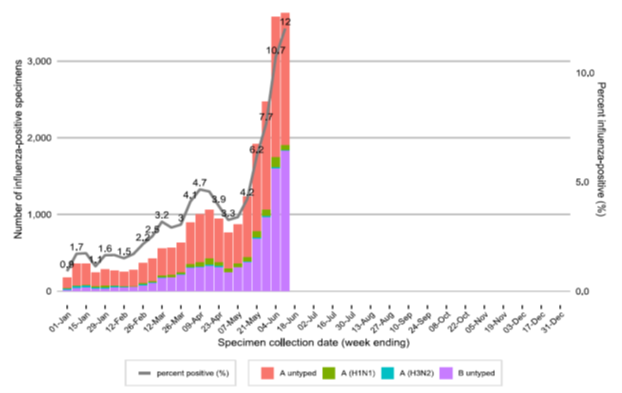
Influenza cases throughout South Western Sydney has steadily increased from early March 2023. In June, cases of influenza B are outnumbering cases on influenza A. From information reported by WHO Influenza Collaborating Centre, the influenza subtype is B-Victoria-like and should be well covered by the vaccine (which contains an inactivated virus from the B-Victoria lineage). Influenza A is predominantly pH1N1 rather than H3N2.
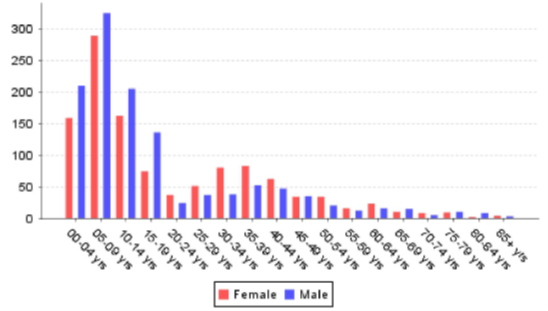
A majority of reported cases have been in children and adolescents, with a peak in primary school aged children. Fewer cases in adults are being reported compared to children.
Flu activity in figures
The overall flu test positivity has come up to 12% which is high.
Most influenza occurs in children and adolescents, as shown in the below chart.
On a positive note, in South Western Sydney we have experienced only one influenza outbreak in aged care, despite lots of testing. Typically, H3N2 creates more problems for our elderly. This may be due to our older age groups having prior immunity, and/or are less affected by H1N1, and/or the flu vaccine is well matched.
Vaccination uptake for influenza
Latest influenza vaccination coverage by state as of 17 June, for NSW.
- Under 5 year-olds is 20% (Aboriginal and Torres Strait Islander is 12.6%)
- 65 years and over is 57% (Aboriginal and Torres Strait Islander is 59.8%)
As of June, South Western Sydney is running behind NSW vaccine coverage
| Age group | South Western Sydney flu vaccine uptake |
New South Wales flu vaccine uptake |
| 6 months to <5 | 9.1% | 13.5% |
| 5 to <15 years | 6.7% | 7.6% |
| 15 to <50 years | 11.1% | 13.2% |
| 50 to <65 years | 22.6% | 24.1% |
| ≥65 years | 45.1% | 49% |

Help us vaccinate kids while we can
Resources for Aboriginal people – Influenza (nsw.gov.au)
Influenza resources in community languages – Influenza (nsw.gov.au)
WHO Influenza Collaboration Centre
Flu immunisation message from clinicians