


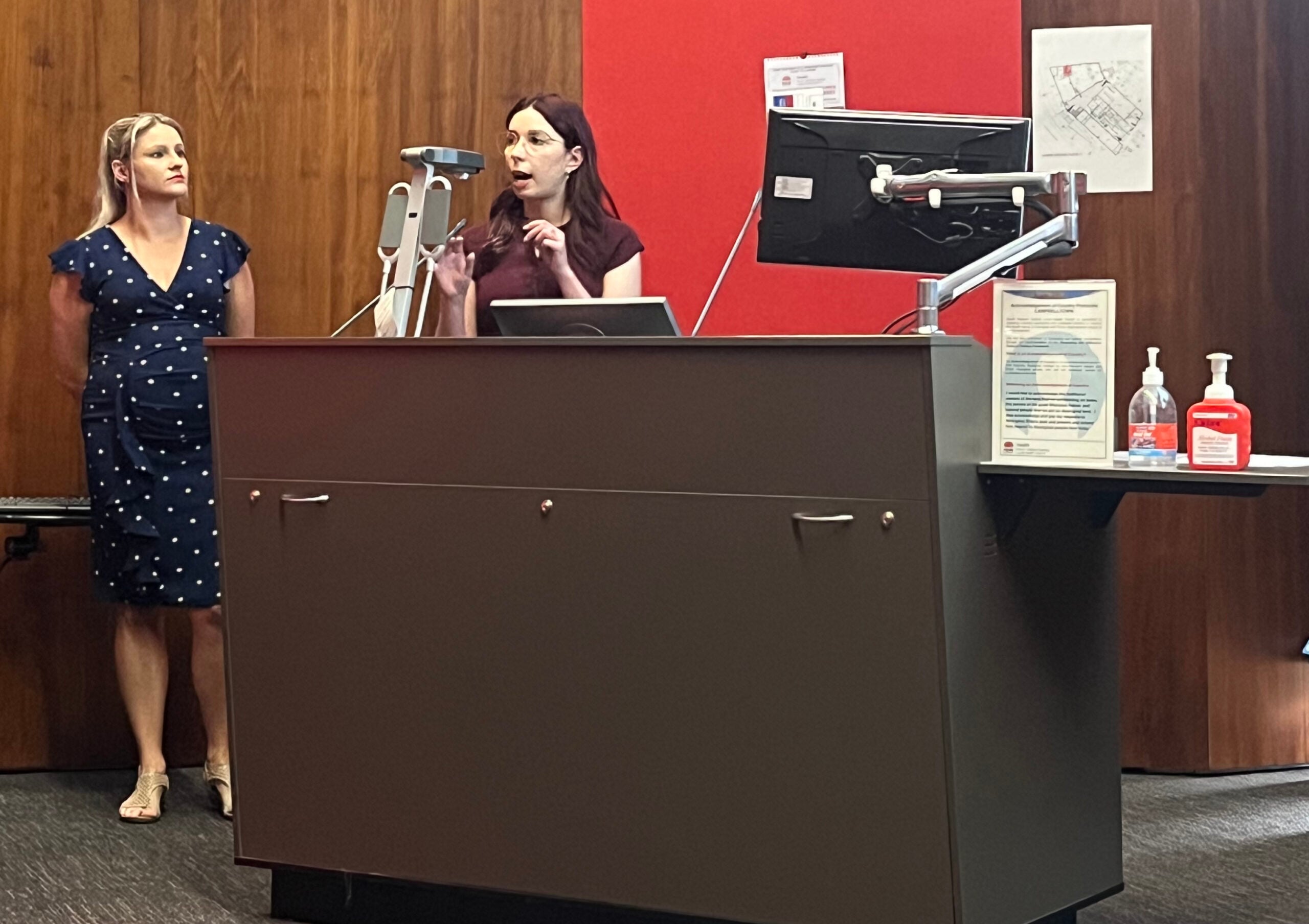
A partnership between SWSPHN and South Western Sydney LHD (SWSLHD) which saw the piloting of mental health-type 2 diabetes case conferencing was among the projects highlighted at the Diabetes Tech n Talk Conference at the Macarthur Clinical School on Saturday, 25 October.
Tech n Talk focuses on innovation and integration in diabetes clinical care, self-management and prevention.
SWSPHN Integration and Priority Populations Coordinator, Alyssa Horgan, joined SWSLHD Mental Health Service Physical Health Coordinator, Isabella Sierra (pictured left and right), for the presentation to about 60 GPs, diabetes specialists and academics.
Physical health conditions such as cardiovascular disease, respiratory conditions and endocrine conditions, including diabetes and thyroid dysfunction, contribute to an increase in morbidity and mortality in people living with severe mental illness.
“Cognitive challenges impact logistics of regular care, with life expectancy shortened by up to 23 years,” Alyssa told attendees.
As outlined in the South Western Sydney Diabetes Framework to 2026, improving the care of people who are at risk of diabetes or who have diabetes, and a mental health condition, is a priority for SWSPHN.
In their presentation, Alyssa and Isabella described the model they used for the pilot project and the positives and challenges from that model. They also talked about the changes to the model based on patient/clinician responses and the expected outcomes of those changes.
The model initially involved gaining consent from identified inpatients at Mental Health Units (MHU) to be paired with a ‘keystone’ GP to participate in diabetes case conferencing alongside a GP, endocrinologist and mental healthcare coordinator, who acts as a care navigator in the pilot program.
There was a good uptake to the model by inpatient resident medical officers and improved liaison between medical officers across MHUs and endocrinology services.
However, challenges included patients not meeting all eligibility and poor documentation of pathways on discharge summaries.
The model was then refined. This included revising eligibility; involving a diabetes educator; expanding pathways to allow community mental health services to initiate referrals; and allowing patients to see either their own GP or a ‘keystone’ GP.
The expected outcomes include: a better coordinated approach to providing healthcare; improved care for patients, especially those with complex needs; person-centred care; shared decision-making; and improved GP knowledge and skills.
The Tech n Talk also heard from: keynote speaker Professor Anthony Russell, co-creator of Diabetes Beacon Practices; Fairfield GP Dr Dong Hua, who spoke about improving diabetes care in general practice; and Rachel Hicks, who spoke about NetHealth and the future of remote monitoring of gestational diabetes mellitus care.