



We’re putting the spotlight on mental health in this new monthly feature. Learn more about SWSPHN commissioned services, projects and events, and find guidance on navigating the mental health system.
This month we’re highlighting the Credentialed Mental Health Nursing Service delivered by APMHA Healthcare Limited in partnership with Inshirah.
What services and supports does your service provide?
The Credentialed Mental Health Nursing Service provides ongoing therapeutic interventions and clinical care coordination for people living with severe and complex mental illness which has a significant impact on the person’s social, personal and work life.
Services include:
- Regular review of mental health and therapeutic interventions
- Coordinating clinical services and supporting care planning
- Working with relevant mental health support services as part of a multidisciplinary team
- Liaising with families and carers where appropriate
- Providing information and support on physical healthcare
- Administering and monitoring some medications
- Providing structured psychological therapies
What are your service location/s and service hours?
The Credentialed Mental Health Nursing Service is available across the South Western Sydney in the local government areas of Bankstown, Fairfield, Liverpool, Campbelltown, Camden, Wollondilly and Wingecarribee. Some Credentialed Mental Health Nurses may be able to provide home visits or outreach services within the region. Services are delivered based on individual needs.
What is the eligibility criteria to access your service and are there any targeted supports to specific population groups?
The Credentialed Mental Health Nursing Service is available to people who work, study or live in South Western Sydney with a severe and complex mental illness which is enduring.
Does your service provide support to people who don’t speak English as a first language?
Yes, a number of the Credentialed Mental Health Nurses speak languages other than English and work with many non-English speaking clients and their families/carers. They are also trained in delivering culturally sensitive services to culturally and linguistically diverse families and communities.
How can people be referred?
Referrals can be made through SWSPHN’s central intake online referral form. A GP Mental Health Treatment Plan is required within the first four hours of service.
Please provide a case study/example of a client journey when accessing your services
Why were they referred?
Daenerys* was referred by Headspace as she needed more intensive support than what a mild to moderate service was able to provide, and clinical coordination. Headspace first discussed the referral with the Credentialed Mental Health Nurse, who agreed the referral was suitable. The Headspace clinician made the referral via SWSPHN’s central intake online referral form and the referral was allocated.
How were they supported?
The Credentialed Mental Health Nurse contacted Daenerys and arranged for an initial appointment, taking down some basic information about risk and urgency. Within one to two weeks, Daenerys had her initial appointment with the Credentialed Mental Health Nurse and after a comprehensive assessment, it was decided that Daenerys would need weekly sessions. The Credentialed Mental Health Nurse advised Daenerys she would need a Mental Health Treatment Plan from her GP, but Daenerys was confused and did not know what to ask her GP. The Credentialed Mental Health Nurse contacted Daenerys’ GP and informed the GP of the service. The Mental Health Treatment Plan was then provided in the subsequent session.
Daenerys and the Credentialed Mental Health Nurse then created a management plan together, comprising of ways to address mood, sleep, diet, physical health, emotions as well as assistance with coping in the family environment. This included psychological strategies and liaising with her GP for medication. The Credentialed Mental Health Nurse organised a home visit for a family meeting, where the nurse sat with Daenerys and her parents to discuss ways she could contribute to the household and how her parents could best support her.
What was the outcome?
Daenerys was discharged from the service following 12 months of engagement. Daenerys had enrolled herself in a TAFE course, got into a romantic relationship and remains compliant with the strategies she was taught as well as her medication regime.
*name has been changed
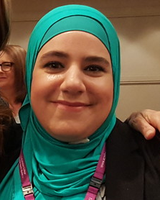
A day in the life of Amanda Butt
Credentialed Mental Health Nurse, Nurse Practitioner and Clinical Lead of the Credentialed Mental Health Nursing Service
Day-to-day role
The day-to-day role of a Credentialed Mental Health Nurse is like that of the jack of all trades. I start all my sessions with a quick assessment of the patient’s current mental state. This will then give me time to set up supports or escalate the case if my patient is suicidal or unwell.
I spend about five to 10 minutes allowing the patient to vent about the past week and then move onto our structured psychological therapies.
If the patient needs assistance with their NDIS or Disability Support Pension application, I will support them with making a plan of the support letters required and write a report of my own to support them.
If the patient is escalating, I will thoroughly assess whether they would need tertiary level services, or provide intensive therapy, distraction techniques, mindfulness, deep breathing exercises or discuss their medication regimen with their GP.
Every session we develop a management plan of what will occur in the next session. The patient also gets homework so they can practice their techniques, be mindful of their thought processes and note them down, or I just have them write a simple mood diary and see if they recognise a pattern.
Home visits are planned weeks in advance as they require more time to be blocked from my schedule. This is only provided as deemed suitable for the patient’s circumstances. At times I have planned to conduct sessions over lunch in a less formal atmosphere for exposure and to aid a patient with their social anxieties. I also attend GP and psychiatrist appointments with patients as needed.
What do you find most challenging about your role?
The most challenging part of the role is redirecting a patient to the management plan. It can be very easy for people to get carried away with their emotions and the narratives and I am definitely here to listen, however it can heighten a patient’s emotions and cause us to stray from the main purpose of our sessions. As a therapist, we are teachers, we equip our patients with the skills to deal with whatever life throws at them. Skills that will remain long after we part ways.
What do you find most rewarding about your role?
The most rewarding part of the role is knowing you’re making a difference. Discharging is bittersweet – we’ve built rapport with this individual but now they are well enough to continue this journey on their own. It is most rewarding to see ex-patient’s have fully functional lives, with jobs, education and stable relationships.
As the Clinical Lead, I also oversee clinical aspects of the program, assist the APMHA intake team with suitability criteria and recommendations on complex cases, training and mentoring new Credentialed Mental Health Nurses, clinical supervision, liaise with other SWSPHN commissioned service providers and meet regularly with the CEO and general managers of APMHA Healthcare Ltd.
What do you enjoy doing outside of your job?
On a more personal level, I love cooking and entertaining with my family, connecting with my faith spiritually, learning about the world, nature, humans and the universe through various documentaries and listening to classical music as well as film scores. My favourite pieces are Samuel Barber – Adagios for Strings, Ludovico Einaudi – Experience, and anything from orchestral composers John Williams and Ramin Djawadi.